
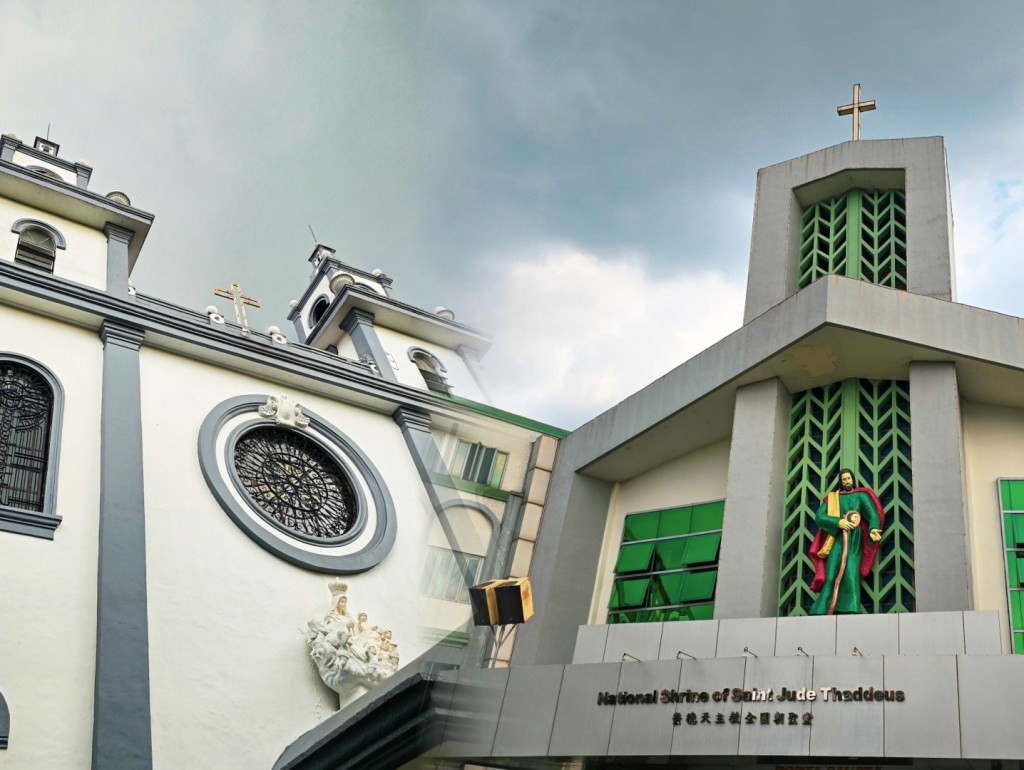
Malacañan Palace is rightly so considered as the center of power in the Philippines. There is arguably no place in the country where power is so concentrated than the place that serves as the official residence of the President of the Republic. It is not surprising hence that it is treated like a fortress, heavily guarded from all fronts and flanks.
While the Palace draws so much attention to itself given the history that shaped it and the national destiny that it shapes, it was not our destination. Visiting the official residence of the Republic understandably requires pre-bookings to visit its museums, and we were not that prepared to step into the palace grounds just yet. We only wanted a casual walk visiting churches, and interestingly enough, Malacañan Palace, the fortress of power, is flanked by two houses of prayer.
It would have been a much quicker walk from the Basilica Minore de San Sebastian to our next church destination, but the Mendiola Gate to the palace complex was closed, hence we needed to walk through Concepcion Aguila St. until we reached Jose Laurel St. and took the gate to the complex from there. After roughly about half an hour walk, we reached the first church flanking Malacañang: the National Shrine of St. Jude Thaddeus.
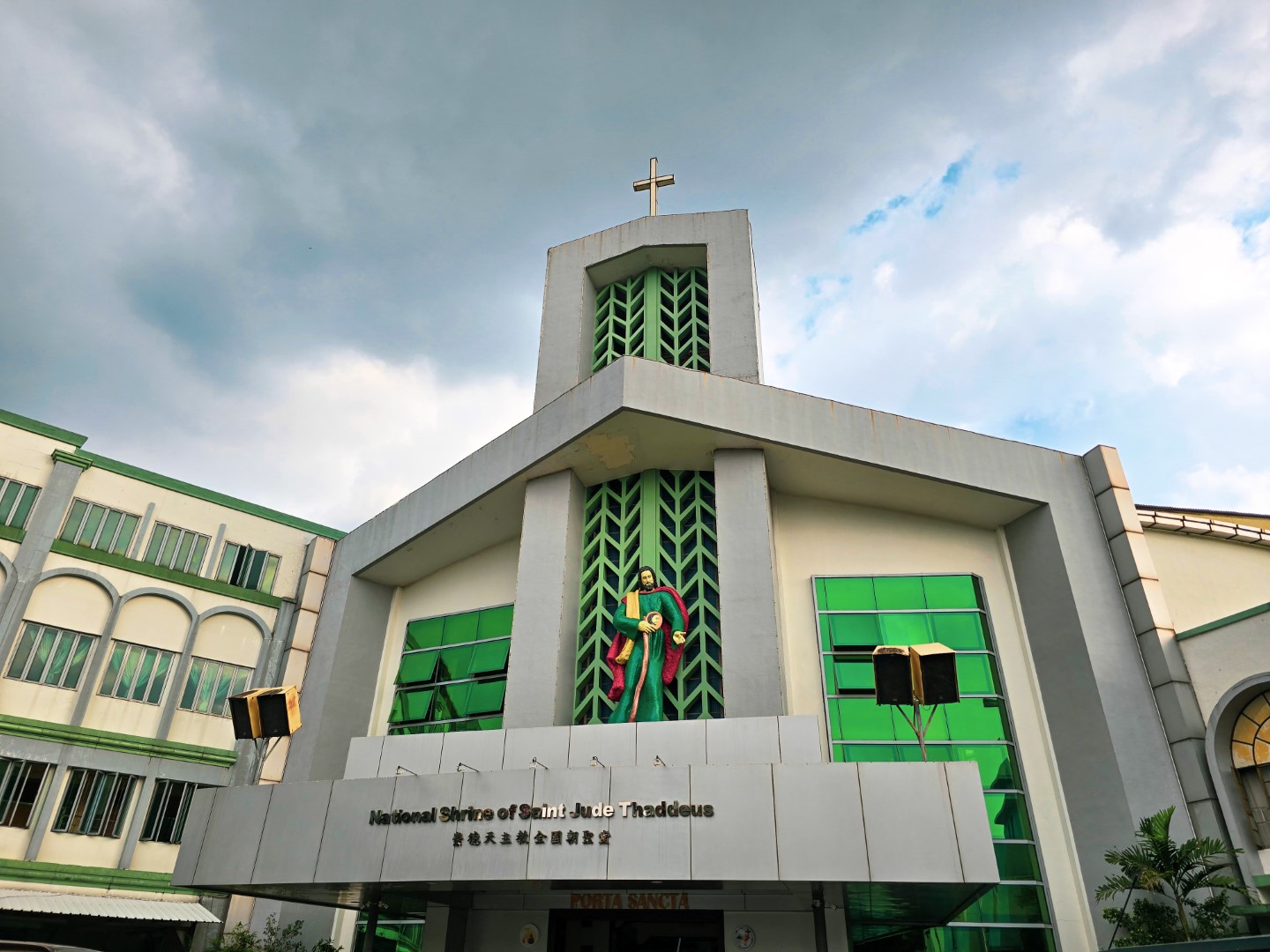
A personal parish when it was founded as Espiritu Santo Chinese Parish in 1954, it was eventually rededicated to the Apostle St. Jude Thaddeus and was made a territorial parish in 1986, taking territories from the nearby San Miguel Parish. Owing to its popularity for pilgrims who seek the intercession of St. Jude who is considered the patron saint of impossible cases, it was elevated to the status of a National Shrine in 2010.
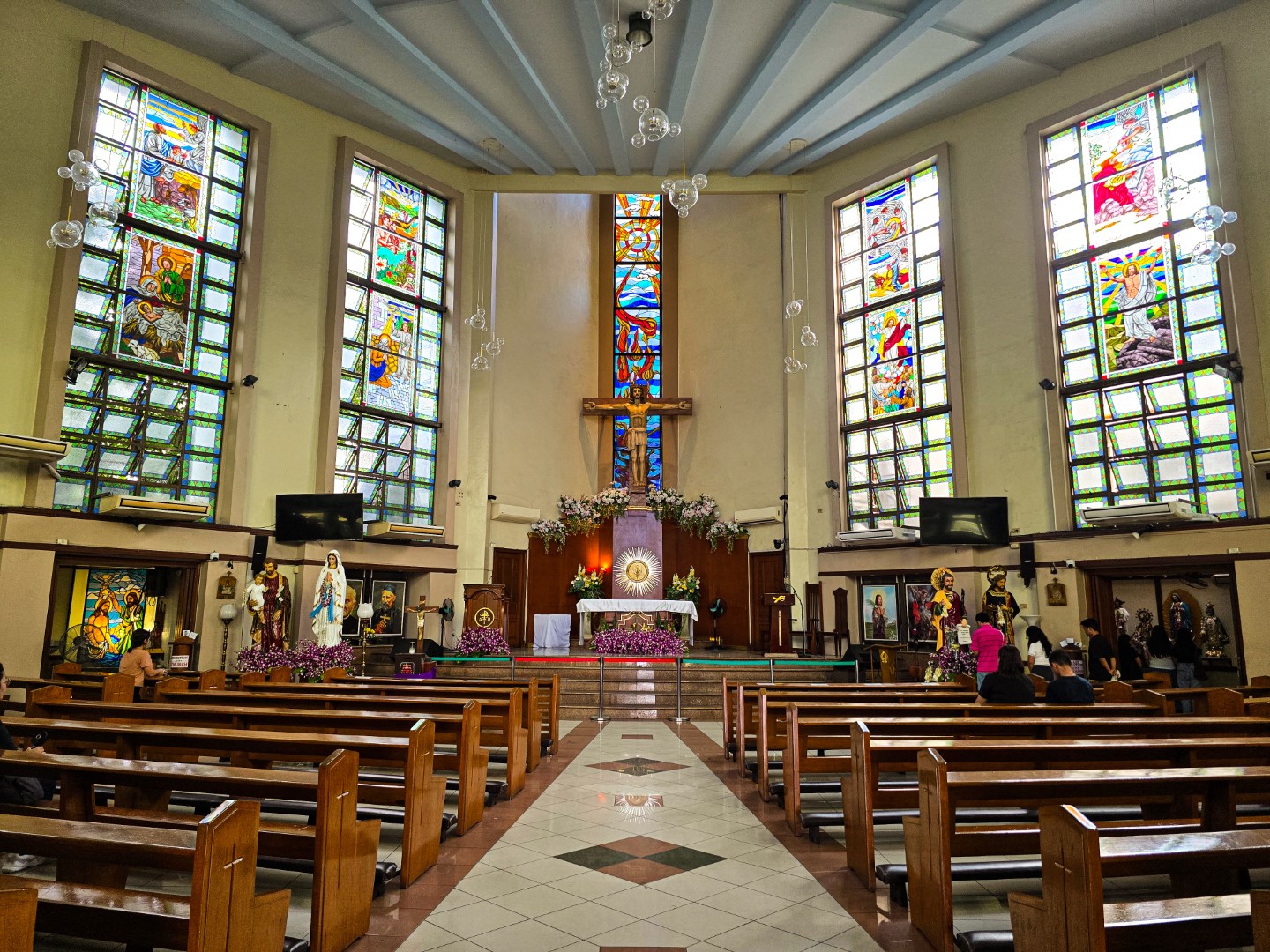


The images of St. Jude and Simon, Apostles. They share the same liturgical feast day on 28 October.

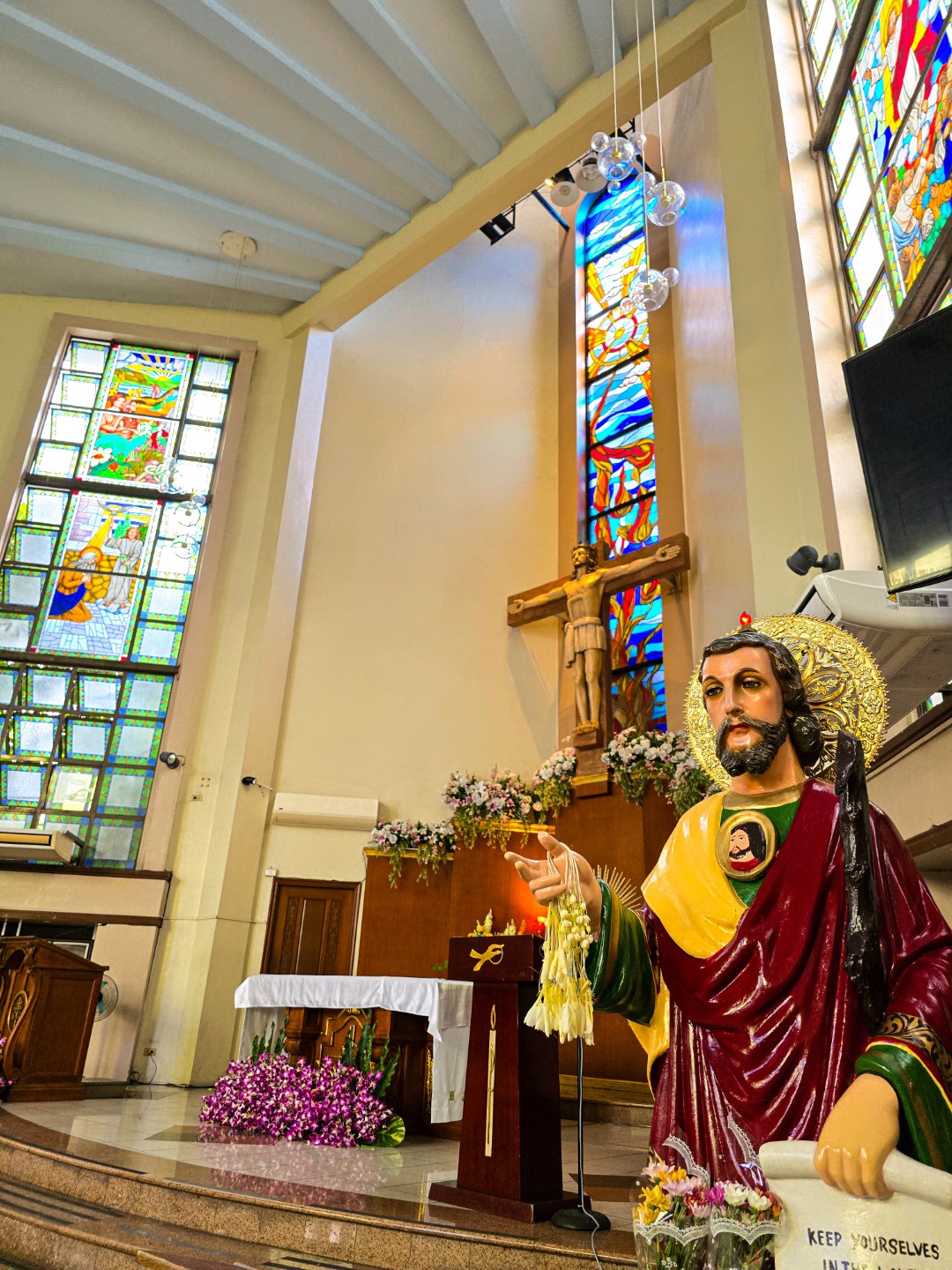
The loft of the shrine and the devotional image of St. Jude.
One anecdotal account of why St. Jude Thaddeus is considered as the patron saint of impossible cases accounts for the fact that he shares the same name as Judas Iscariot, the one who betrayed Jesus. Ἰούδας in Greek and Iudas in Latin, the name Judas Thaddeus was shortened to Jude in English in order to distinguish him from Iscariot. in the ancient times, due to his namesake, it was said that people avoids calling to him for prayers. As such, those who would must have been really desperate, and the Saint, given that not much people calls to him for intercession, was bound to grant their prayers.
The anecdote aside, the intercessory powers of St. Jude should not come as surprising. The new Testament refers to him as the brother of Jesus, though not literally a blood brother as the word for brother in both Aramaic and Hebrew is the same word used for kinsman, cousin and other close relatives. Regardless, he is of very close relations with the Savior.
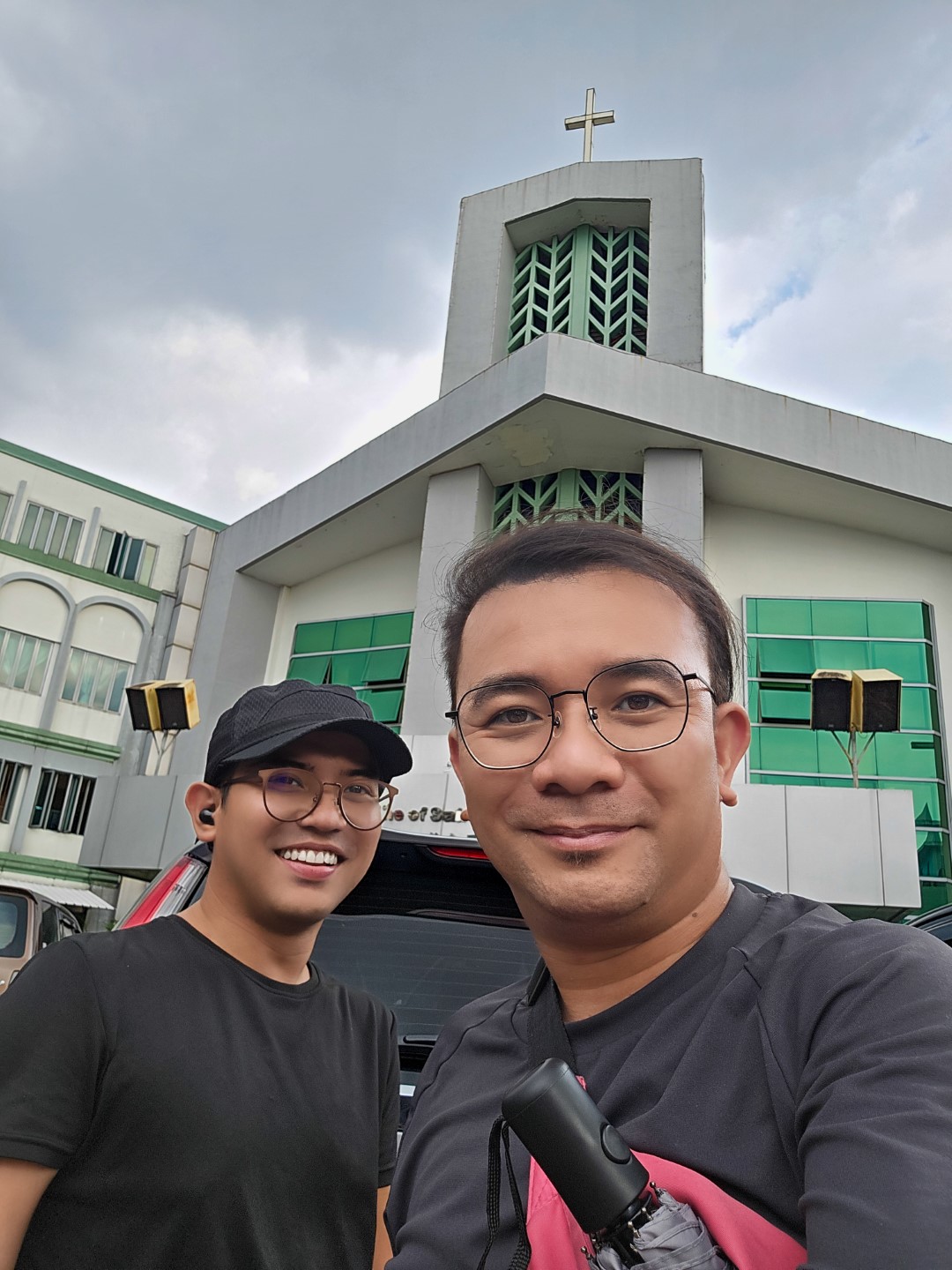
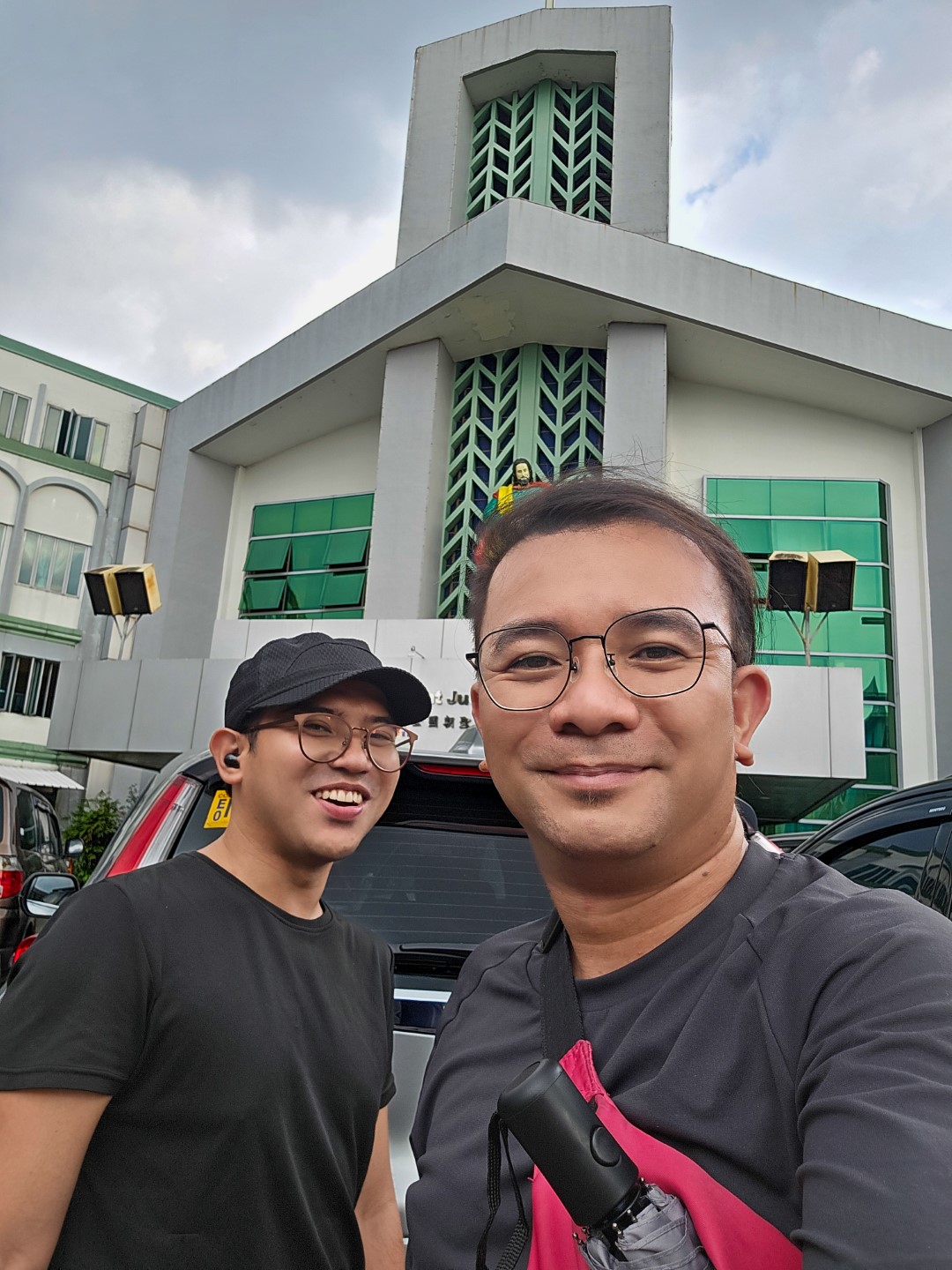
Ran and I before we went on our walking trip.
Similar to our route from San Sebastian Basilica to the St. Jude Shrine which was prolonged by closed roads, it would have been a quick straight walk along Jose Laurel St. to our next stop. Some parts of the road though have been closed due to its proximity to the main gate of the palace. We hence took Arlegui St. then Aguado St., until we got back right track on Jose Laurel St. From there, a little more walk and we’ve reached the second of the two palace churches.
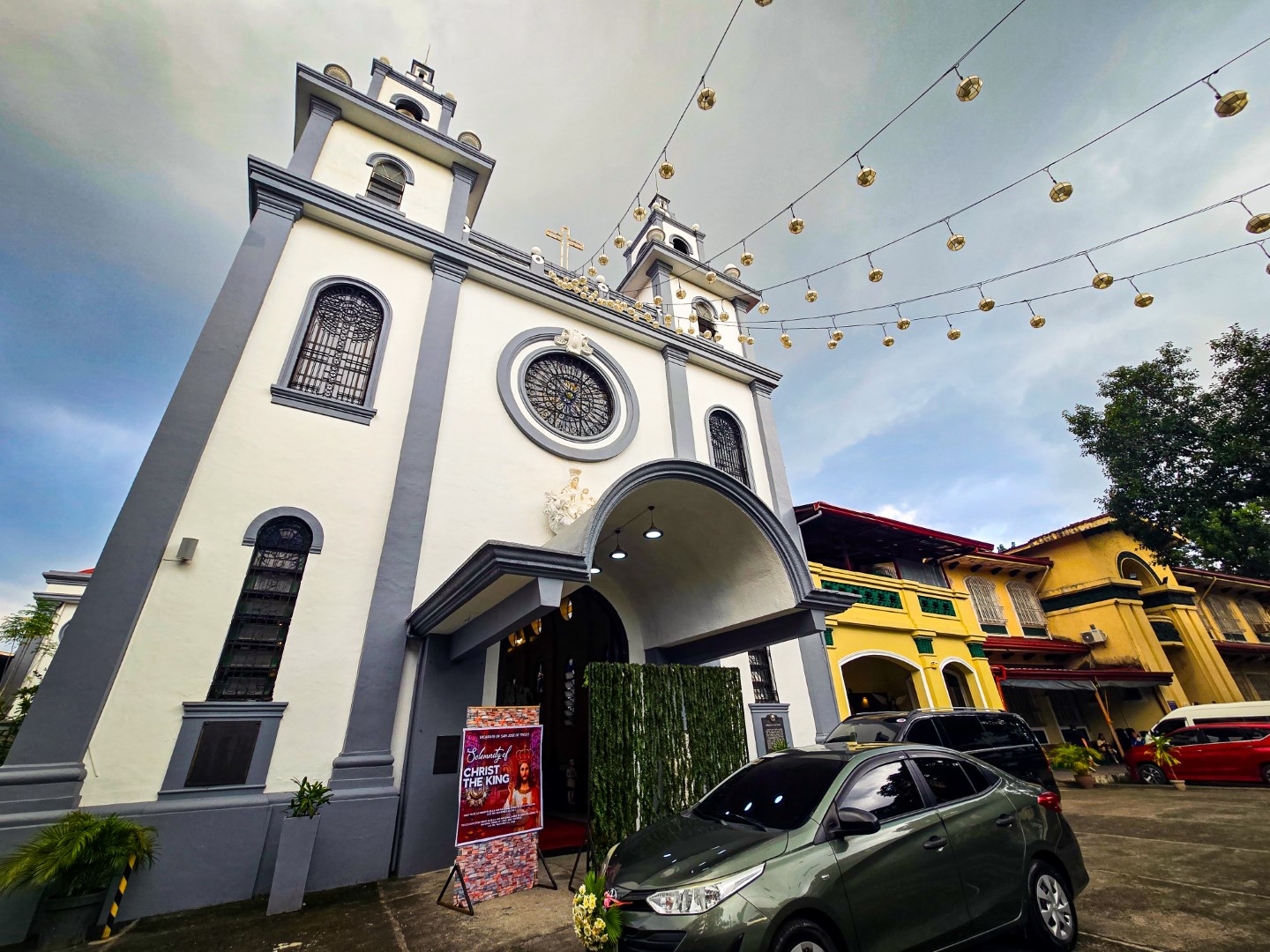
Originally built in 1603 by the Society of Jesus, it was made a parish in 1611 and was designated as a mission center for Japanese Christians in 1615. During the rehabilitation of Manila after the War of Liberation during the Second World War, it was made the proto-cathedral of the Archdiocese of Manila. In 1986, it was elevated to the status of national shrine.
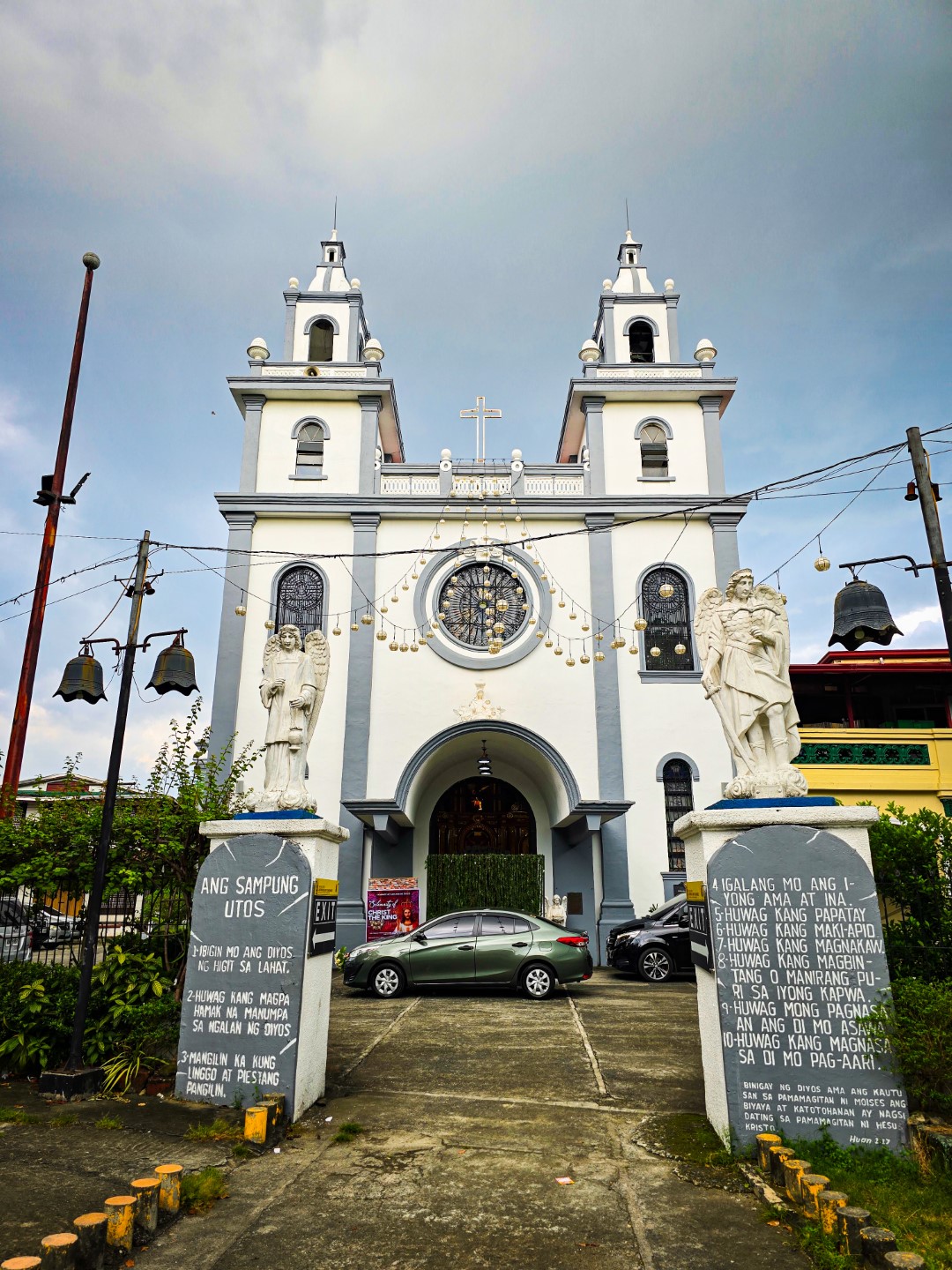
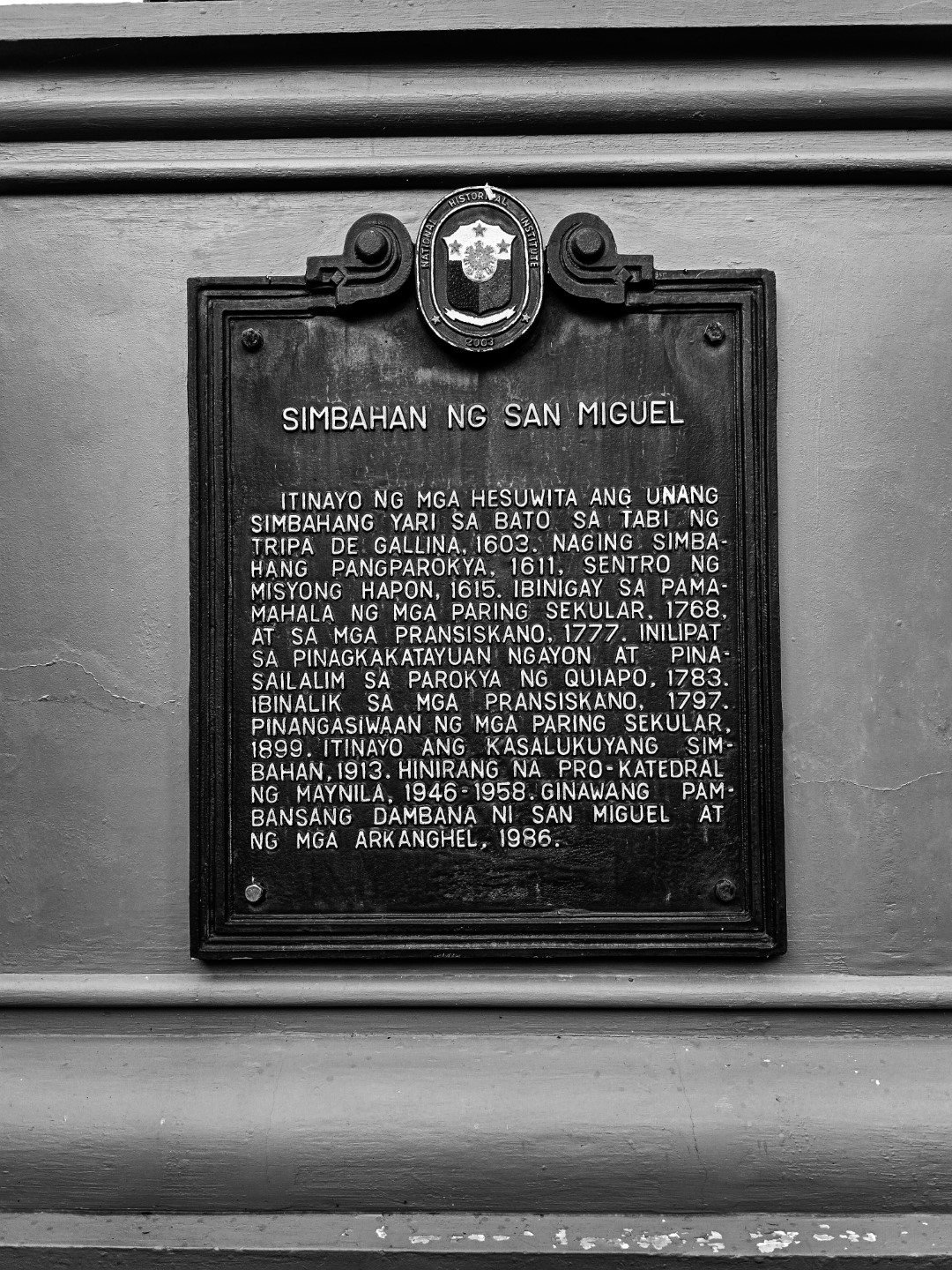

There was a wedding when we arrived in the church, so Ran and I waited a little until the ceremonies were over before exploring the church.
In stark contrast to the neighboring National Shrine of St. Jude which is predominantly modern in its architectural style, San Miguel Church is of European Baroque style, which in a way speaks of its closer affinity to colonial architectural influence.
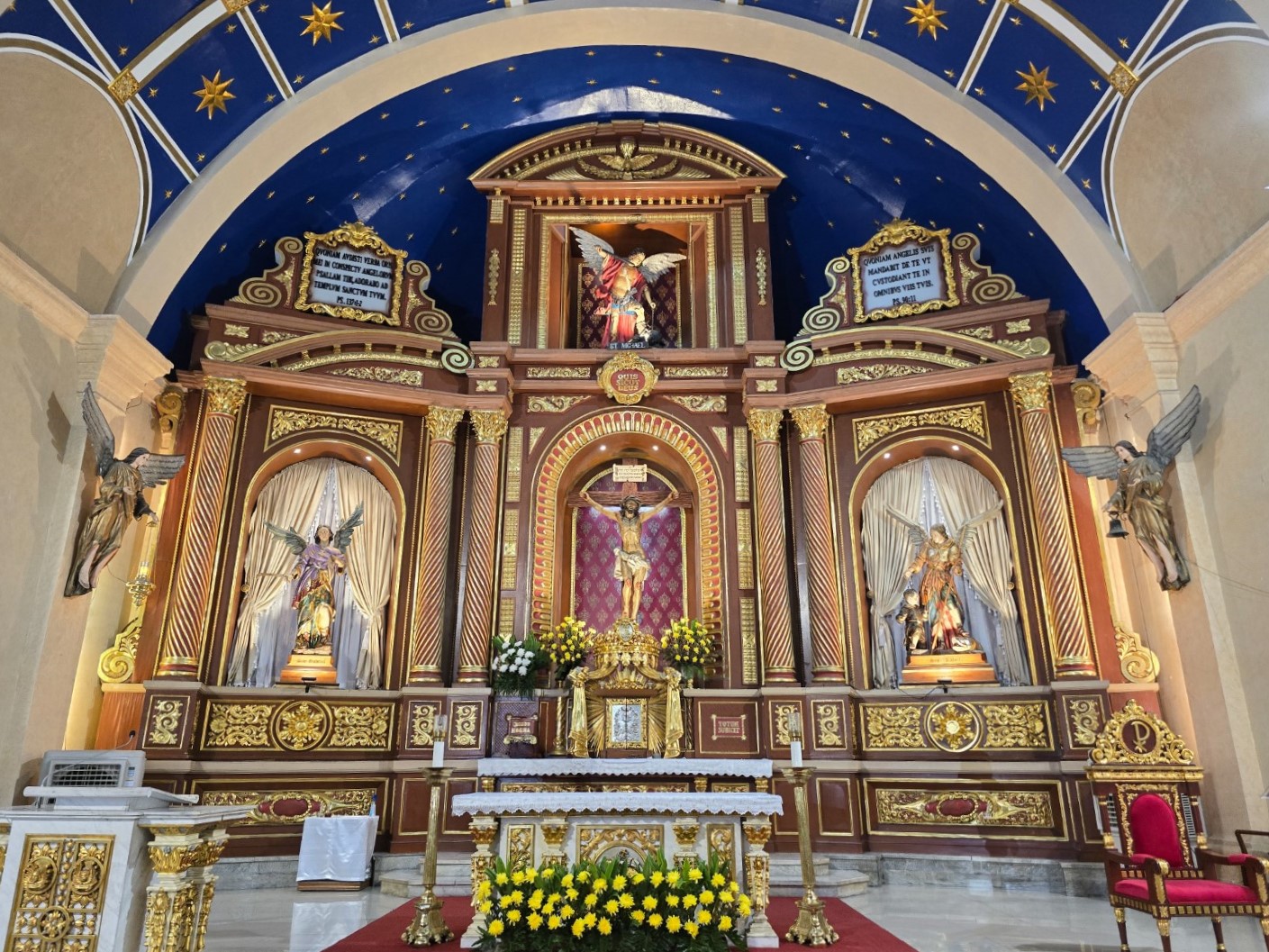


The Archangels, Sts. Gabriel, Michael and Raphael.
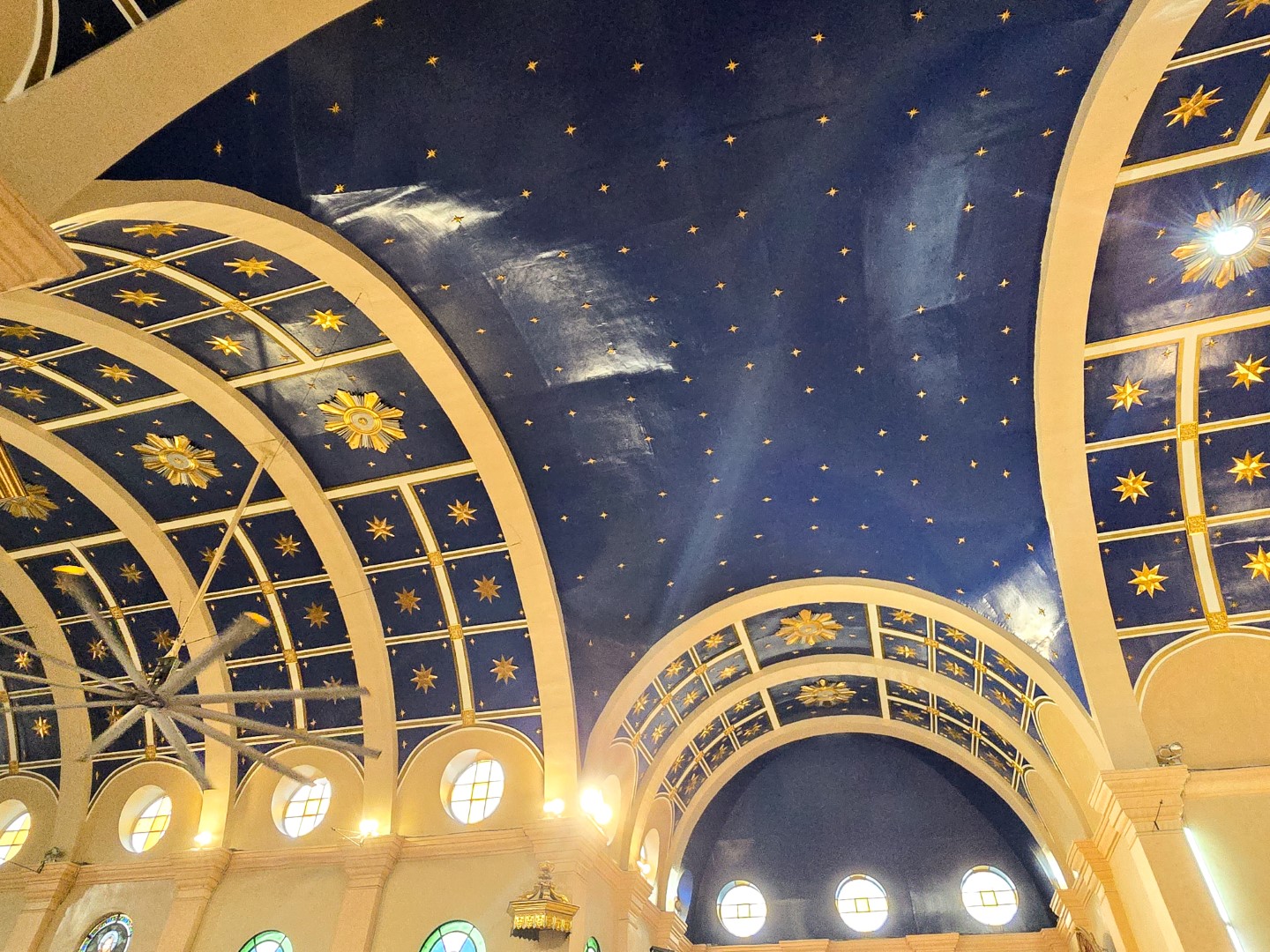


Details of the ceiling of the church.


The baptistery located at the south transept of the church.
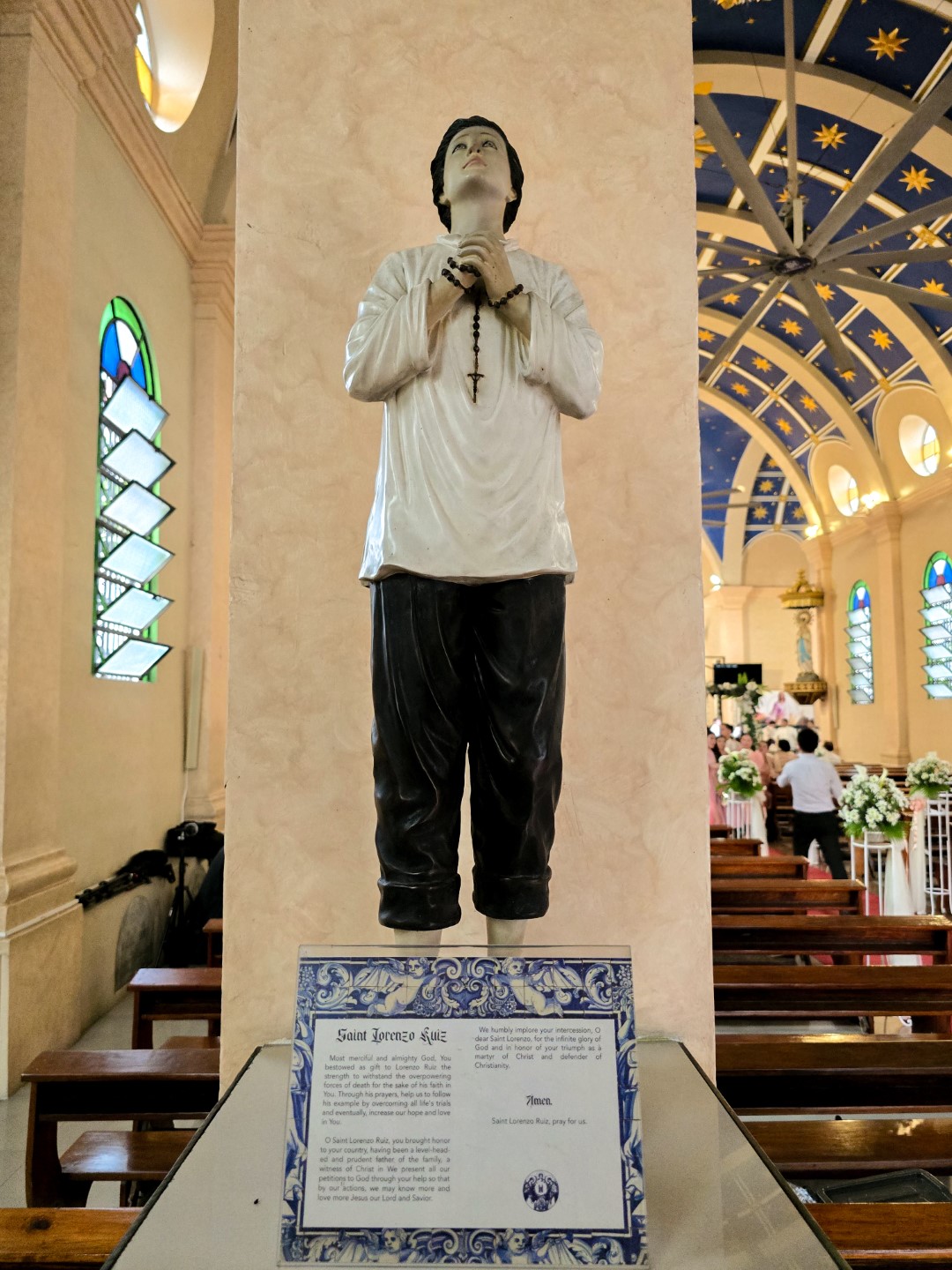

Images of the Filipino Saints, St. Lorenzo Ruiz and St. Pedro Calungsod, located near the narthex.
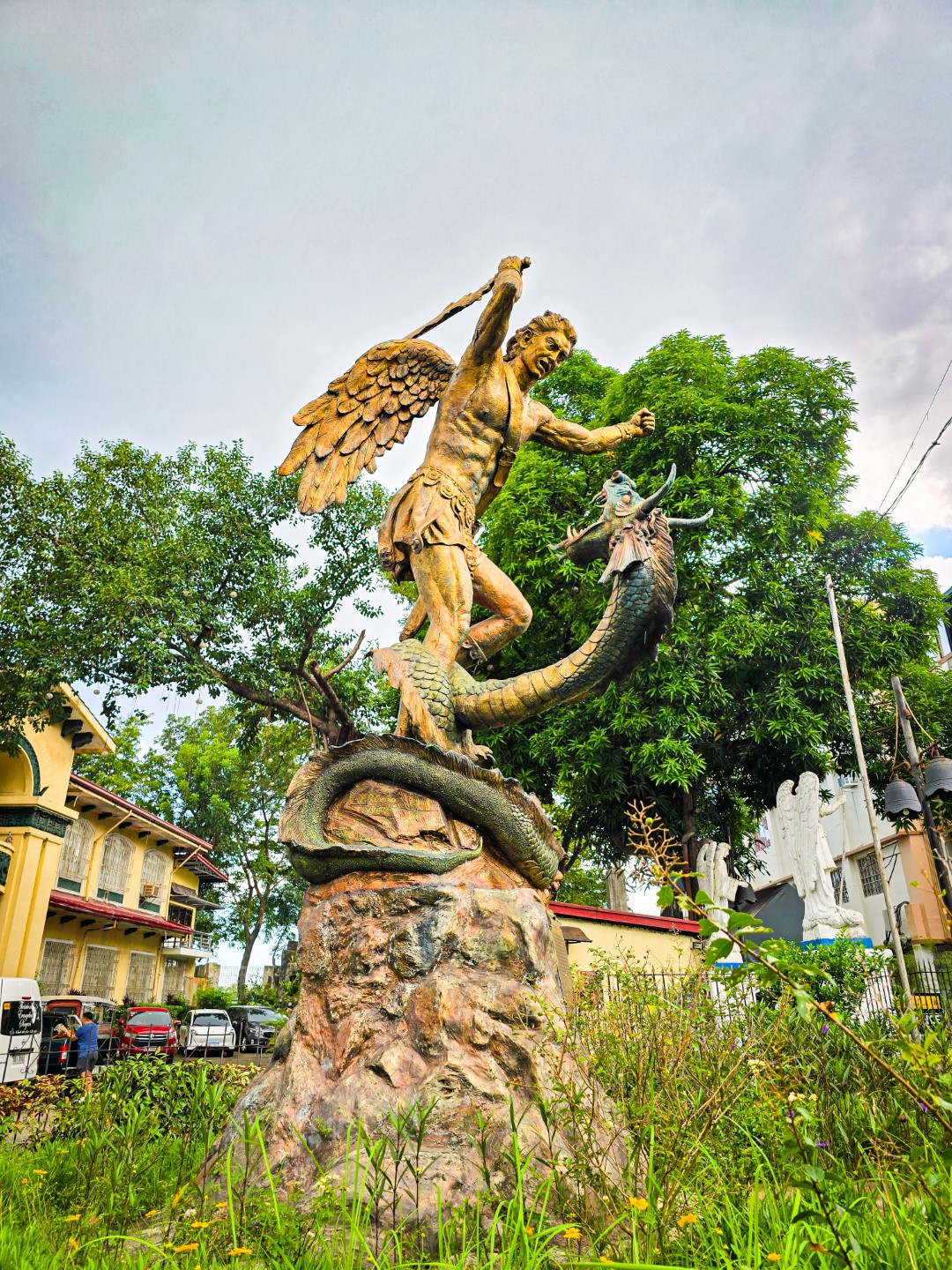
Visiting the two palace churches which happened to be both national shrines opened an insight to a Filipino reality: even the most powerful institution in the country is cradled in faith. It is not uncanny that Malacañang, the seat of power, is nestled between two houses of worship and prayer.
On one side of the palace is a church dedicated to St. Jude, the patron saint of impossible cases, giving hope to the desperate while at the same time sending the message that the power of the man in the fortress is measured by the amount of service extended to the same populace who cling to the divine for their needs. On the other side is a church dedicated to St. Michael, the Prince of Heavenly Hosts, protecting man from the snares of the devil while at the same time reminding the one who sits in the palace of the mortality of human power, the limits of which have been ordained by heaven.
Faith flanks the fortress, and in so many times in the history of this nation, many times has it been proven that those who act like God ends nowhere near earthly glory.


 Renegade Junctures
Leave a comment