

It only makes sense that our first day in Tawi–Tawi was mostly spent in the town of Bongao. It is the capital town after all, the center of commerce and the center of governance. It hosts important landmarks, and as the capital, it has the prime role of hosting the provincial capitol building.
Bongao got its name from bangaw (pronounced as ban·gaw, not ban͠gaw) which is the Sinama and Tausug term for the bird heron, which used to abundantly inhabit the place. Herons are known fish hunters, frequenting rivers, lakes and coasts, and are reputable for their vigilance and patience,
The sky was still gloomy when we left the MSU Tawi–Tawi campus. Apparently, the wet welcome was not over yet. The scattered rain showers continued until we got to Euzel Souvenir Shop. The Aura Adventures gang went down for a quick stop to check on remembrance items. Ran and I just got matching Tawi–Tawi caps to at least buffer the showers above our heads.


Matching caps! Actually, matching everything!
We didn’t mean it, but the colors of the caps we chose were reminiscent of the hats we bought when we were in Batanes. It was as if we are being reminded of how far long we have gone, from the northernmost province of the Philippines, we were then in the southernmost. The experience just got extra meaningful.

Batanes and Tawi–Tawi: two years apart.
We continued on our journey as soon as the group has finished buying souvenirs. A little less than half an hour on the road, we found our service vehicle climbing a hill. A little more push, and we reached the provincial capitol of Tawi–Tawi.


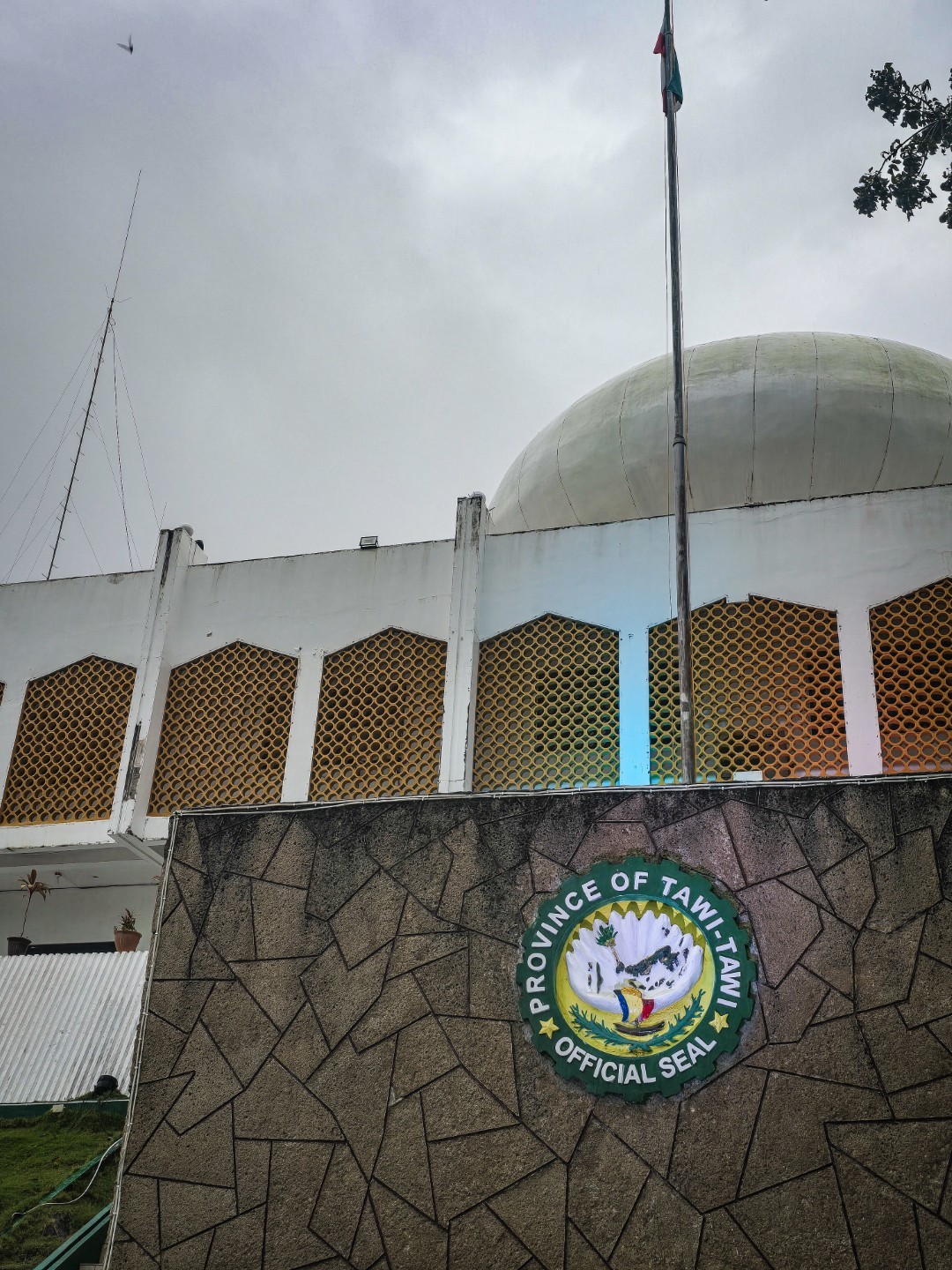
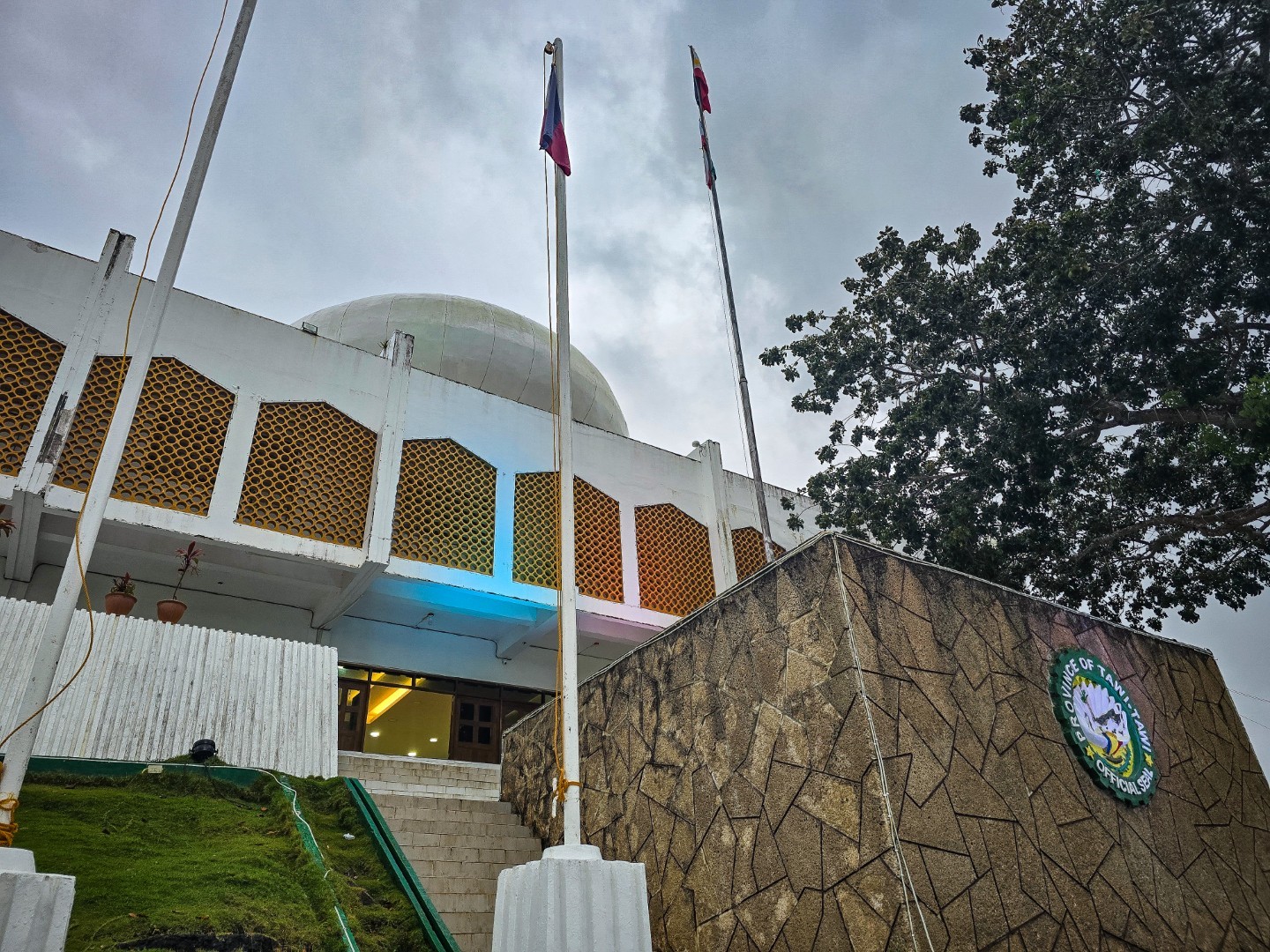

The provincial capitol of Tawi–Tawi.
The provincial capitol building stands on the top of a hill in Bongao overlooking the sea, as if a giant heron nestled on the top of the hill watching the islands as a sentinel, vigilant as ever. The capitol would have not been in such a location if Bongao was not made the capital in 1979, as when the province of Tawi–Tawi was established in 1973, the designated provincial center was in the town of Panglima Sugala, then called Balimbing.
The rain that started since we left Ate Sidang’s homestay became more pronounced on the top of the hill. That, however, did not deter us from taking our pictures with the capitol’s façade at the background.


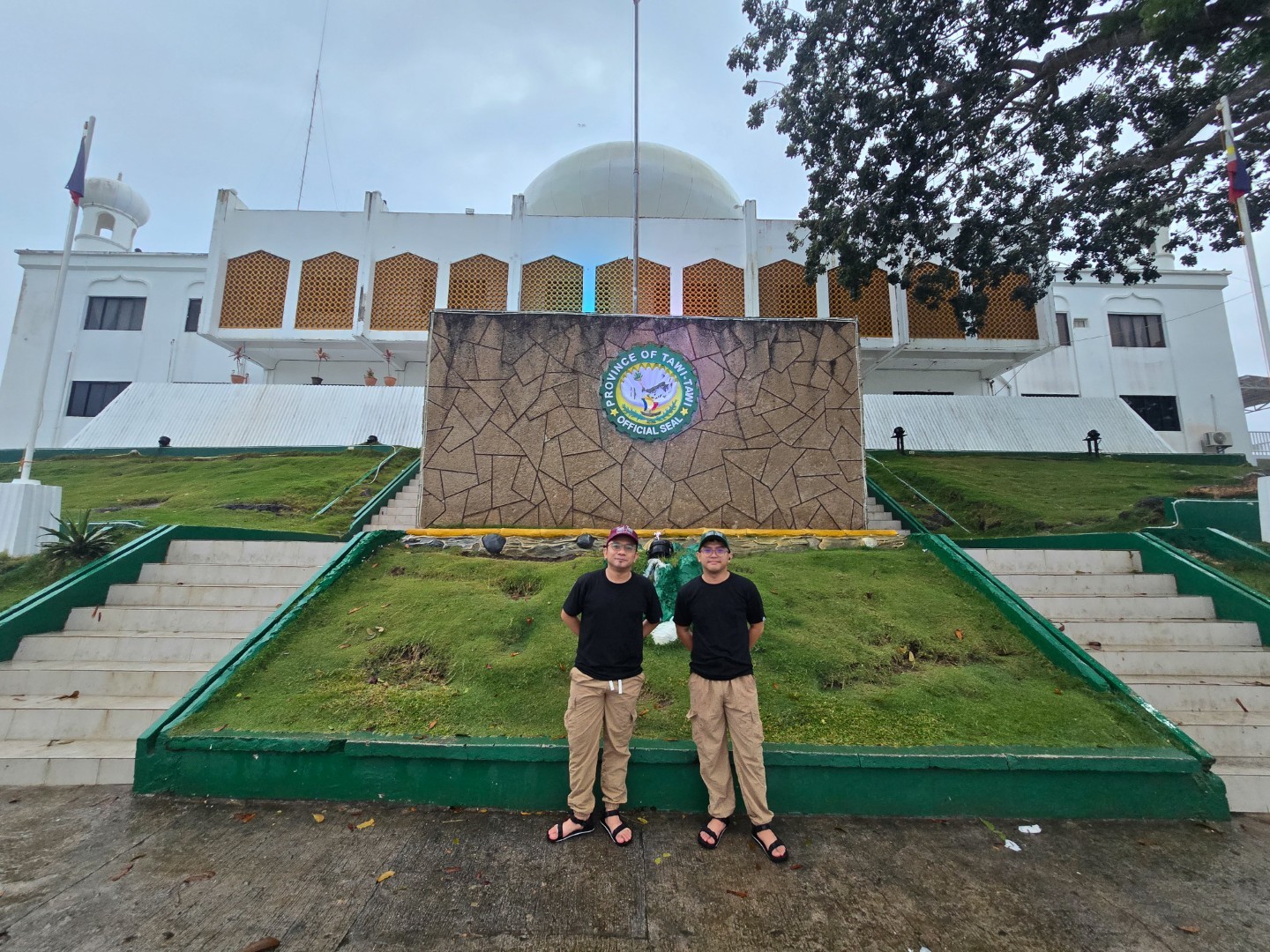
In front of the capitol building with its distinctive Islamic architecture.
Right in front of the capitol is a view deck that allows one to see Bongao against the backdrop of the sea and sky. It would have included the mountains from a distance, but the weather prevented us from seeing far beyond the horizon. It was still worth picture taking, nonetheless.


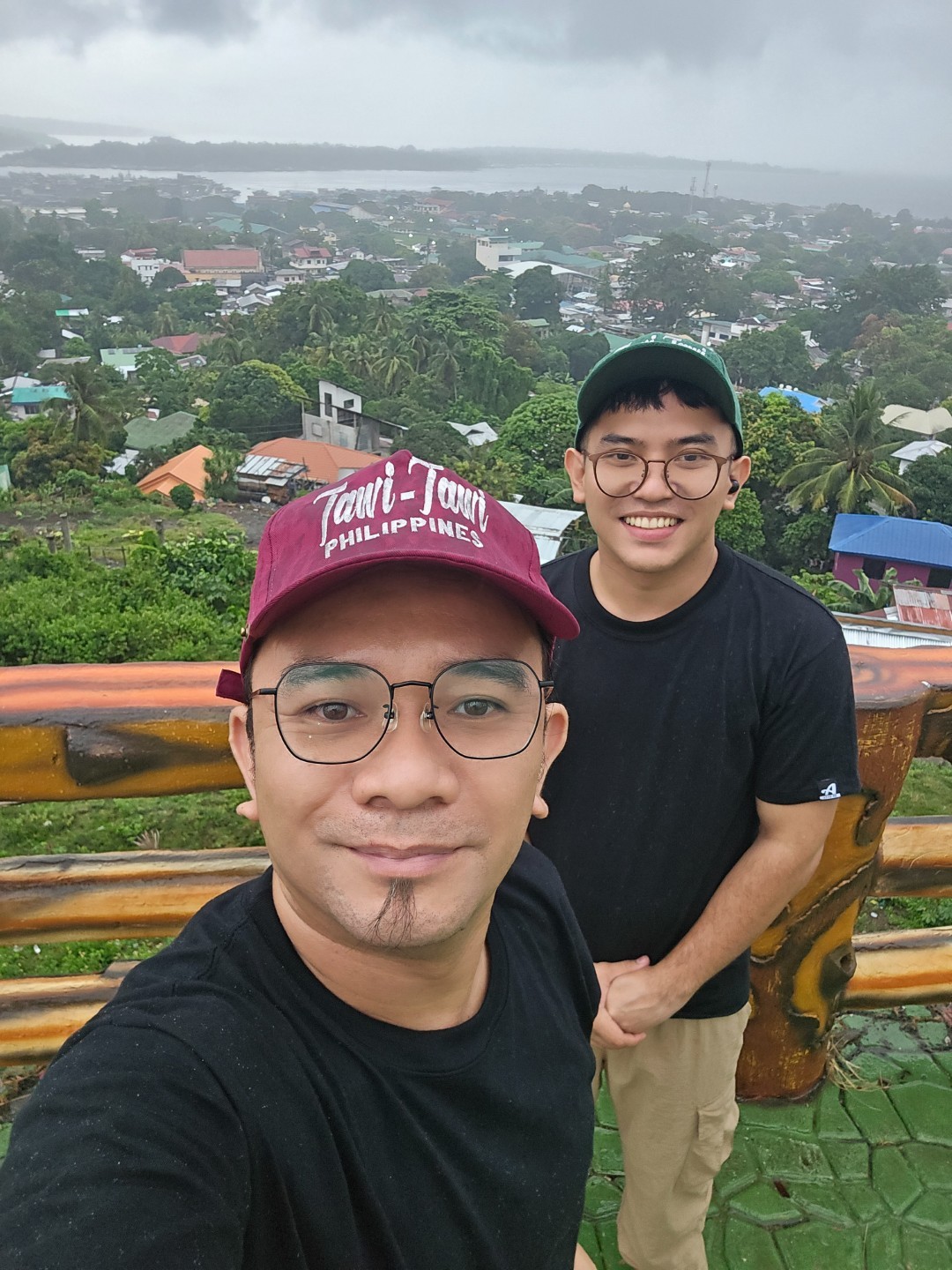

Atop the Capitol Hill in Bongao.
The rain got a little stronger as we were taking photos by the view deck, and that was the signal that we need to board our service vehicle. Our visit to the capitol was drawing to a close. It was actually our last official stop in the itinerary, but little did we know that we would soon have a split-second decision in downtown Bongao. It was a decision made renegade junctures style.
That decision eventually made us gain another place to tick in our list, and it would be a very meaningful one.


 Renegade Junctures
Leave a comment