
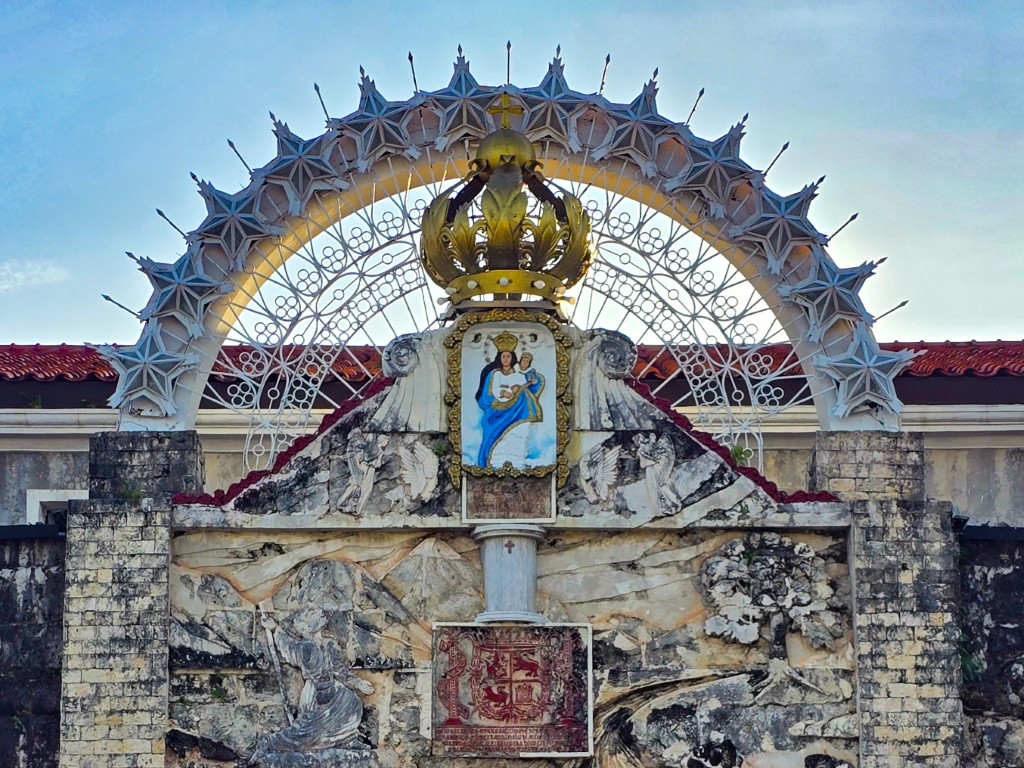
The Marian title of Our Lady of the Pillar honors what is considered the first apparition of the Blessed Virgin, which is unique as the said apparition happened while the Mother of the Lord was still alive, living in Jerusalem. According to the accounts of the apparition, while the Apostle St. James the Greater was feeling downtrodden because of the difficulties he encountered in preaching in what was then the City of Caesaraugusta in Roman Hispania, the Virgin appeared to him atop a pillar, accompanied by a myriad of angels. The apparition consoled and encouraged St. James, who eventually laid down the foundation of the Church in Spain. Mary under the title of Our Lady of the Pillar henceforth became the Patroness of Spain, while St. James the Greater has become its Patron Saint.
The deep devotion of the Spanish people to the Blessed Virgin under the title of Our Lady of the Pillar, or Nuestra Señora del Pilar, is one of the reasons why when the Real Fuerte de San José was rebuilt in 1718, it was renamed to Real Fuerte de Nuestra Señora del Pilar de Zaragoza. In 1734, a bas-relief of the Virgin was placed on the eastern wall of the fort. The eastern wall is presently an outdoor shrine where regular prayers and masses are held, providing a place for spiritual solace for those who seek some peace and quiet.
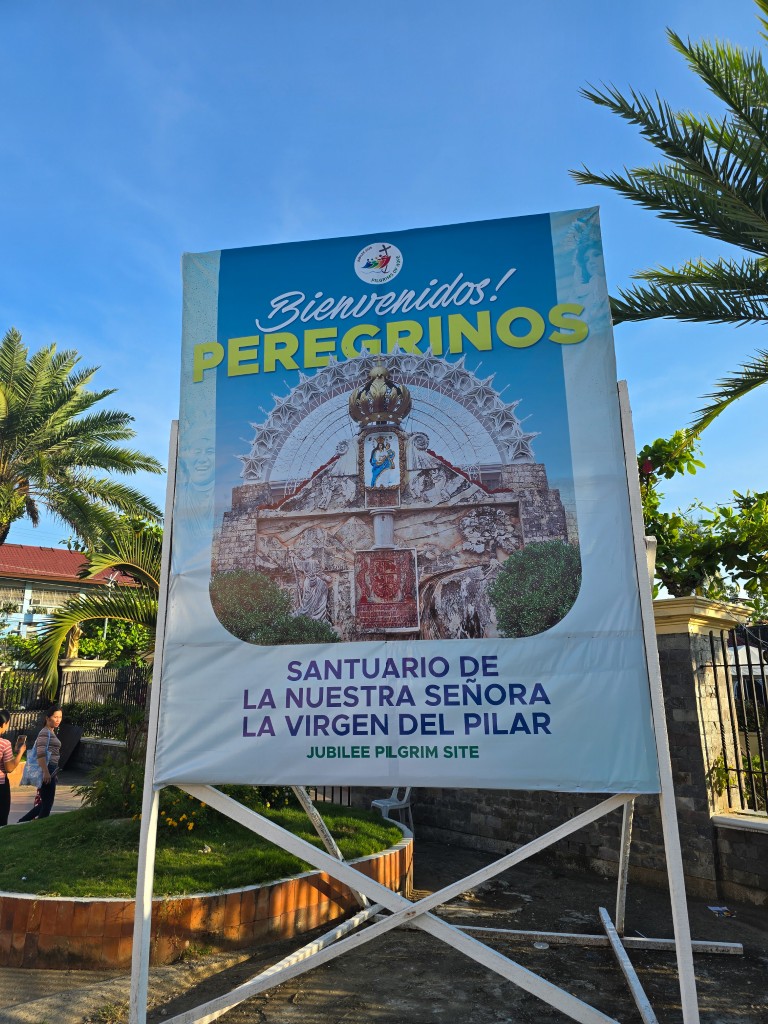

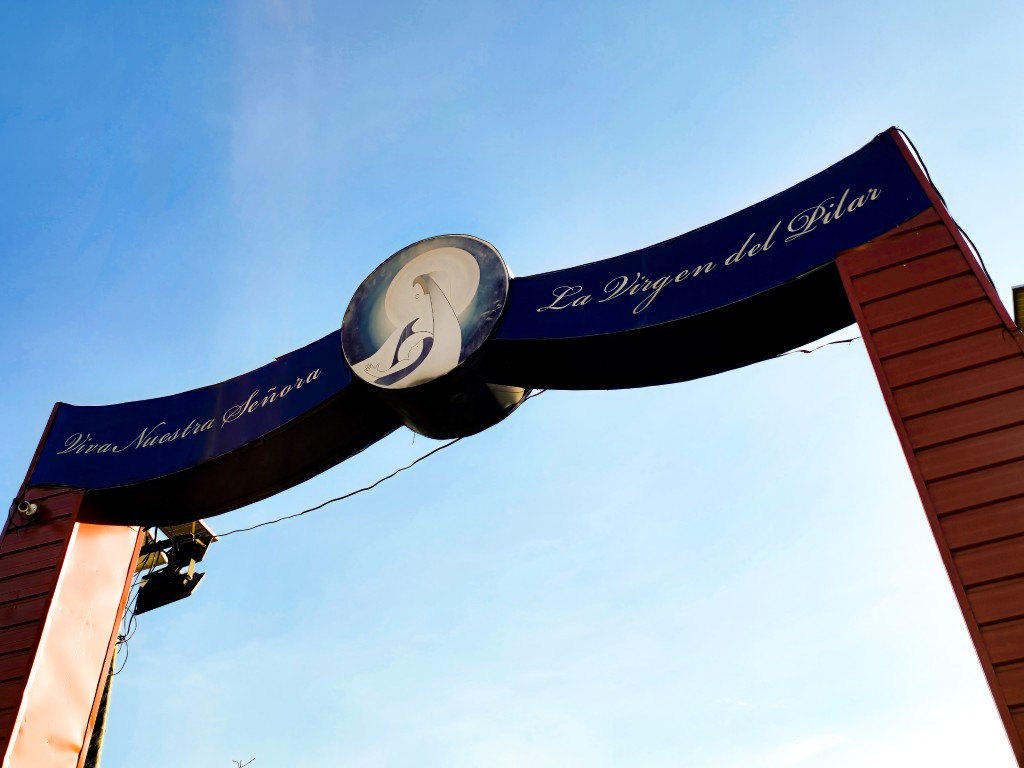
The welcome signage and arch leading to the shrine.
The devotion to Our Lady of the Pillar in Zamboanga has been fortified through the years by stories of apparitions and miracles in the fort, much like the circumstances surrounding its patroness way back during the infancy of Christianity. One of the most popular apparition accounts is that of the sentinel in the fort, who in 1734 reportedly saw a woman approaching the city gates. The soldier asked the woman to stop, but feel down to his knees in tears upon realizing who the woman was. There was also an account that after a strong earthquake in 1897, the Virgin appeared over the Basilan Strait where she raised her right hand, as if telling the rushing waves to stop. Such reported apparition was then attributed for the safety of the peninsula for what would have been a devastating catastrophe.

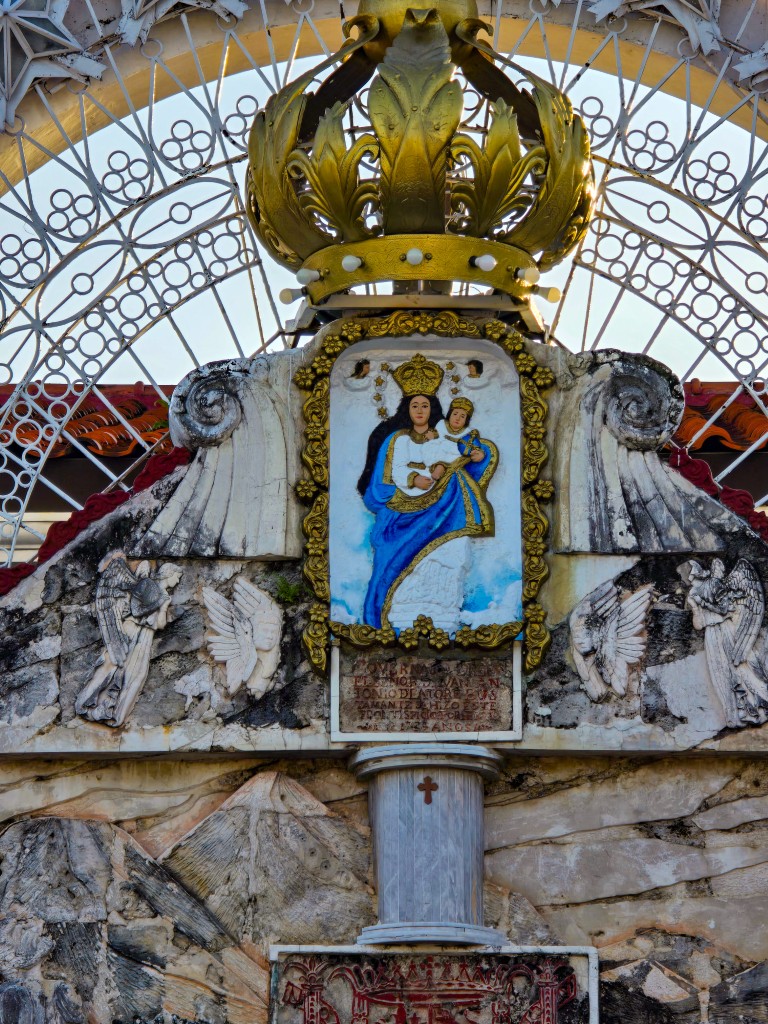

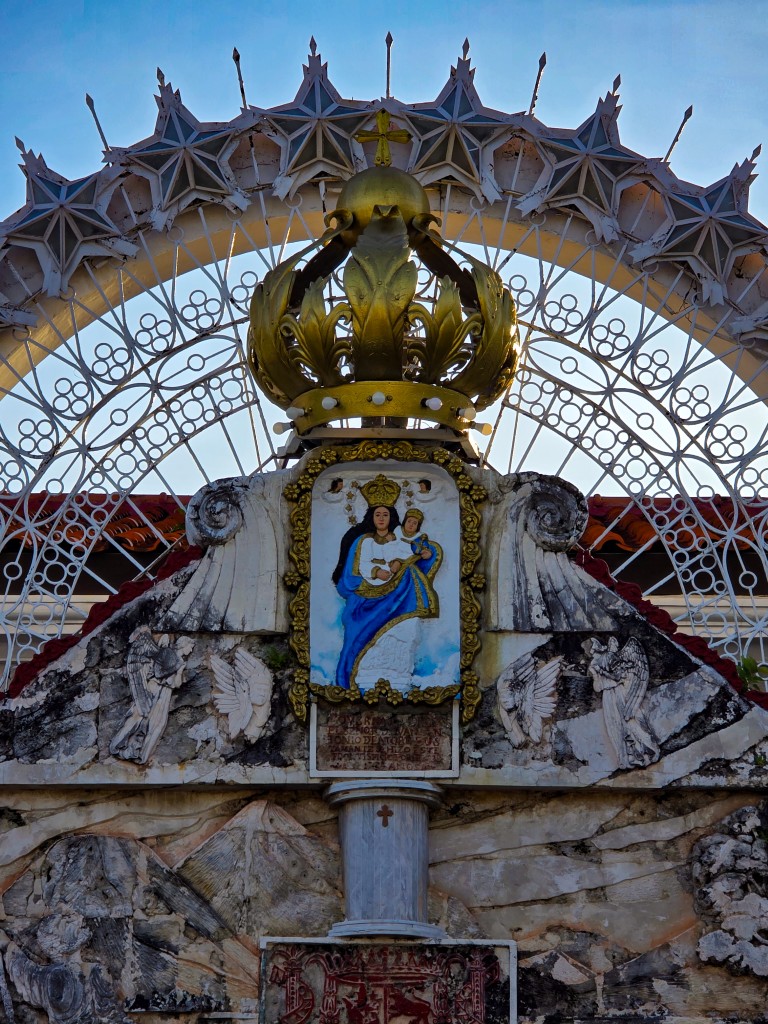
The sanctuary of the shrine with the bas-relief image of Our Lady of the Pillar at the top of the wall.
Despite having no official pronouncement from The Vatican on the veracity of such accounts, the Church nevertheless acknowledged the important role that the image atop the fortress wall played in deepening the faith of the Zamboangueños. In 1960, during the pontificate of Pope St. John XXIII, the bas-relief was granted a canonical coronation, making it the first and to date the only canonically crowned image in the island group of Mindanao.
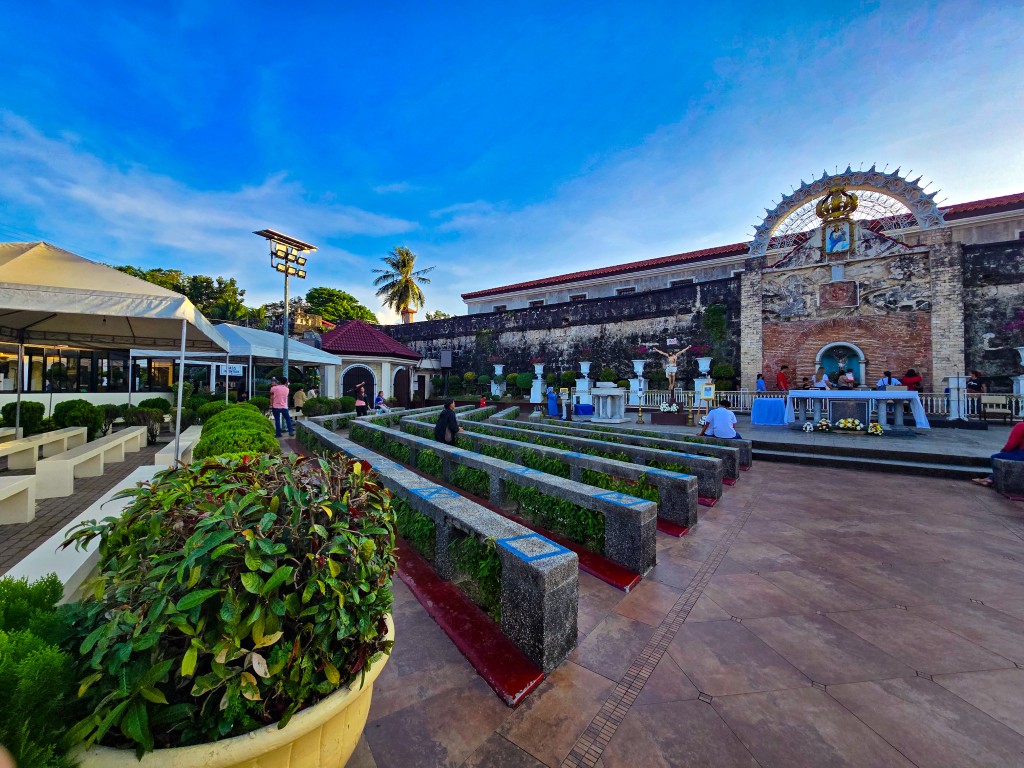


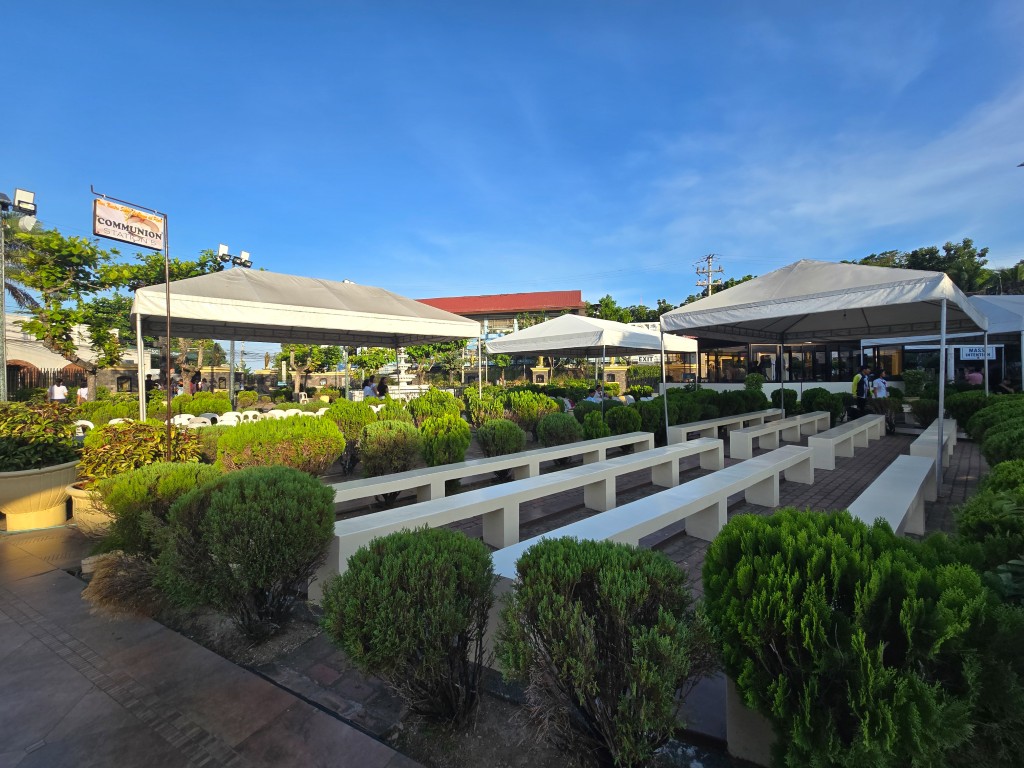
The unique outdoor shrine of Our Lady of the Pillar.
We had a very limited time when we were in the shrine, but the time that we got was just enough for us to say some prayers and to approach the sanctuary. Apart from the crucified Christ in the middle of the sanctuary, there was also a reliquary embedded in the wall. Turned out it was the relic of St. Charles Borromeo, a cardinal-saint from the 16th century whose patronage includes catechists, catechumens and seminarians, and even some local churches and parishes.


The sanctuary crucifix and the relics of St. Charles Borromeo.
Before heading out to rejoin our group, we took some extra souvenir snaps of the shrine.


The carillon bells of the shrine and the dovecote that houses the pigeons that freely roam around the area.
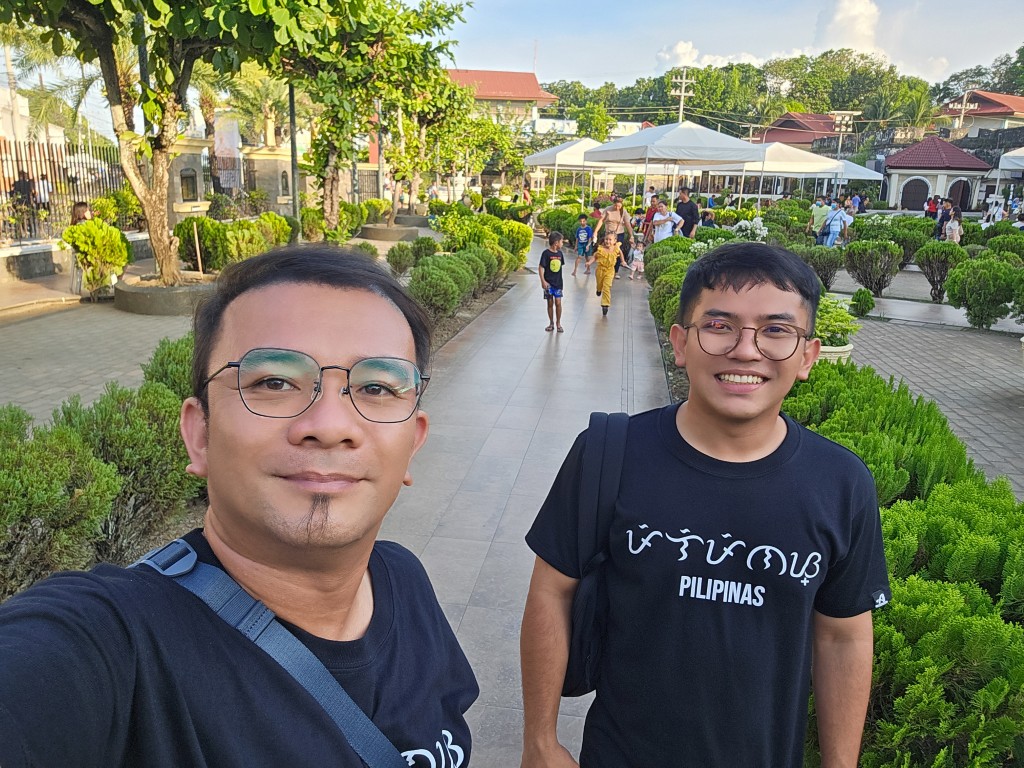
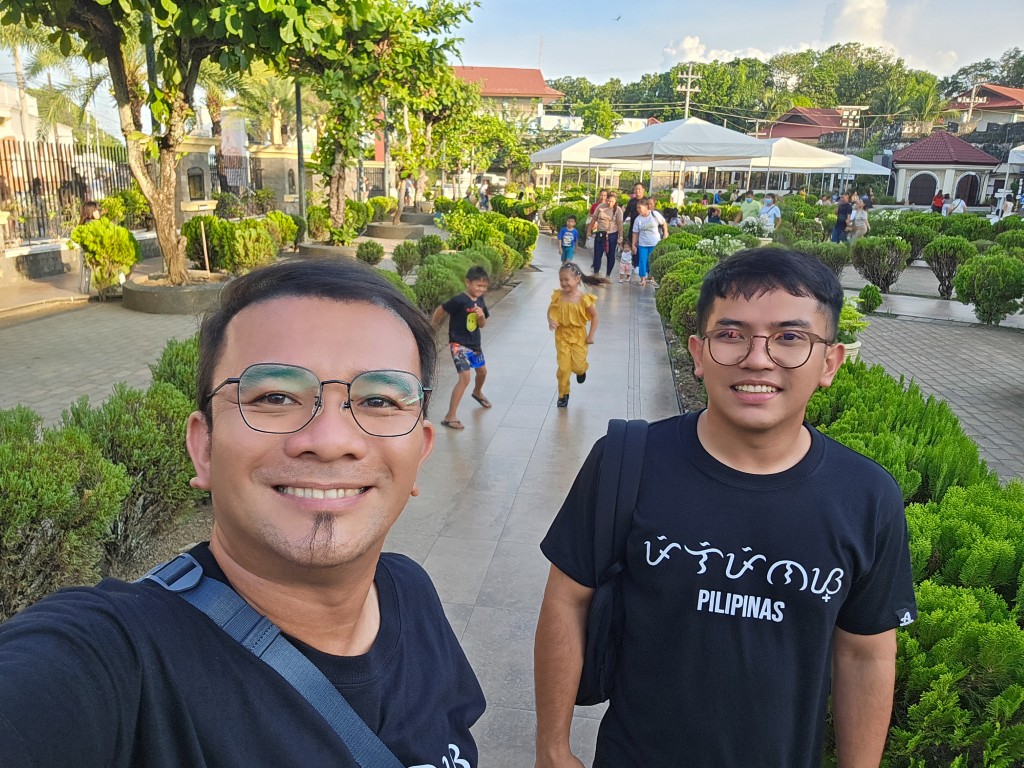
A souvenir twofie to say we were really here.
Thinking about it, the Shrine of Our Lady of the Pillar is the heart of Fort Pilar and not its bastion of bricks and mortar. The Virgin’s title, after all, lent its name to the fort and not the other way around. Her maternal protection is invoked first by believers anyway, before seeking refuge to what human fortifications can offer.
The fort reinforces defenses. The shrine strengthens the soul.


 Renegade Junctures
Leave a comment