
We left Dakak at 06:00 PM and promptly returned to our accommodation. After we have taken our dinner courtesy of the inn, it was finally time to rest for the night. Unlike the previous days when waking up early was non-negotiable, we were told by our Aura Adventures organizers that we may wake-up as late as 08:00 AM the following morning. Extra time to sleep? What a relief.
Before I could snuggle in bed, however, I realized that we were already running short of cash. It was at that point that I decided to take an evening walk down the city plaza and look for an ATM facility where I can withdraw some money. The inn is conveniently located within a walking distance from the city proper, so no worries. I went on my own for some walk of solitude; besides, Ran was busy washing off some small clothing to lessen the load of our laundry that has been piling in our backpacks. Our trip was a backpacking, after all.
I was able to locate an ATM facility inside the Jose Rizal Memorial State University campus, after the school’s security personnel kindly showed me the way. Having accomplished what I came to the downtown for, I took a different route going back to the inn, passing through the plaza. As if providential, the church was open and empty: a perfect opportunity for some silent prayerful moments and picture-taking without the usual obstruction.


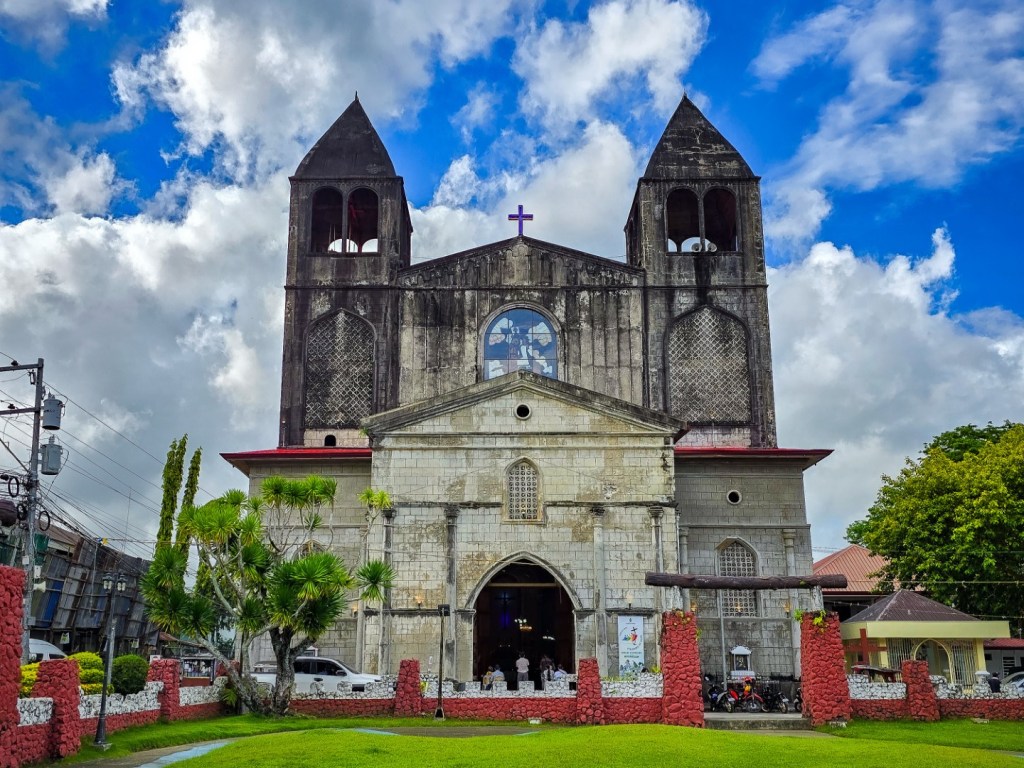
The night facade of the St. James the Greater Parish, Dapitan City.

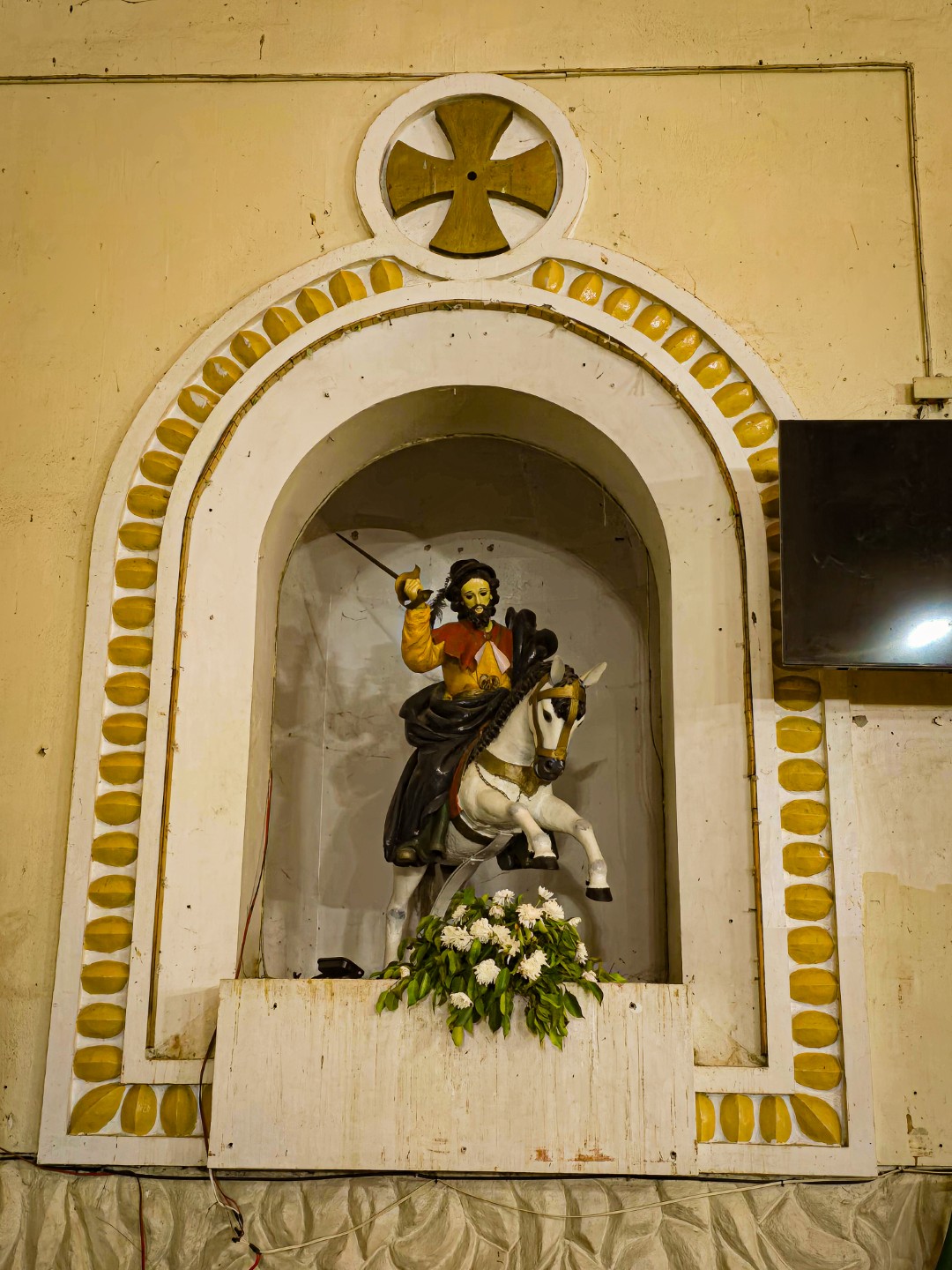
The crucifix at the sanctuary and the image of the Patron Saint of the City, St. James the Greater.
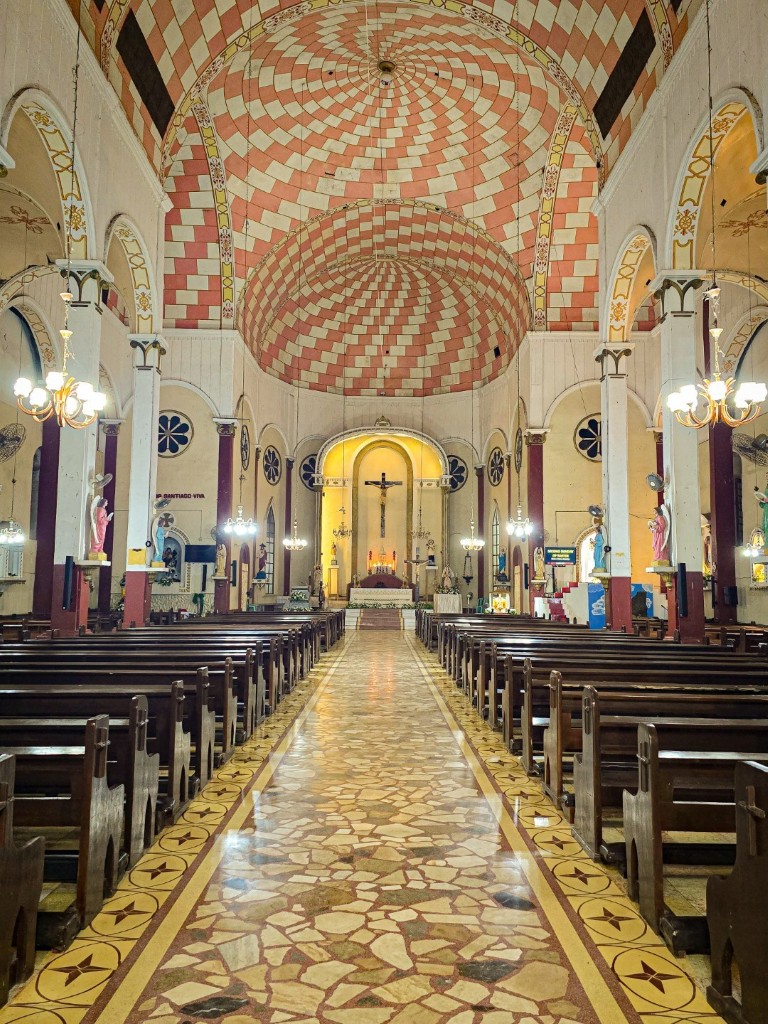
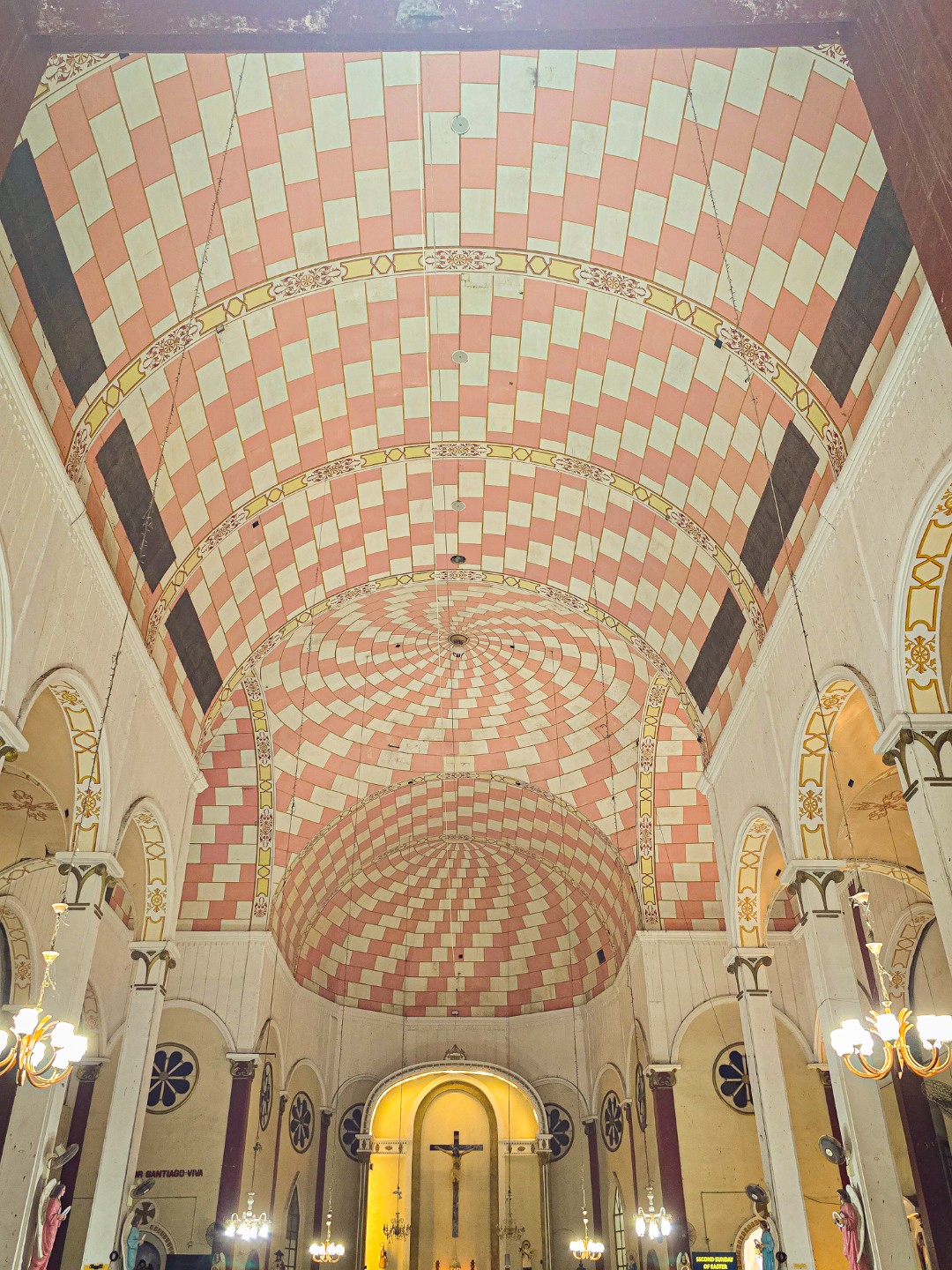
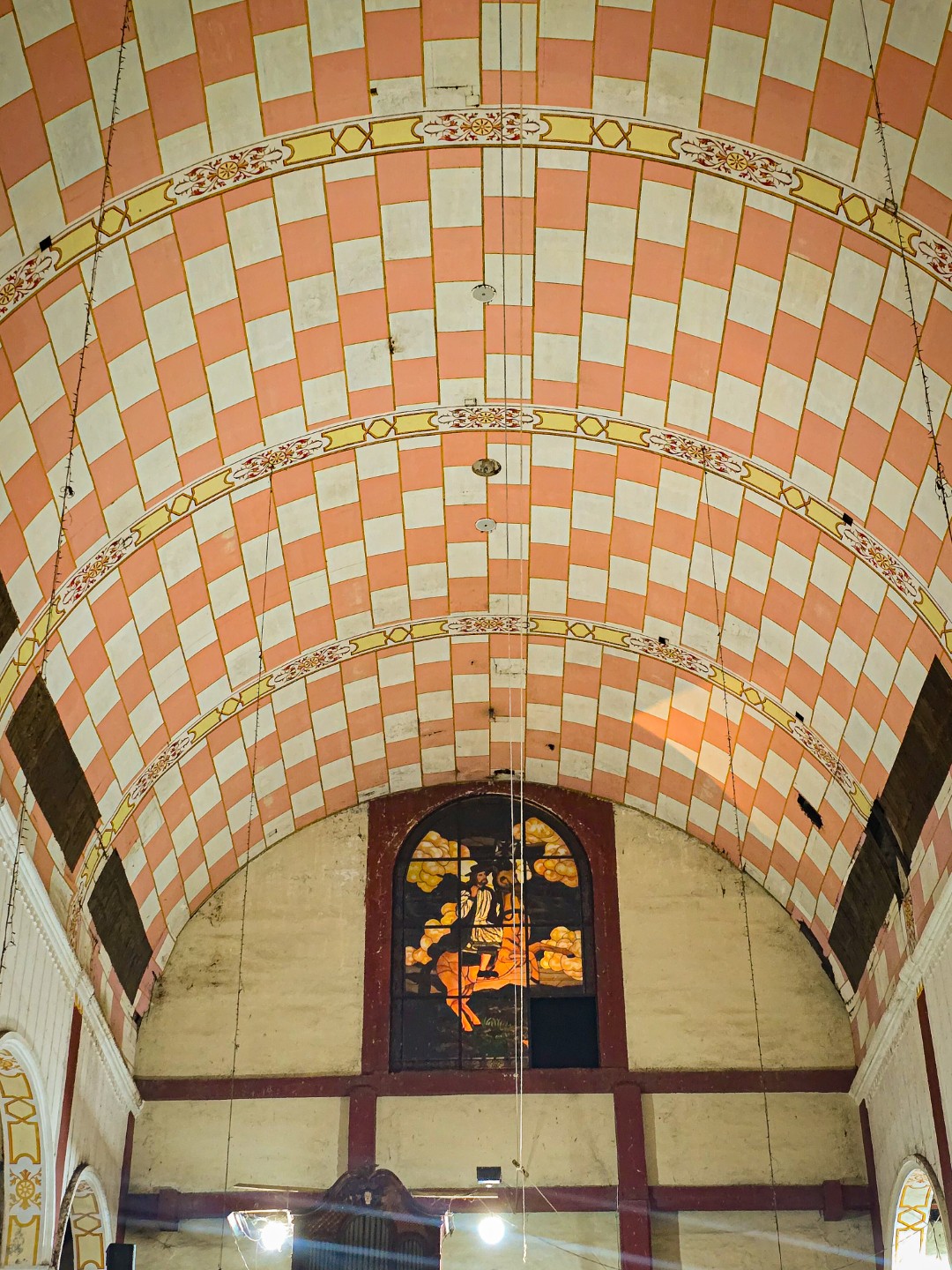
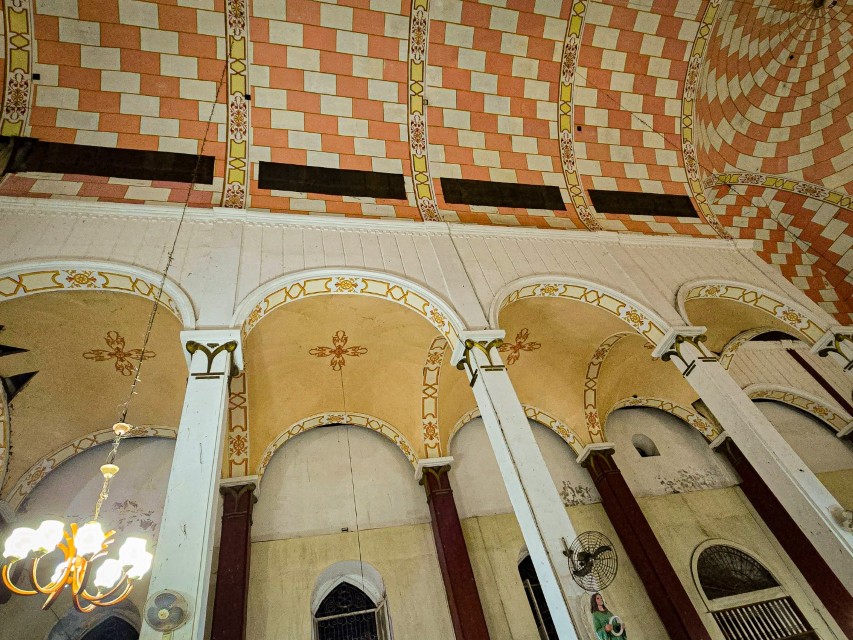

The patterned ceiling of the church.

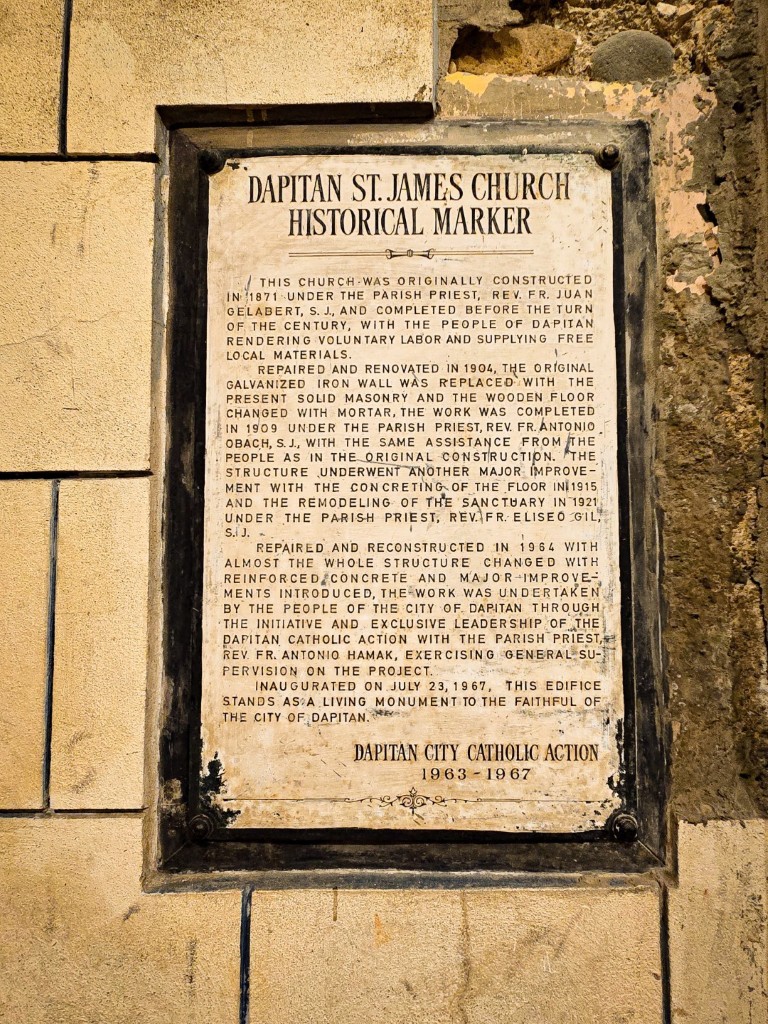
Markers inside the church: one marking the spot where Rizal used to stand when attending the Holy Mass, the other offering a narrative of the history of the structure of the church.
The first parish church of Dapitan was founded by the Society of Jesus, or the Jesuits, in 1631, four years ahead of the formal foundation of Zamboanga itself. The Jesuits administered the parish until 1768 when they were expelled from the Spanish Empire following the Suppression of the Society of Jesus, during which the Augustinian Recollects took over. When the Jesuits were eventually restored, they once again took charge of the parish in 1870. In 1871, the present structure of the church was built.
After spending a few minutes inside the church, I took a quick walk and explored outside where I found two rather interesting images. One was the relief bas of Our Lady of Mt. Carmel on the sinister side of the church where a place for votive candles is located. Another was the statue image of St. James the Greater in his iconic Santiago Matamoros depiction.


Nstra. Sra. del Carmen, in popular depiction of rescuing souls from Purgatory through the brown scapular devotion.

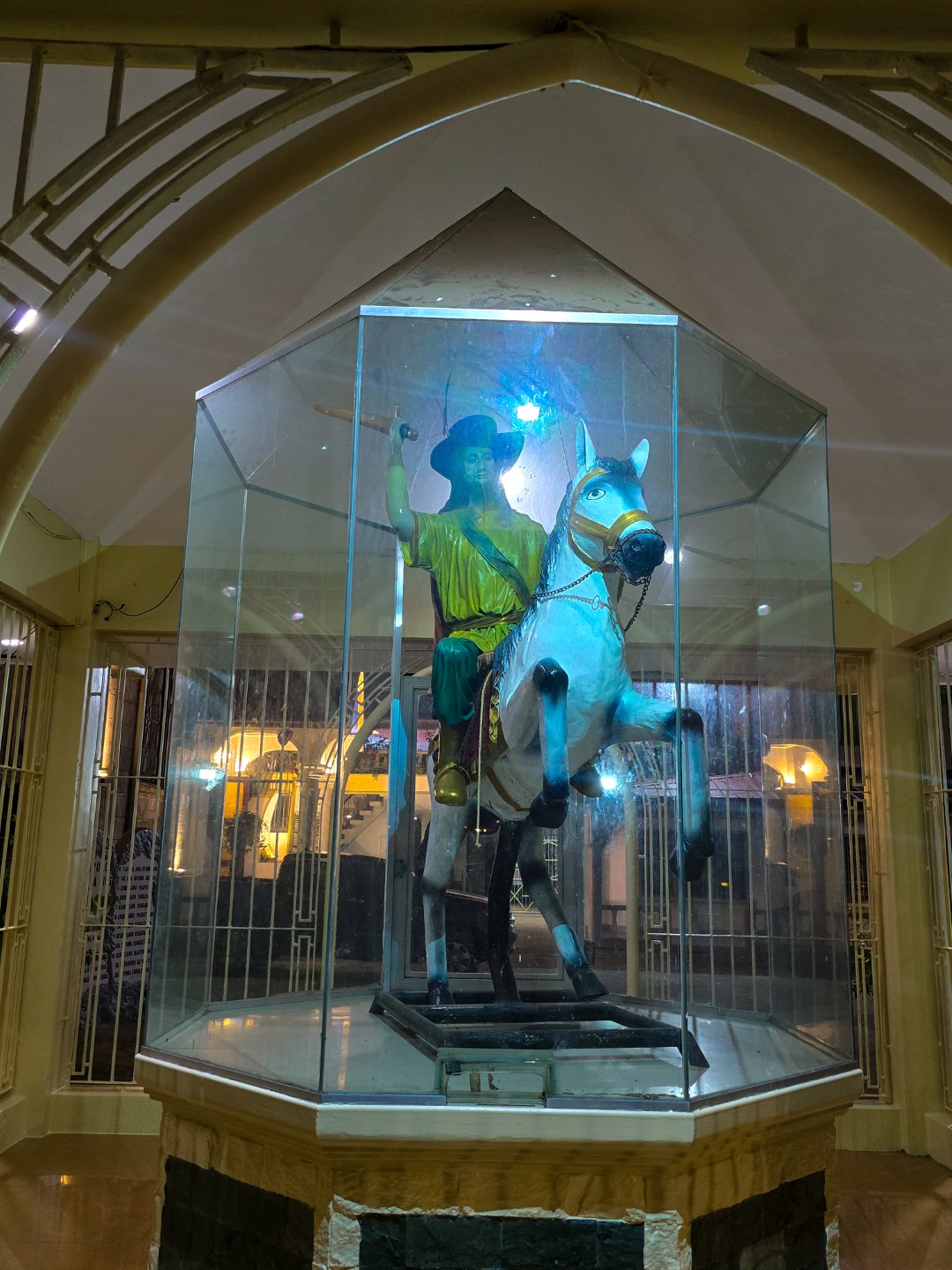
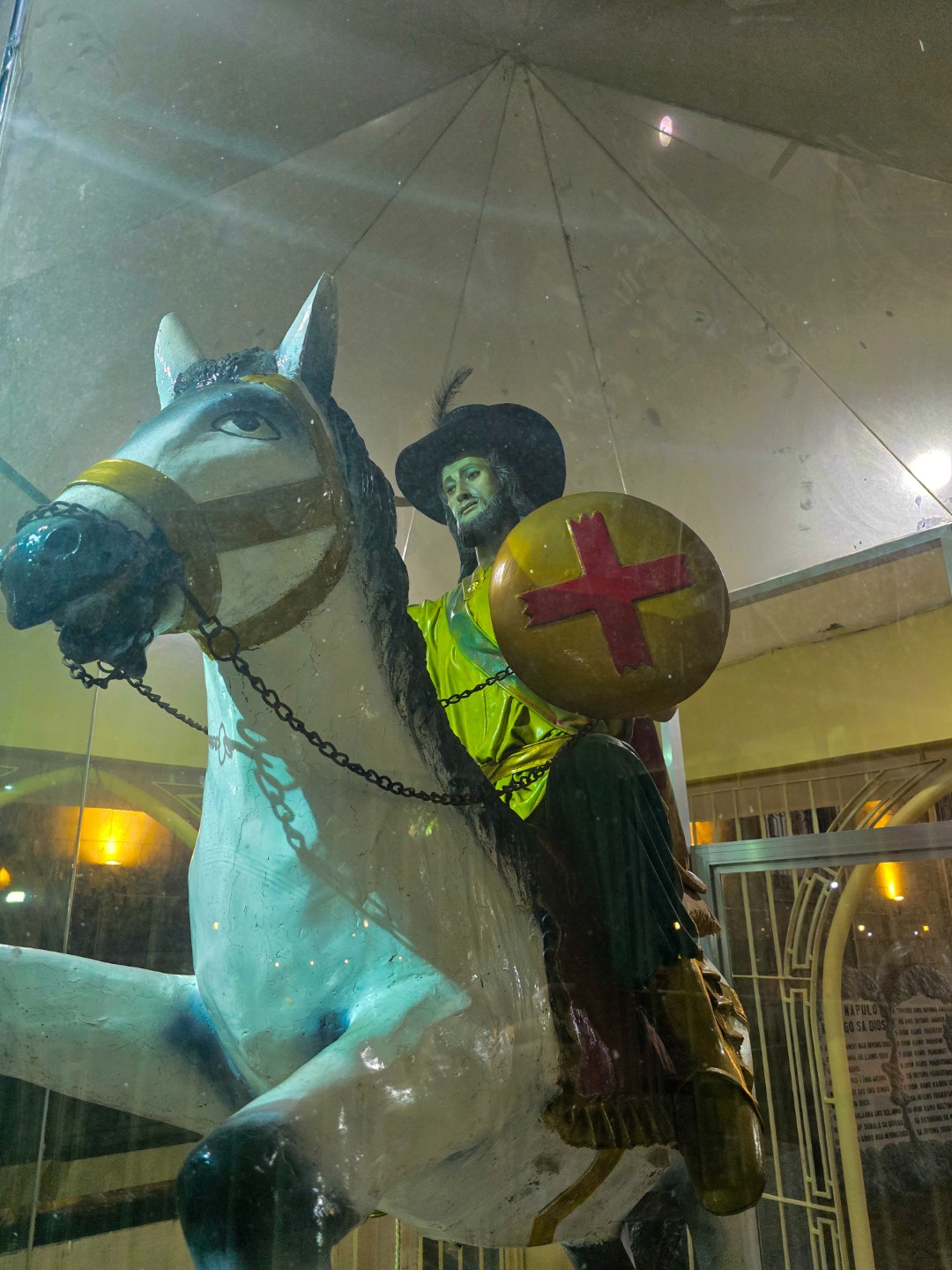
Santiago Matamoros, Patron del Ciudad de Dapitan.
It would not take a long walk from the church back to the inn, and I was back roughly around 41 minutes since I left. It was a meaningful solitary walk, providing just enough window for me to be grounded with the historical and mystic significance of where I was.
Then morning came.
The Parish of St. James the Greater was included in our official itinerary. I was thankful, however, that I already paid it a visit the night before. Our second day in Zamboanga del Norte happened to be a Sunday, and as such, the Holy Mass was being offered and there were a lot of Mass goers.
The parish church is not only notable though for its ongoing role in the life of the faithful from the time it was built. Apart from being a continuing institution of faith since antiquity, the church of Dapitan hosts a historically valuable creation by no less than Jose Rizal himself. In the church plaza, right in front of the church, one will still see the landscaped relief map of Mindanao created by Rizal during his exile in Dapitan.
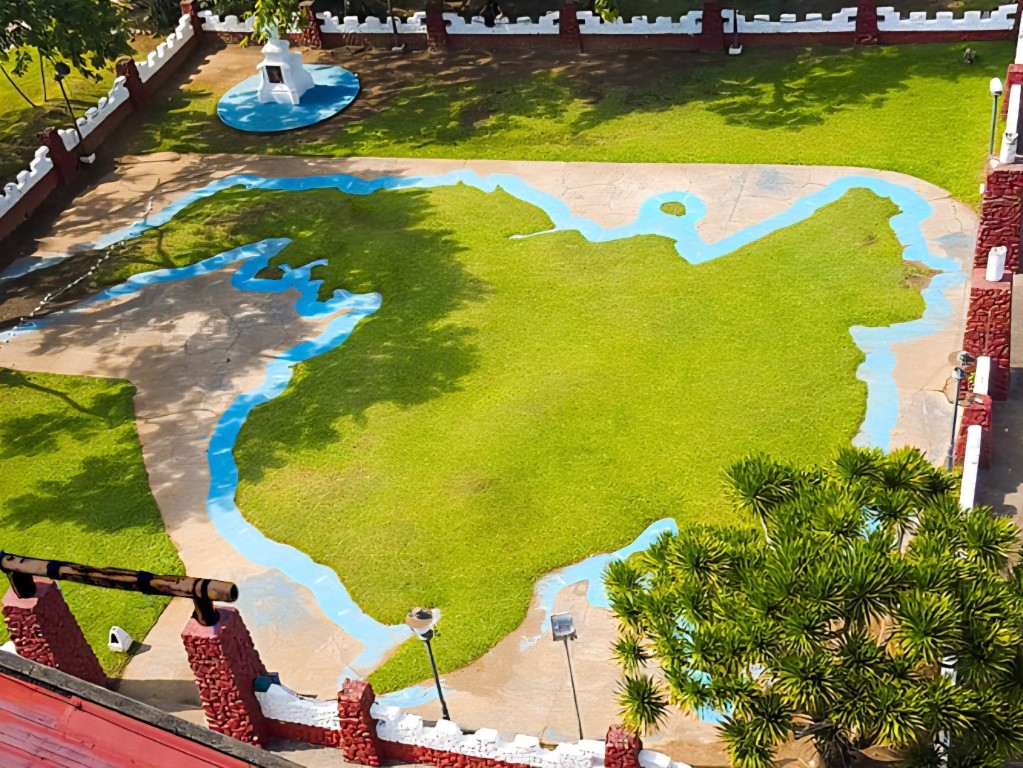


A ground level view of the relief map and its commemorative markers.
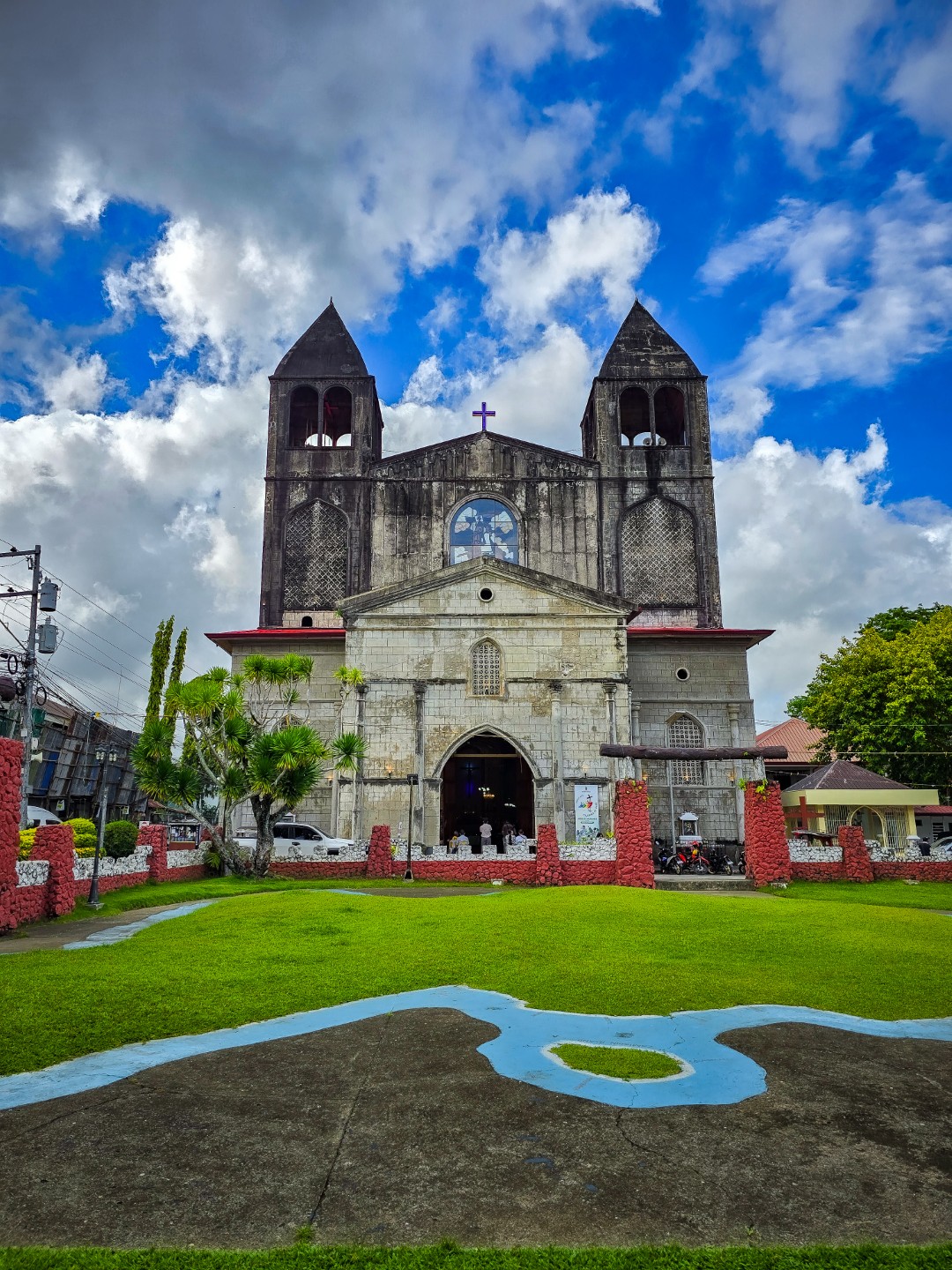
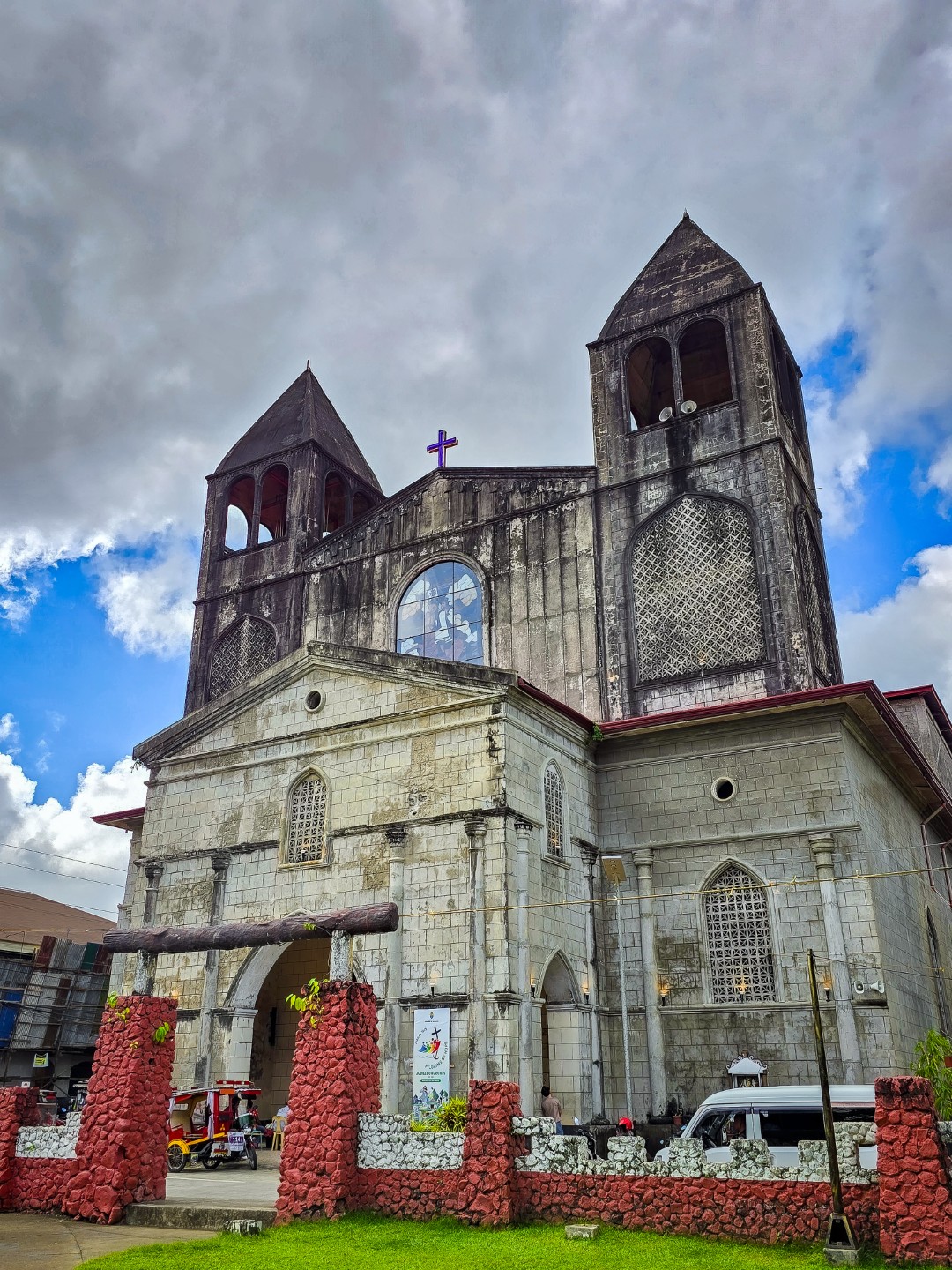
The façade of the church as seen from the relief map area.
Said to have been based on the Fr. Pedro Murillo Velarde Map that was published in 1734, Rizal worked on the project just shortly after he arrived in Dapitan, from August to September 1892. Together with Fr. Francisco de Paula Sanchez, Rizal’s teacher in Ateneo Municipal de Manila, he worked on a map that would be easily understood by the locals, hence serving as a visual tool in education. The relief map was declared as a national cultural treasure by the National Museum of the Philippines in 2005.
While we were really standing in Mindanao since we arrived until when we were standing on the church patio in Dapitan, the relief map gave us the perfect opportunity to take the pun to another level. We were standing on Mindanao.

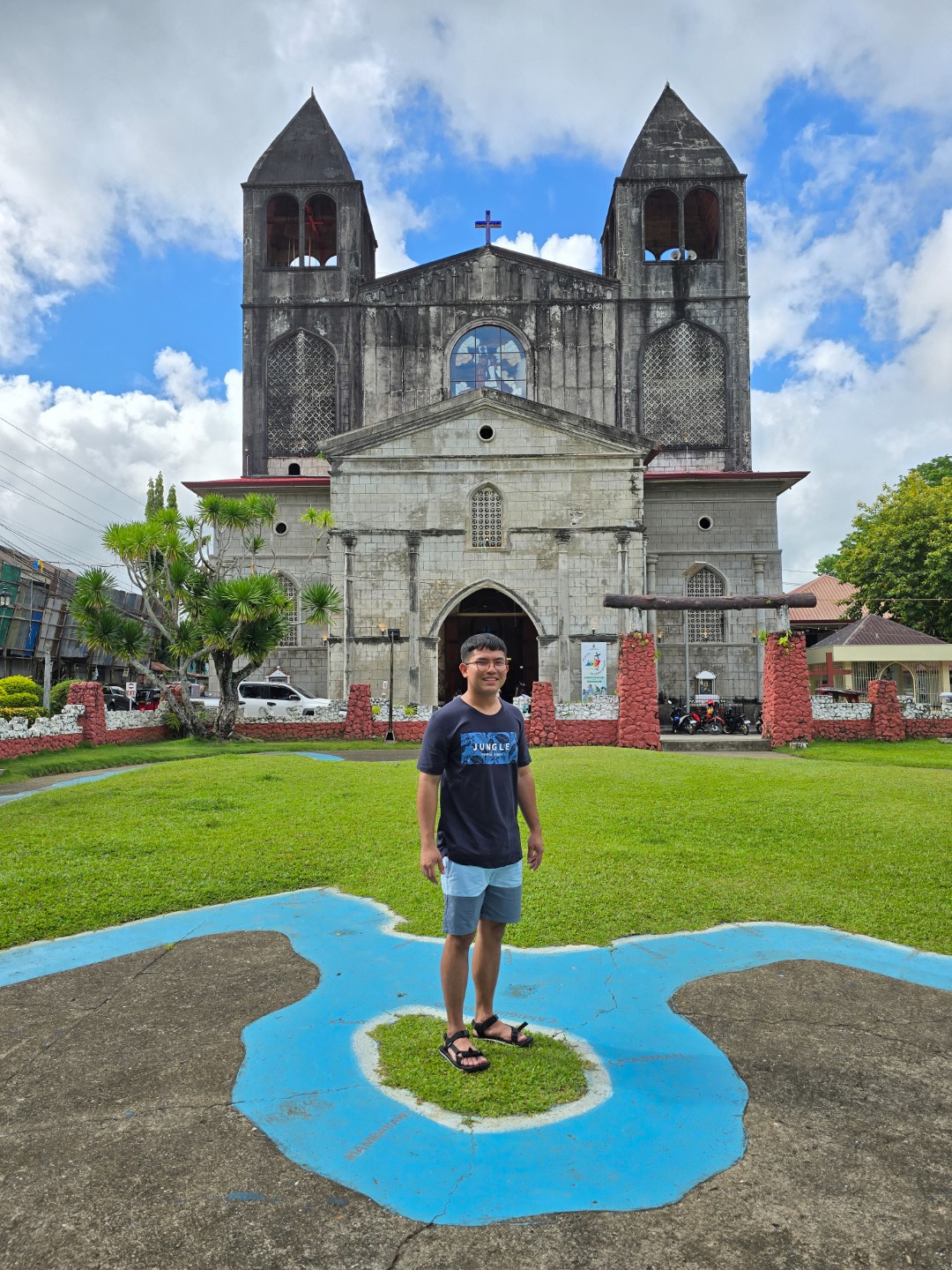


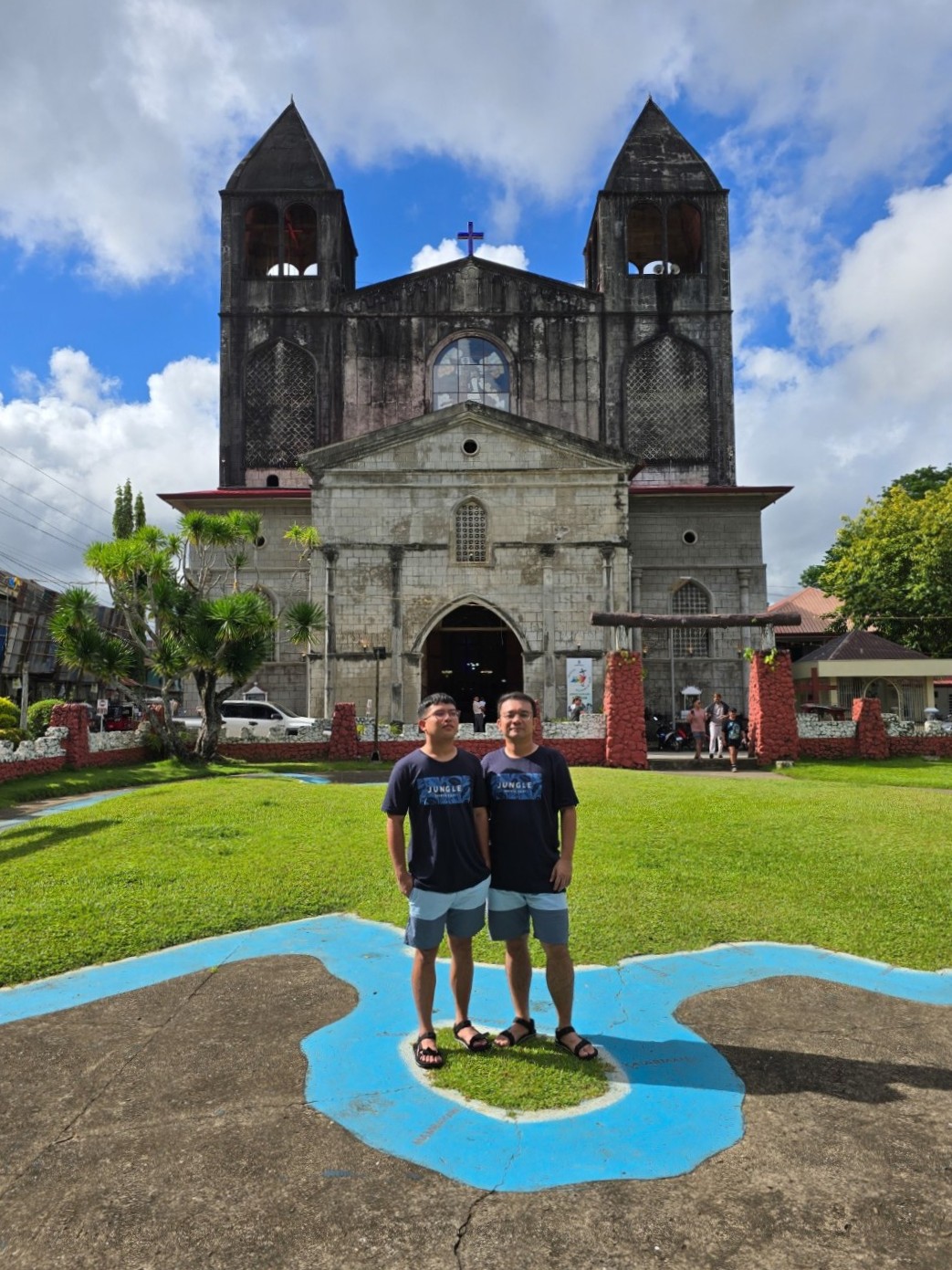
We were on Camiguin!
One may not know exactly how Rizal felt about his banishment, but there is no questioning that The Great Filipino did not allow for those four years to be spent in futility. His relative lack of freedom did not deter him from being a valuable part of the community. As the citation on one of the markers for the relief map reads: Jose Rizal spent four years of banishment in this town, freely devoting his energy, intelligence and property to the economic and social needs of the district, and his skill as engineer, farmer, teacher and surgeon for the benefit of the community of which he was an involuntary resident.
So pass the days of my life in my obscure retreat;
Jose P. Rizal, Mi Retiro, 1895
cast out of the world where once I dwelt: such is my rare
good fortune; and Providence be praised for my condition:
a disregarded pebble that craves nothing but moss
to hide from all the treasure that in myself I bear.
Rizal’s exile in the then town of Dapitan ended on 31 July 1896, when his request to be deployed to Cuba as a military doctor was approved. En route, however, he was arrested and sent back to Manila. Five months later, the Martyrdom in Bagumbayan would forever be etched in Philippine history.



 Renegade Junctures
Leave a comment