
Downtown Jolo was not in our itinerary. Despite that, we dropped by the town center as our companions in the group would want to check out a local shop to check for souvenir items. There is nothing much in Jolo in terms of tourism-related items. For a province torn by conflicts and wars through the decades, tourism bloomed rather late and remains in its infancy. We hence headed to one of the few shops in Jolo, if not the only one, that sells souvenirs, Simply Joy Boutique. We paid for some ref magnets featuring Sulu, then headed out. We would bolt out from the group.


Downtown Jolo, 2025.
To be clear, straying from the group is not recommended in Sulu. In our mind though, we would just do a very quick detour, very much like the one we did in Tawi–Tawi. Besides, military presence in the province was still relatively heavy if comparing to the rest of the country, hence a general feeling of safety and security.
It just didn’t feel right to miss the opportunity not to make the most out of Jolo.
The plan was pretty straightforward: bolt from the group, visit the nearby church, then return. That was what happened, minus the actual visit, and without the part where we would realize that we were treading upon the ground were dreams for some came to a halt.

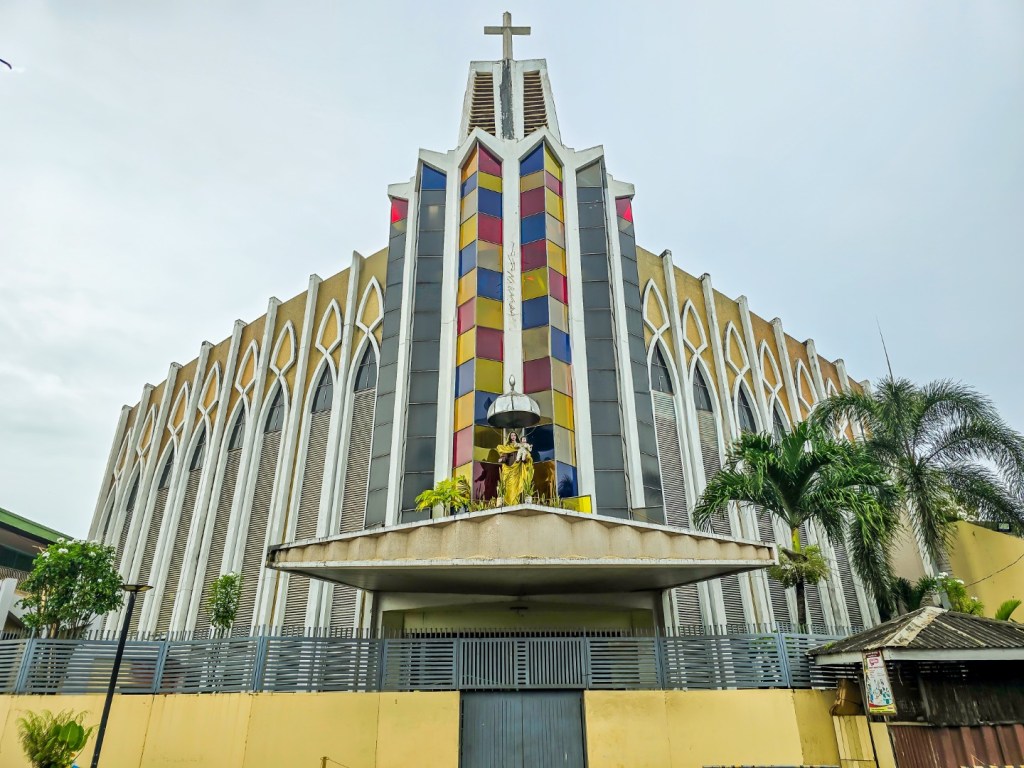
Jolo Cathedral, the church which stands across the town plaza, was closed. Much as we would want to visit the church, it was closed for reasons that evoke memories of pain and sadness to many.
It was a Sunday morning, 27 January 2019. Downtown Jolo was bustling with people. The Sunday Mass for the Christian faithful, a humble minority in the island where 95% profess Islam, had already started. The sound barrier was then broken with a very loud explosion, followed by another one after a couple of minutes, shattering the peace of what would otherwise have been a typical day. At a specific place within the town center, glasses, furnishings and even human lives turned out to have been shattered as well.
The Cathedral of the Apostolic Vicariate of Jolo was bombed.

A week before the bombing, the plebiscite vote for autonomy for the Muslim Region was held, and the majority of the residences of Sulu rejected the proposed measure. The terror organization ISIS claimed responsibility over the bombings, carried out by their local terror counterpart, the Abu Sayyaf Group. 20 people died and 120 were injured. The Philippine government responded soon after with an all-out-war, which led to the dismantling of the Abu Sayyaf Group in 2024.
The church was partially damaged by the explosion, but has been renovated and reconsecrated since then. On the day of our visit, it remained guarded and closed unless there would be liturgical services. Pre-booked visits, however, are allowed.


The Cathedral of the Apostolic Vicariate of Jolo, dedicated to Our Lady of Mt. Carmel.
We were not able to get inside the church. I could only imagine how it would have been a deeply reflectional experience if we were able to. We were there though, under the gloom of the weather, standing in front of the sacred edifice with heavy iron gates shut closed before us, under the gaze of the statue of Our Lady.
That was more than enough.
To stand in front of the cathedral is to stand before a poignant reminder of a troubled past yet a visible sign of hope for a harmonious community of diverse customs and beliefs; to be in the presence of a resilient sign of faith—dedicated to God, consecrated by blood, sanctified by hope.
We rejoined our group just in time before we headed out to out next destination. In hindsight, Sulu was not just providing us a peek into the glory of a kingdom that it was, or was not just giving us adventures of being in places that decades ago are unthinkable to visit. It was offering us a view, an awakening of sorts, that challenged our preconceptions and stirred something deeper; a realization that beneath the layers of conflict and caution lies a place of profound history, quiet resilience and enduring beauty, despite the scars.


 Renegade Junctures
Leave a comment