

We arrived in Sulu at dawn. The entire day turned out to be a very long one, in the sense that we always had to be on the move to make the most out of our stay. It was all worth it though. Every inch that we treaded upon on the soil of the island province was a step on history made, history being made, and history to be made. From a view to the once mighty sultanate to seeing the effort to keep the Tausug culture alive, from understanding the profundity of the Islamic faith to the struggle for peaceful coexistence, and from climbing the mountain tops to immersing in pristine waters—every location was a seeming portal where all the tides of time converge, manifesting itself to those who are keen enough to notice and understand.
Just as the afternoon sun was on its way to setting in the horizon, so were we on our way out the town of Parang. At around 05:00 PM, we were back in downtown Jolo. We then headed to the dried fish stalls in the market to buy some of one of the renowned products of the island province.

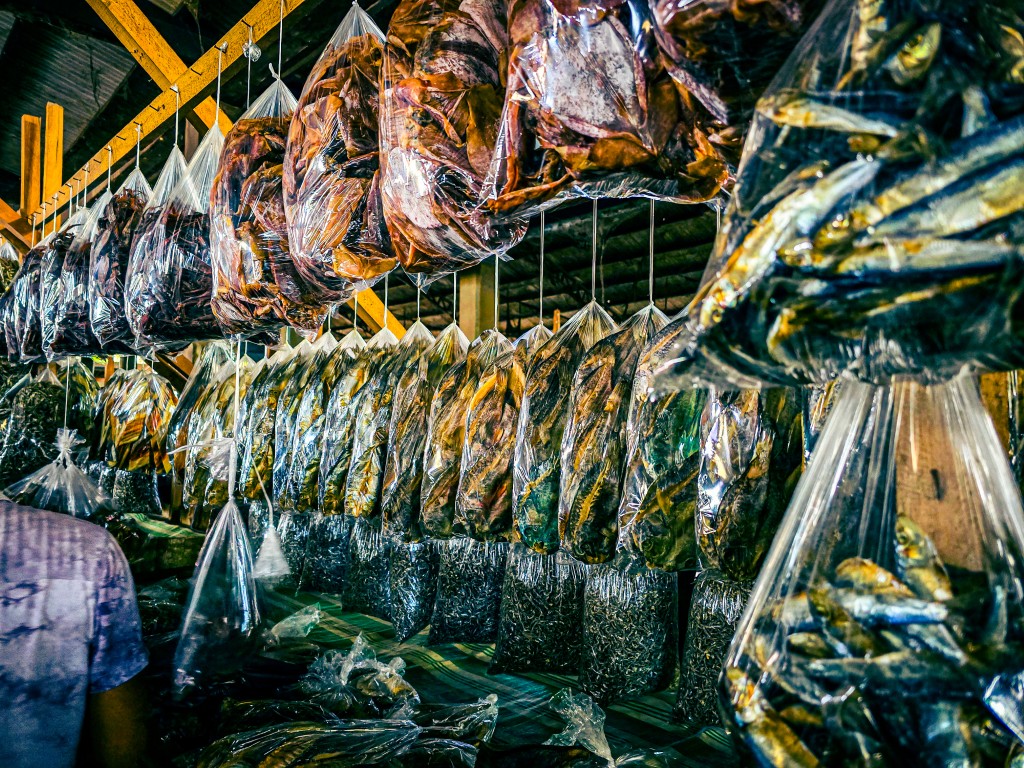

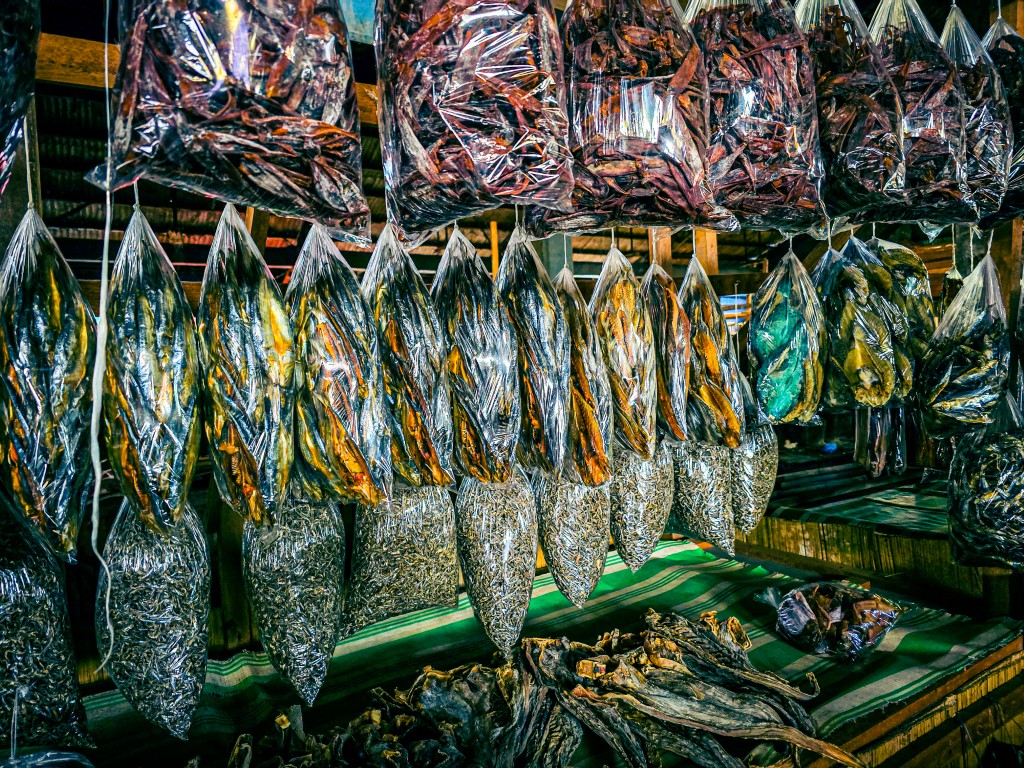

Schools of dried fish in the market of Jolo.
As Sulu is an archipelago, it should not come as a surprise that their major products come from the bounty of the sea. The dried fish were rather inexpensive. Way too inexpensive in fact, that what one would be able to buy in the capital at say PHP 250.00 per quarter of a kilo can be bought for as low as PHP 100.00 per kilo in Sulu. That was not just a deal, it was the deal. Ran and I hence ended with four packages of dried fish added to our baggage that day. We then proceeded to a local convenience store and bought a few sheets manila paper and a roll of packaging tape. We needed to seal the dried fish, lest the airline would not allow us to bring it onboard if it would smell even a little bit. Once all things were settled with our fish, we headed to Litayon Beach where we would be having our dinner.


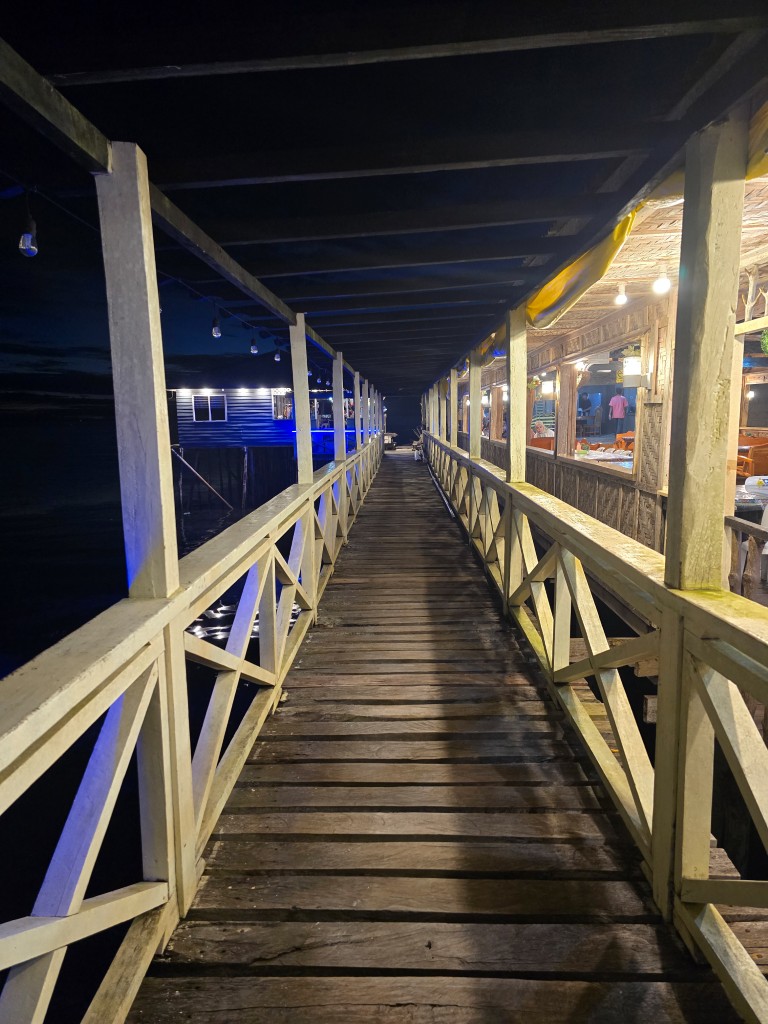

The aesthetically pleasing Shoreline Resto Cafe.
Our Sulu guide Bhenny arranged for us to have our dinner in Shoreline Resto Cafe. Located over the shallows of Litayon Beach, it features Filipino food and local Tausug delicacies in its menu. Unfortunately though, we hit a bump when in the restaurant as there was a mix-up with our orders delaying service for a considerable amount of time. When it was finally sorted out, we just had a quick bite as we needed to rush to the port.
If anything, the restaurant was able to provide an immersive view of the sea.

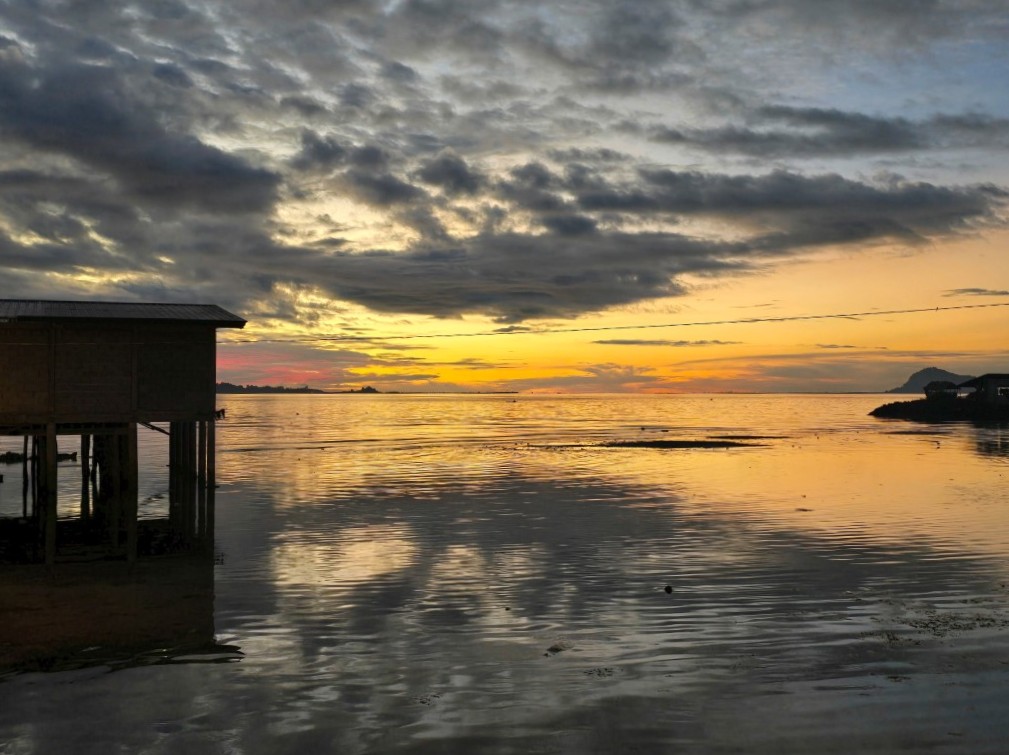
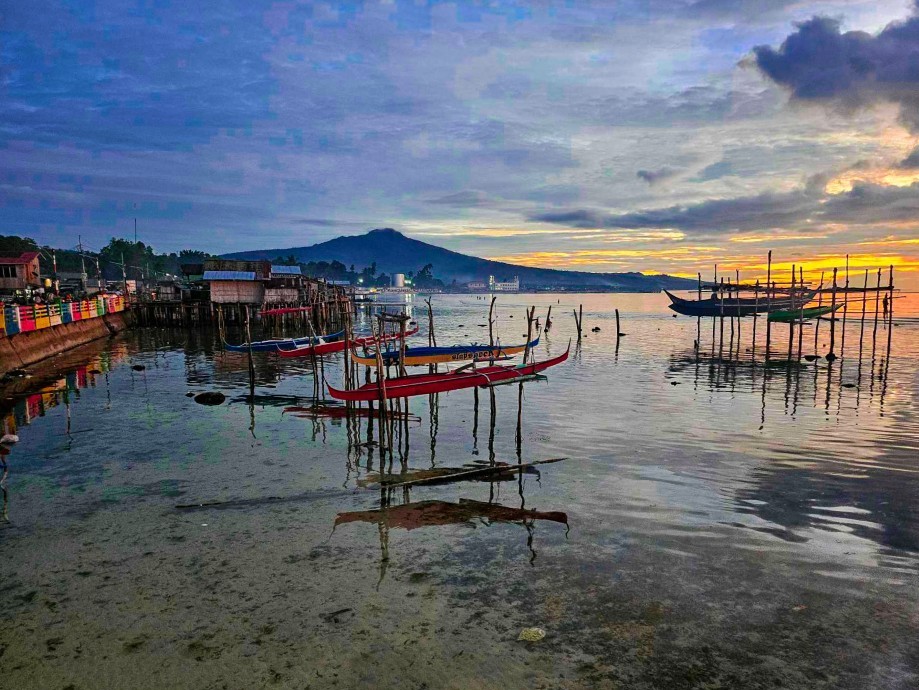
The twilight of dusk over Jolo, Sulu.
We were already at the port by 07:45 PM and the ferry left at 08:13 PM. Aboard M/V Honduras, we were bound for Zamboanga again, leaving behind the amazing island of Sulu behind but taking with us a lot of memories to cherish and realizations to live by.
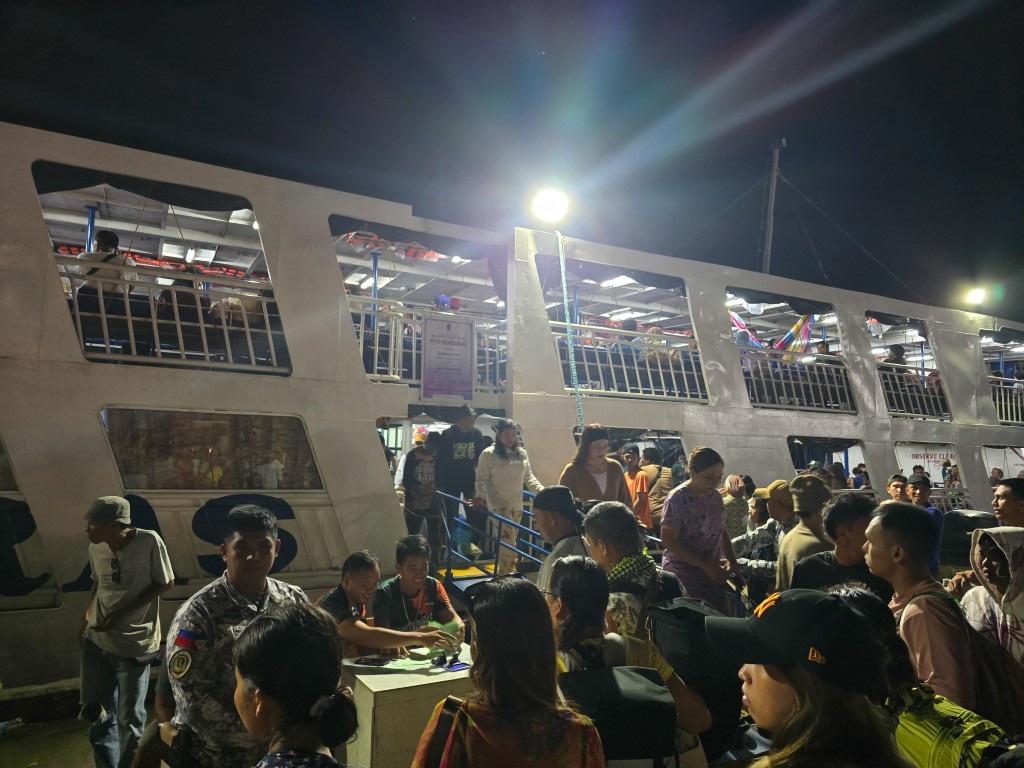
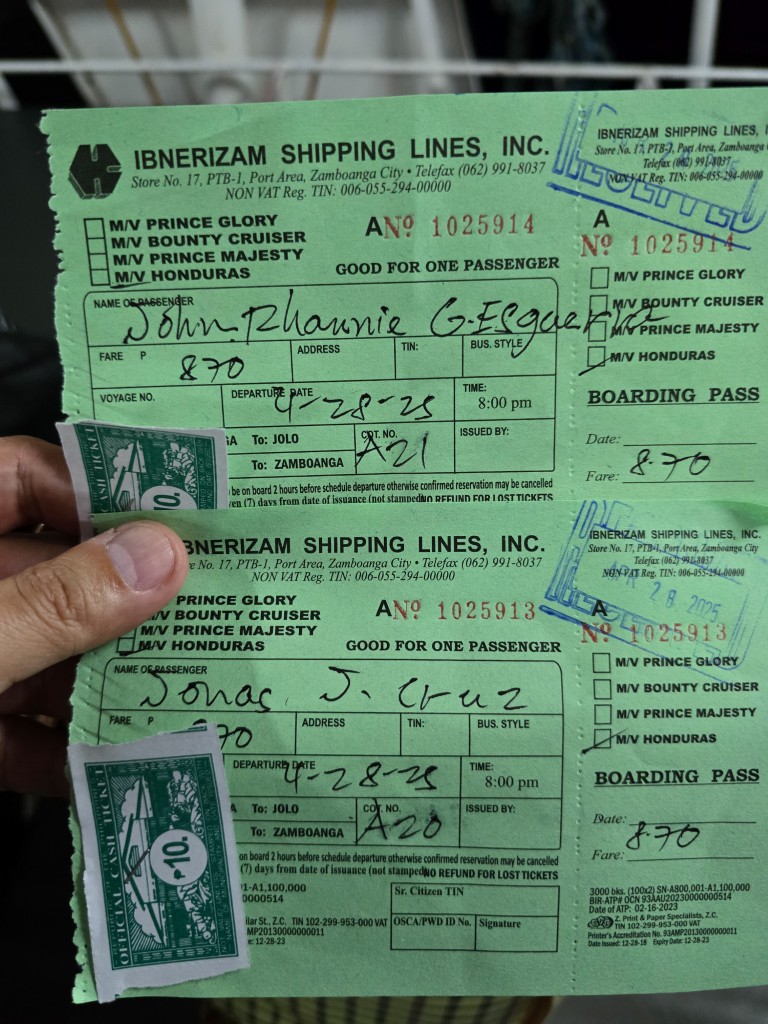


Another night in the middle of the sea.
In a very personal sense, Sulu to me is the land of dawns and dusks. Our visit, short as it was, was able to show me both in the figurative and literal sense that dawn and dusk are not antonymous to one another, but complementary parts of a cycle that became pronounced in the long history of the island province and its current endeavor to chart its way to progress. Stated differently, with the dawn of peace and development came the end of the dusk of conflict and poverty; with the dawn of inclusive growth came the end of the dusk of alienation.
We arrived in Sulu at dawn. We were leaving by dusk. It was a long day, but our day in Sulu was rather too short. It was a consolation, however, to think that the place we visited for a very short time was able to impart a lot of understanding to minds often clouded by stigma and fear.
Stigma and fear have already dusked though. Now we await for dawn.


 Renegade Junctures
Leave a comment