
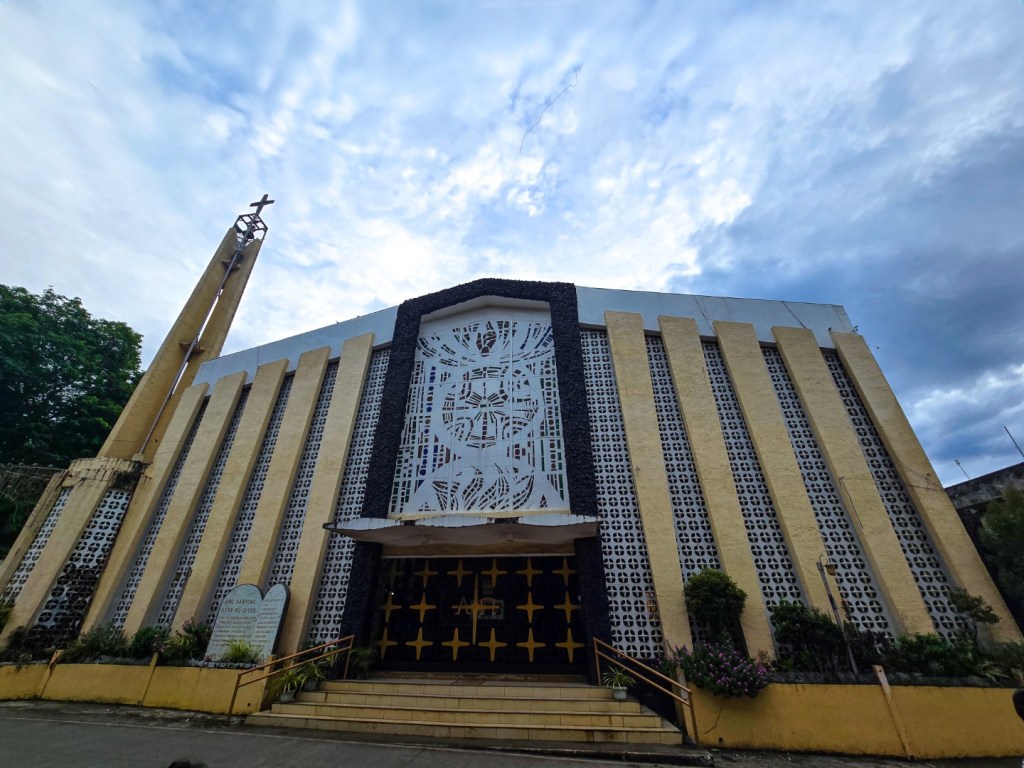
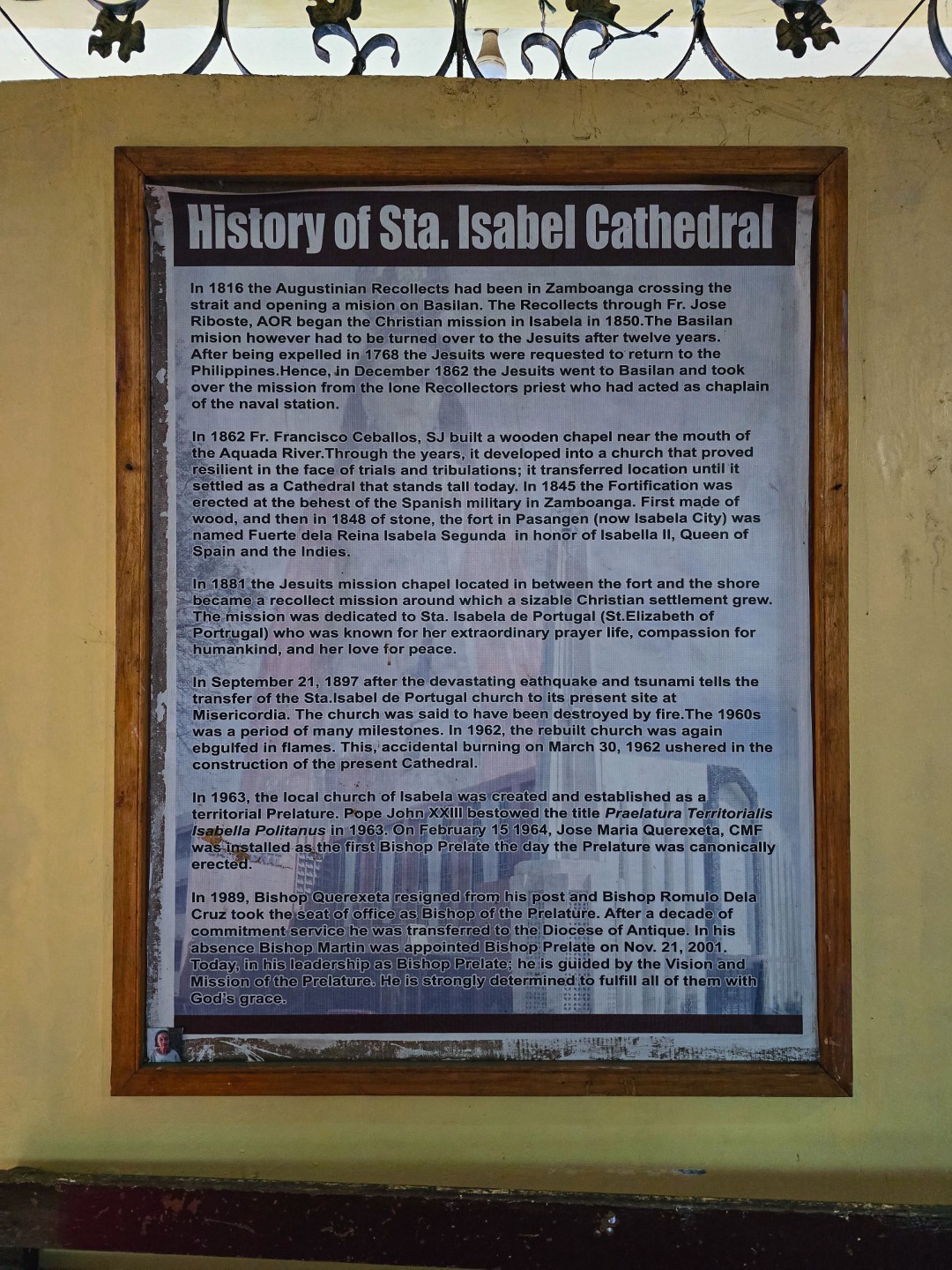
Isabela City, the old capital of Basilan, got its name from Queen Isabela the Second whose name was initially lent to Fuerte Isabel Segunda, the military fort in the island that was completed by the Spanish in 1848, then eventually to the entire town where it once stood. As Spanish conquests are not complete without the introduction of Christianity, a wooden chapel was erected near the fort in 1862. In 1881, the mission was dedicated to Sta. Isabel de Portugal, aligning with the naming of the fort nearby. Many years after, the Sta. Isabel Mission grew until it was designated as the cathedral when a territorial prelature was erected in Basilan.
The fort is no longer existent and the old provincial capitol of Basilan now stands on its location. The former site of the Sta. Isabel mission is now where the Cathedral of the Territorial Prelature of Isabela stands.
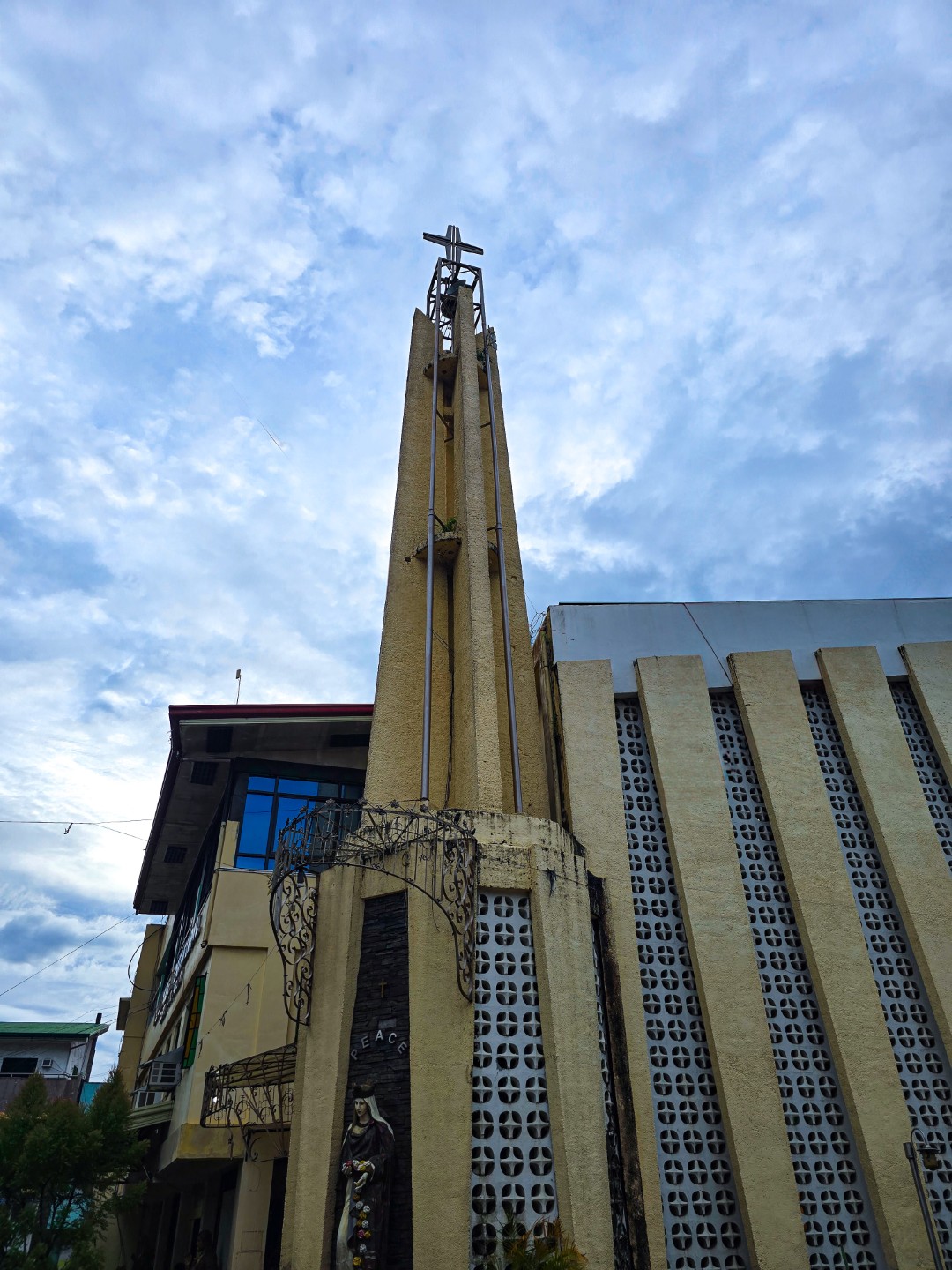


The exterior of the Sta. Isabel Cathedral.
Established in 1963, the Territorial Prelature of Isabela was erected to serve the Christian minority of Basilan while at the same time fostering for peaceful coexistence with the Muslim majority of the island. It was a noble cause but not without challenges. During the height of radical fundamentalism in the island province, there were several instances where priests of the prelature would be kidnapped by the Abu Sayyaf. The religious building at one point was not spared from extremism as well. Like the cathedral of Jolo, it also suffered damages in 2010 when a bomb exploded within its vicinity.
Unlike the one in Jolo, however, the Cathedral of Isabela was open. In fact, the Holy Mass was going on when we arrived. We hence reverently went inside the church, offered some prayers, and took some photos while keeping profile as low as possible so as not to disturb the faithful.

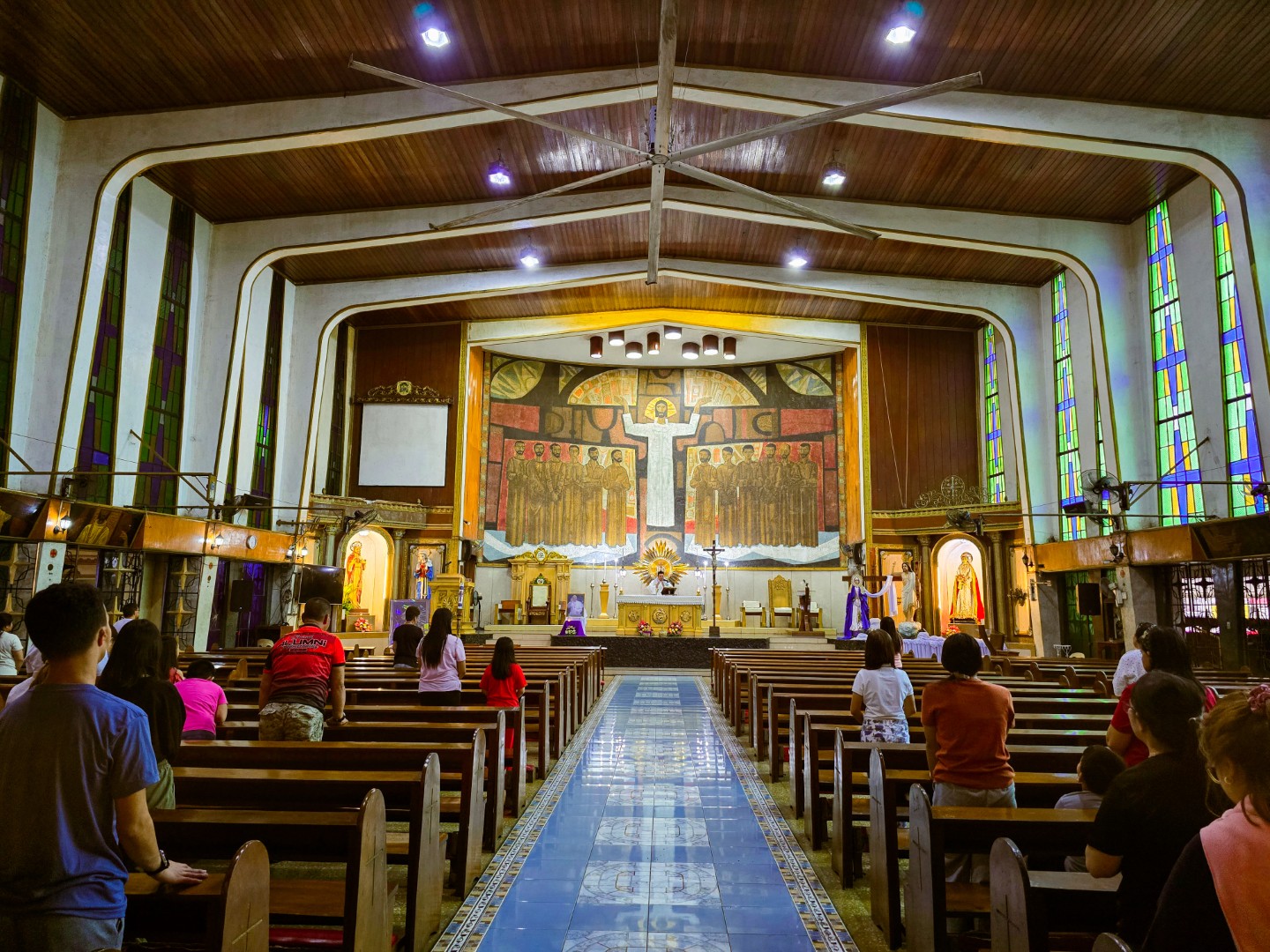
The interior of the Sta. Isabel Cathedral while the Holy Mass was ongoing.
Sta. Isabel de Portugal under whose patronage the cathedral church is placed, was a queen of Portugal known for her virtues of holiness and charity. Canonized in 1626, the saintly queen lived the rest of her life after her regal consortium in a monastery, caring for the poor and the sick. The patroness of the town hence stands in stark contrast to the other Isabel, Queen Isabel II, whose reign in Spain was marred by political unrest. She was eventually deposed in 1868.
Apart from the cathedral, we also dropped by the church plaza, now renamed as the HAPIsabela Plaza, a playful portmanteau of happy and Isabela.
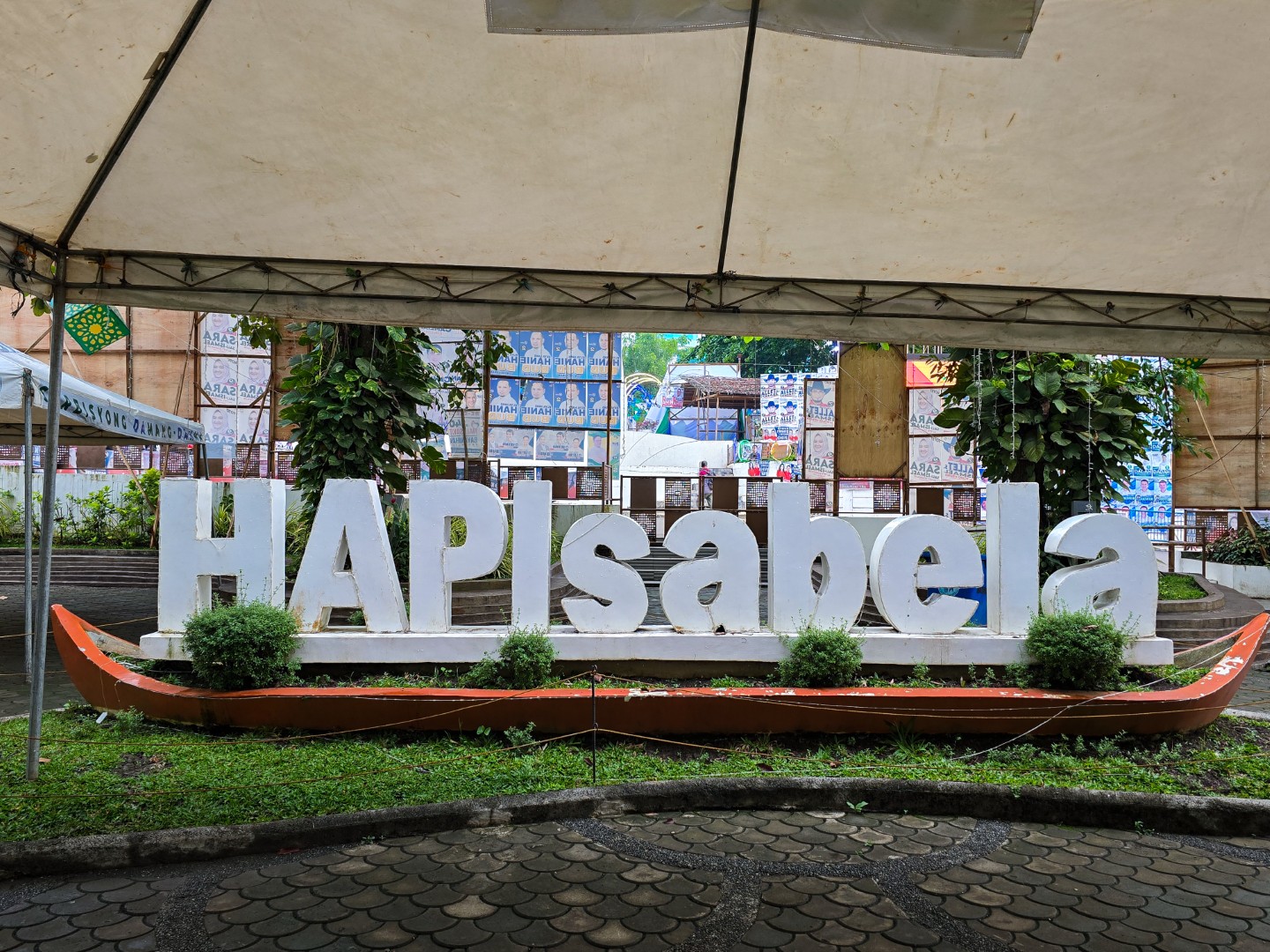
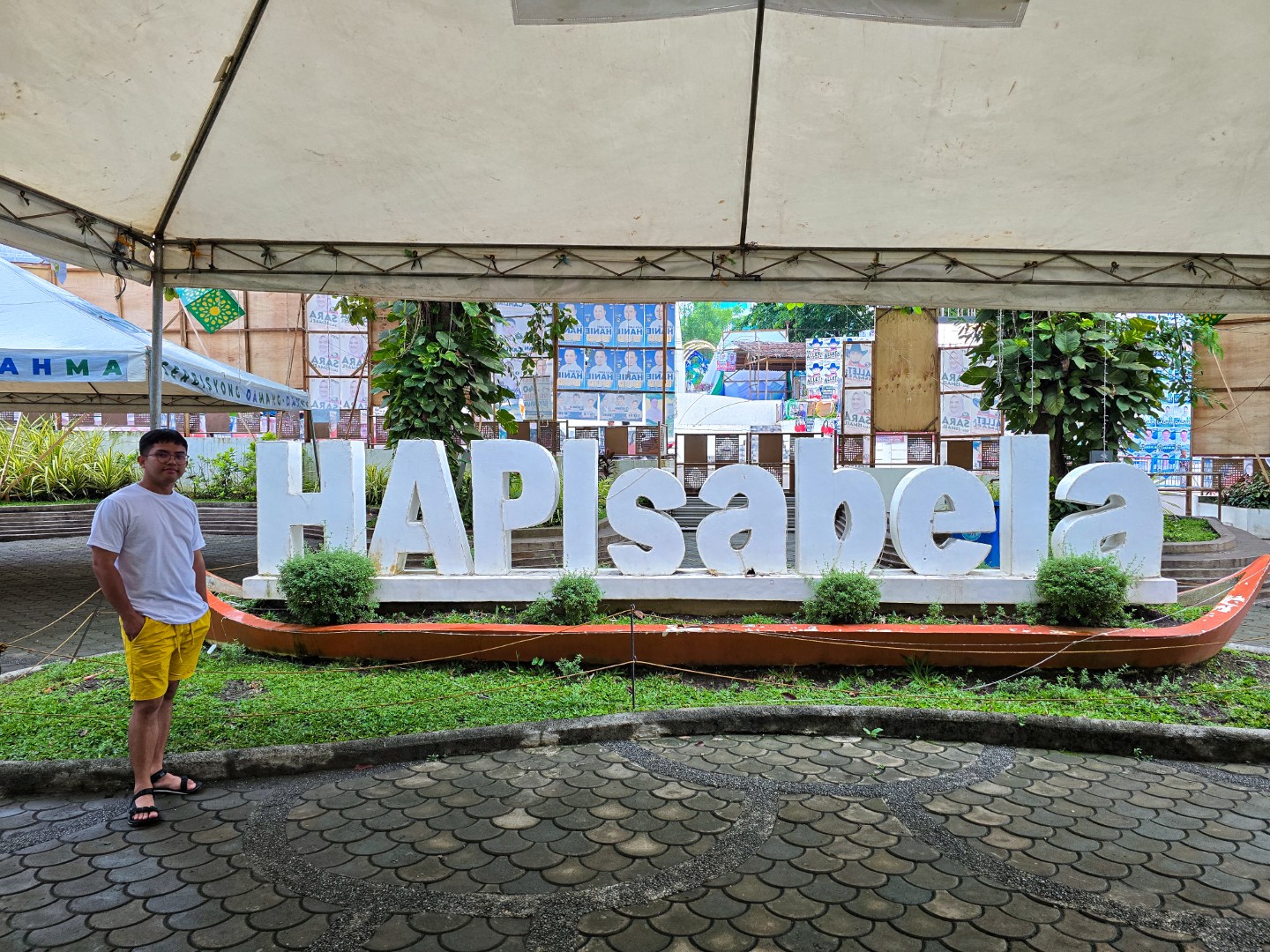

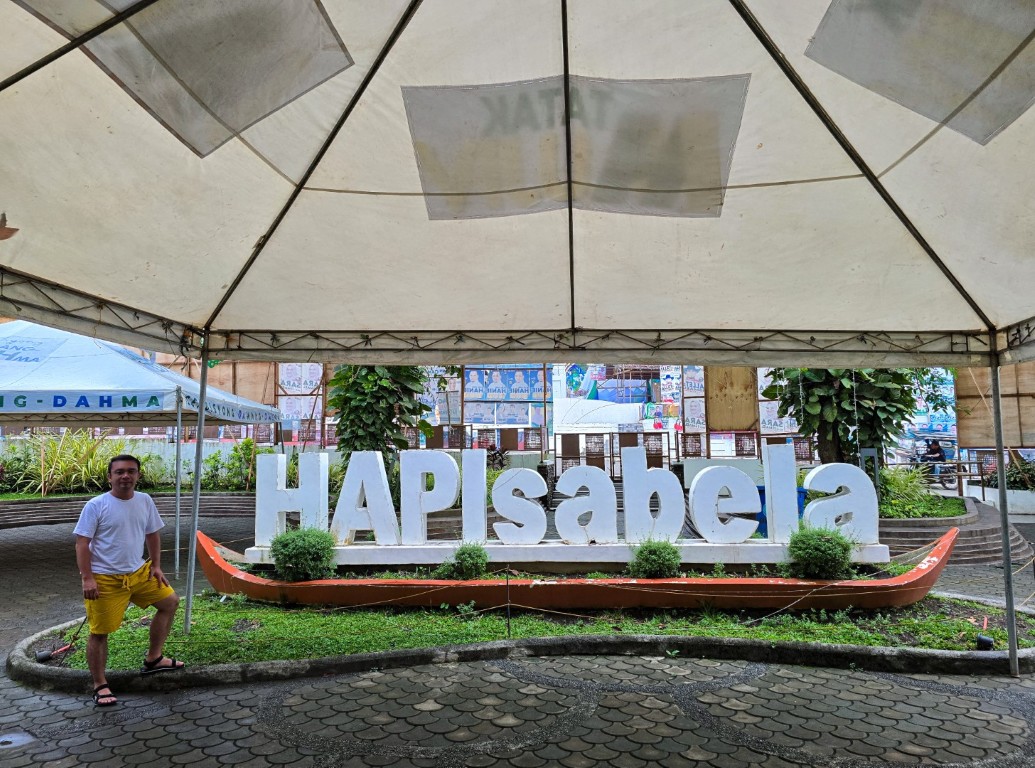
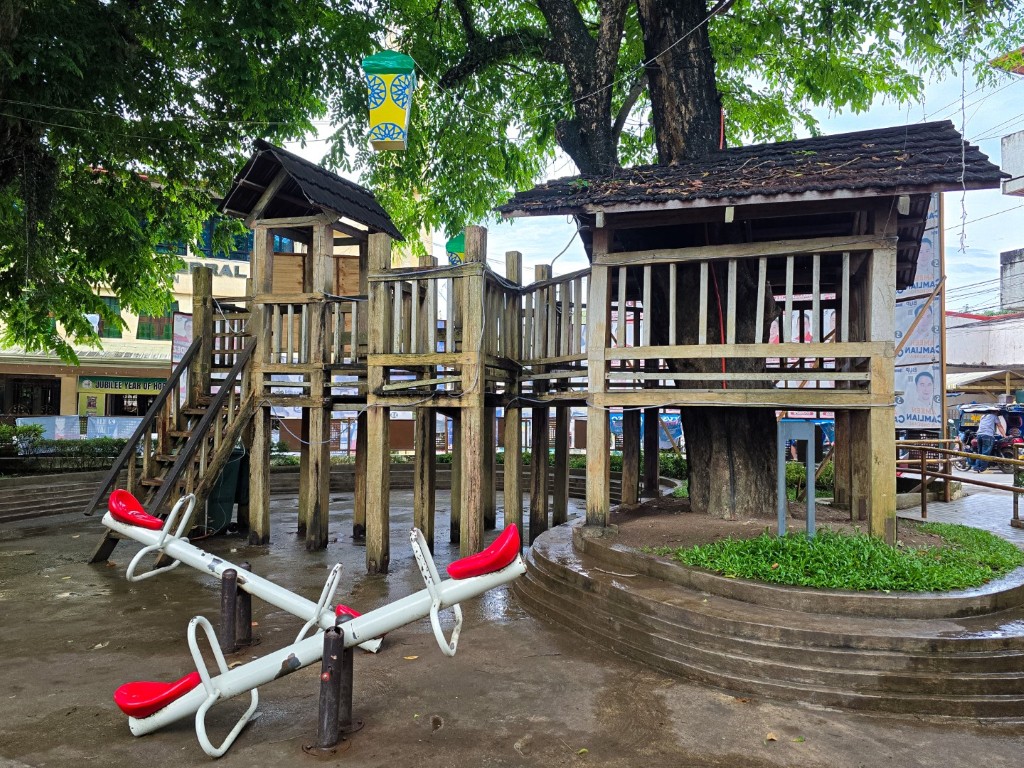

The church plaza, now known as HAPIsabela Plaza, is located right in front of the cathedral.
Our accommodation was literally just a few minutes away from the plaza, hence it did not take long for us to be back in the hotel after our day tour of Basilan. It may be a relatively short tour, but it is in no way devoid of learning and meaning. Apart from opening our eyes to the beauty of Yakan culture, we were able to gain better perspectives about the island province, often a victim of stigma and false stereotypes.
In the past, the words peaceful and Basilan would be oxymoronic if to fit in a single sentence, like the dos Isabelas. Not anymore.


 Renegade Junctures
Leave a comment