
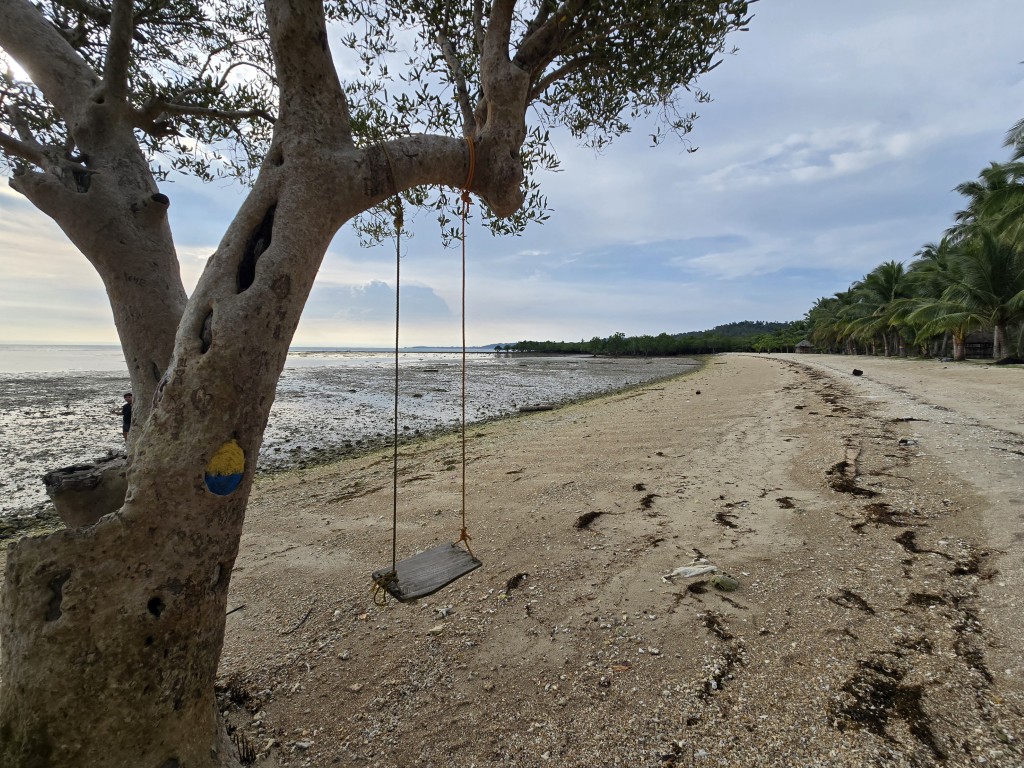
The town of Sipocot in Camarines Sur is said to be one of the last pueblos in Bicol to be established by the Spanish colonial government. Being made into a separate town in 1801 is considerably late in the Spanish timeline. It was for that reason that Sipocot lagged behind its neighboring towns during the colonial regime in terms of commerce and development, the reason for which was its relative isolation.
The present-day territory of Sipocot still has traces of the isolation it had back during the Spanish period. The densely forested and mountainous terrain of the town with boundaries extending across the Bicol Peninsula would not make isolation unimaginable, not to mention its size that makes Sipocot one of the big towns of Camarines Sur.
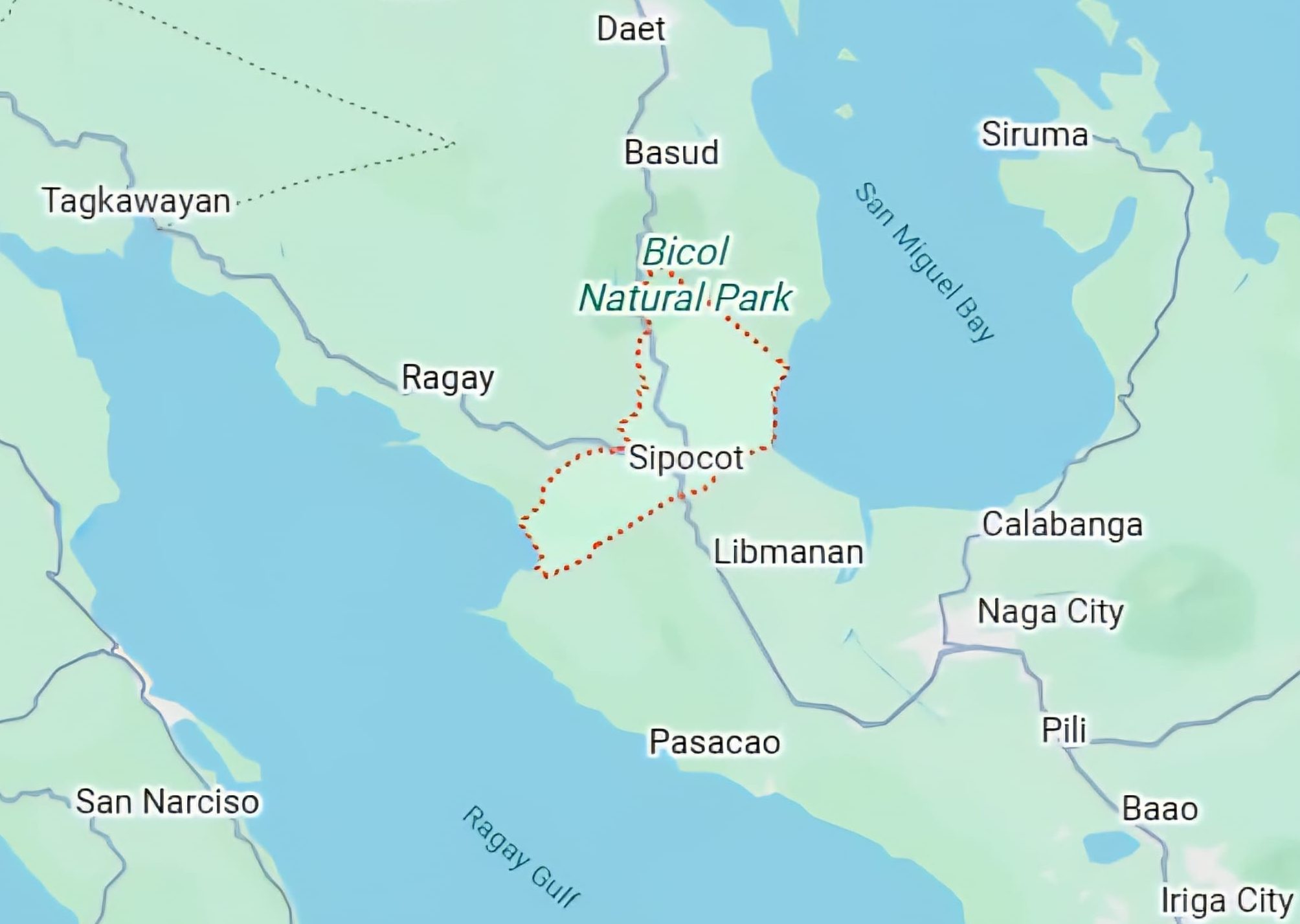
With the western end of Sipocot facing Ragay Gulf and the eastern one facing San Miguel Bay, the town is not short of beaches to visit. That was actually our planned first activity in Sipocot—to visit the beach.
We started preparing to visit one of the beaches in Barangay Binahian when we were done getting some sleep after the long night drive. From our accommodation, we went to Rose’s family residence where she and my brother Mikle arranged for motorcycle service that would take us to Binahian beach.
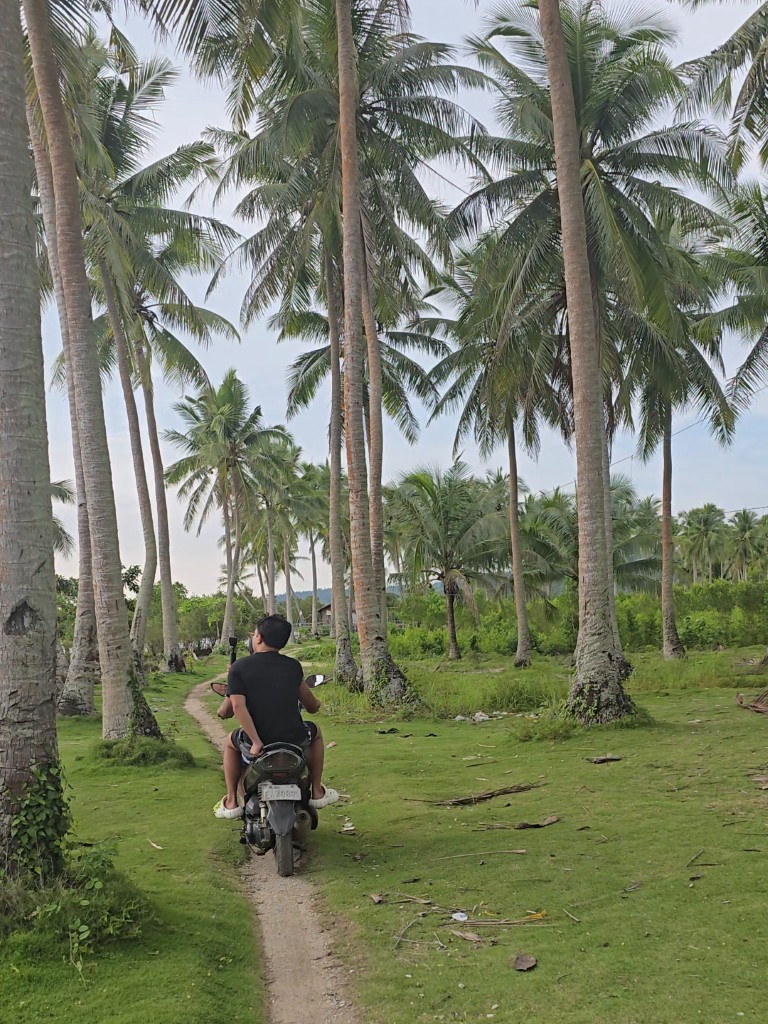
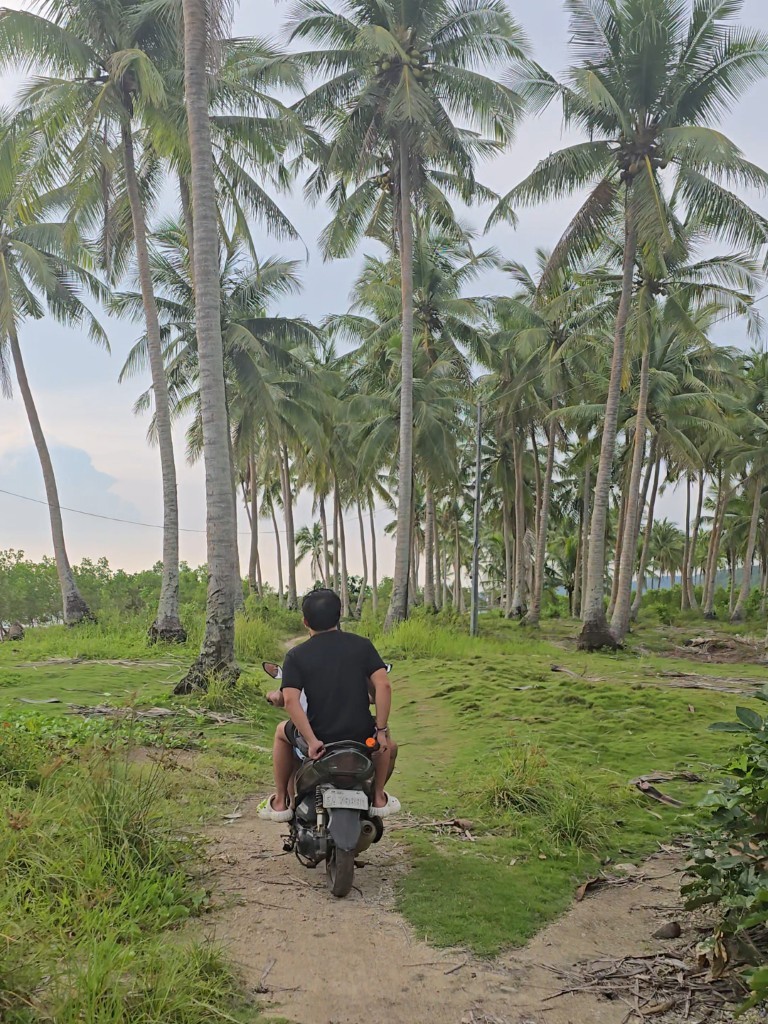
It would turn out to be an enjoyable afternoon ride on narrow yet scenic roads, across green rice fields, tall coconut trees slacked villages.
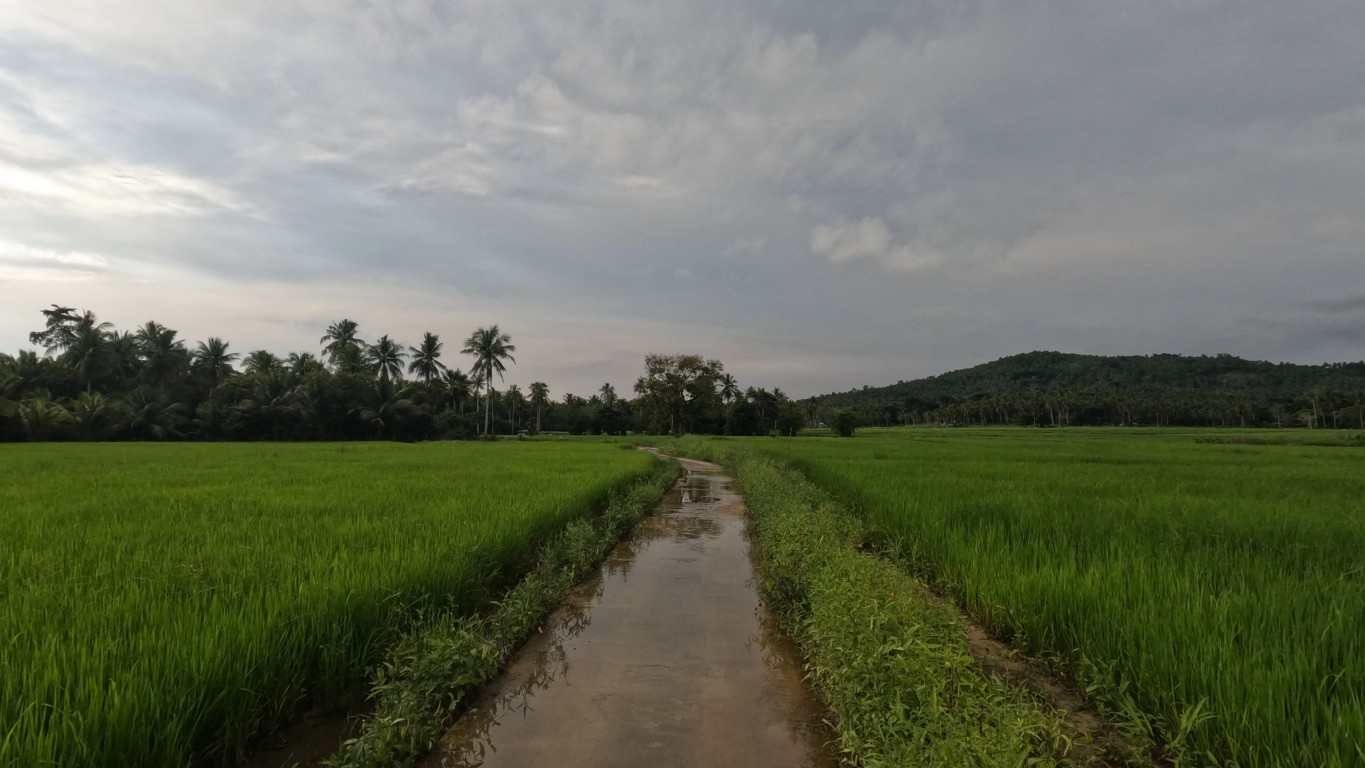
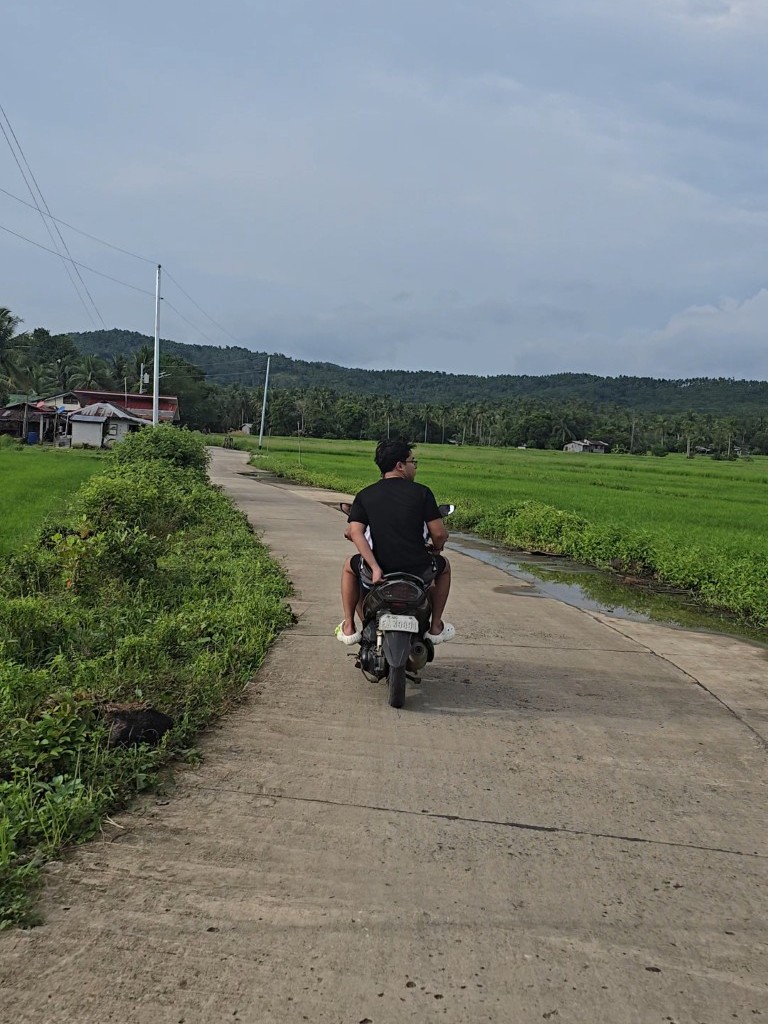
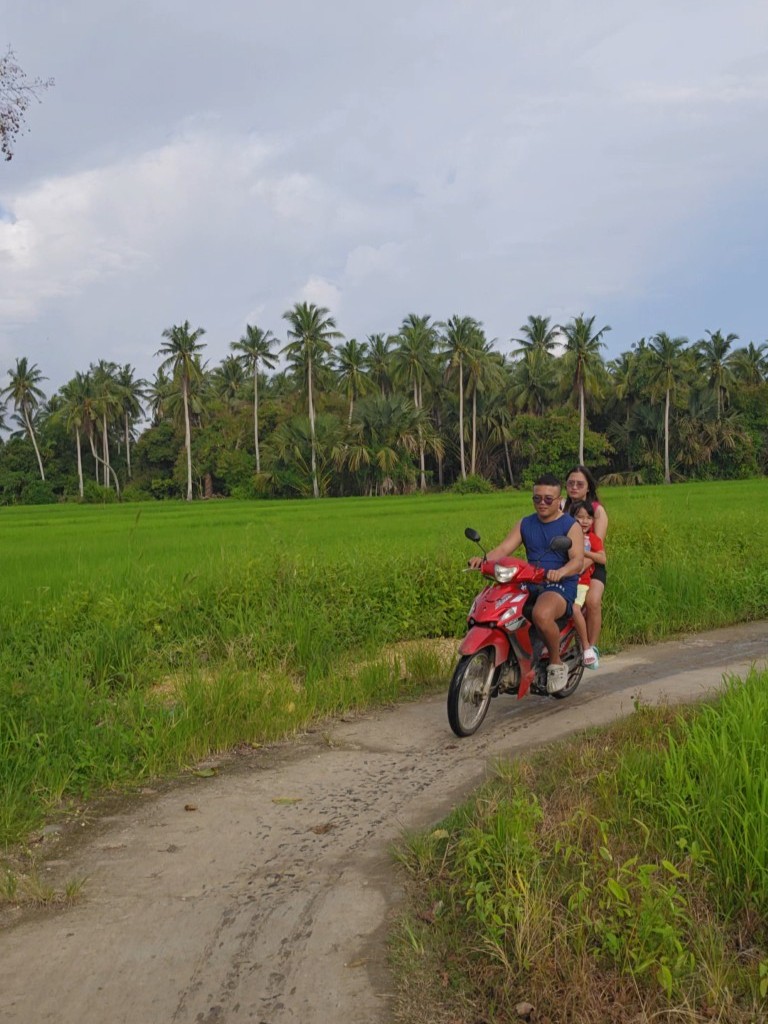
Joy riding through the rice fields.
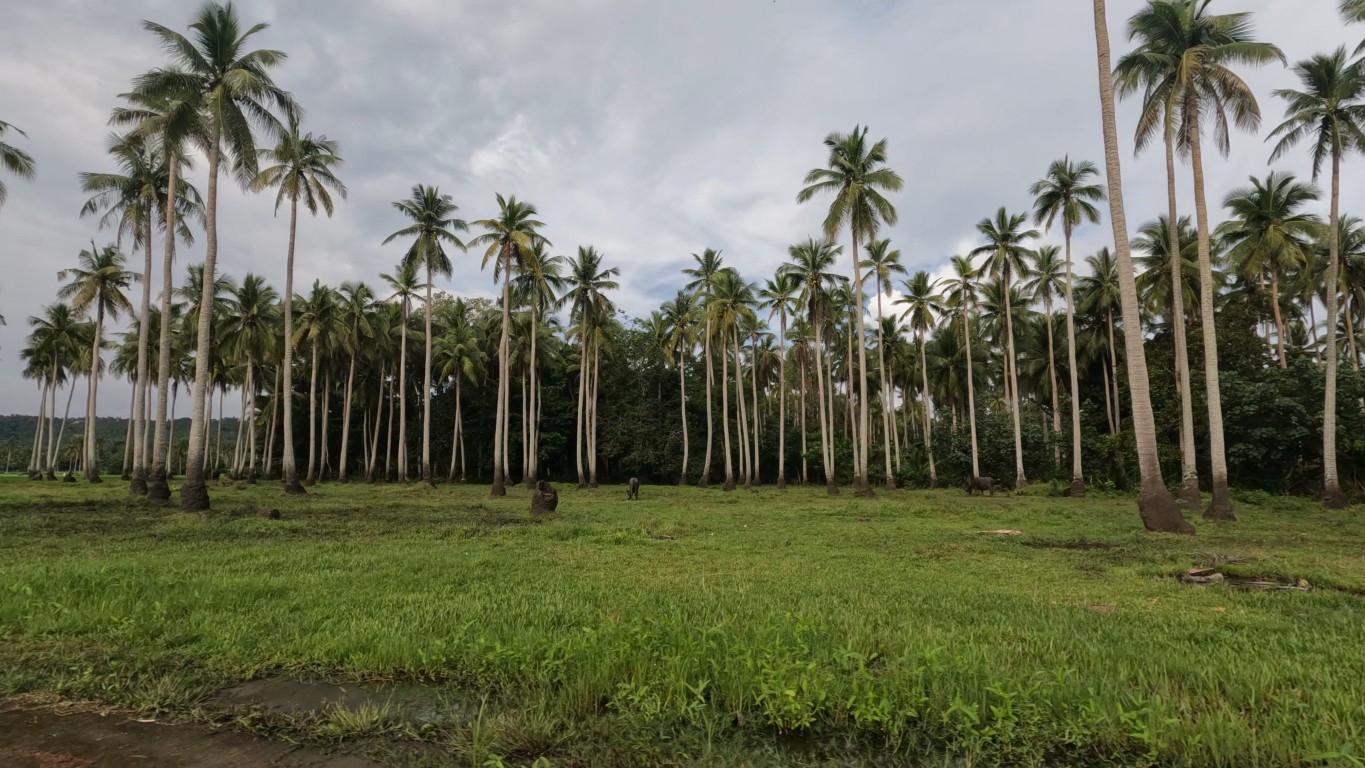
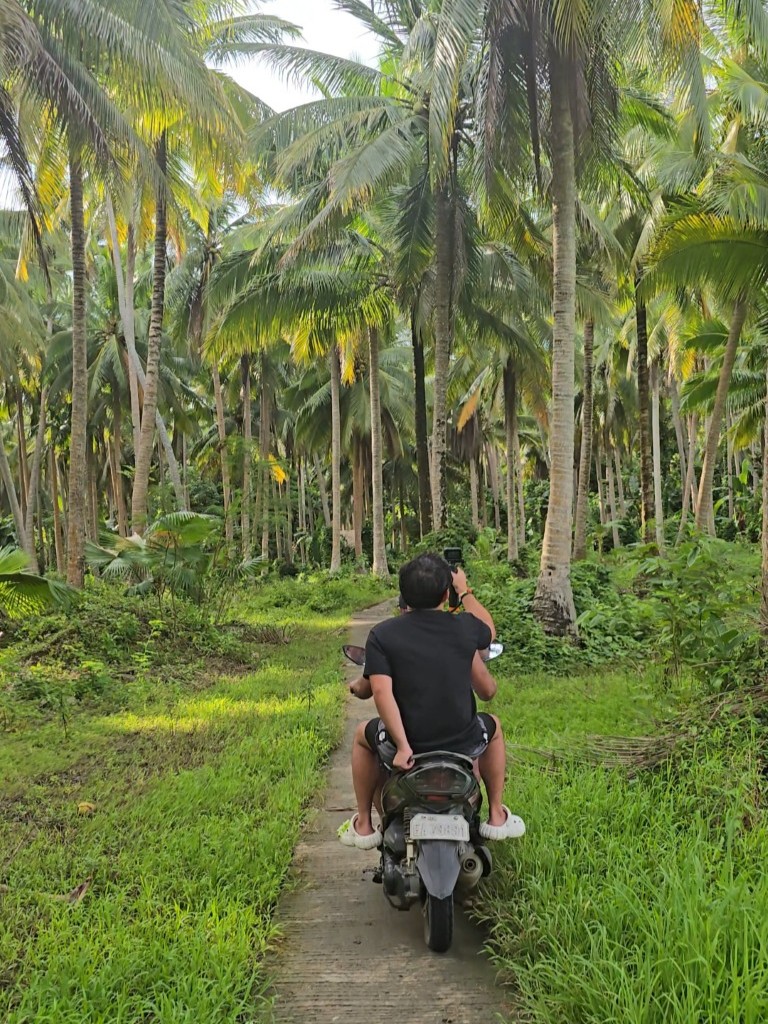
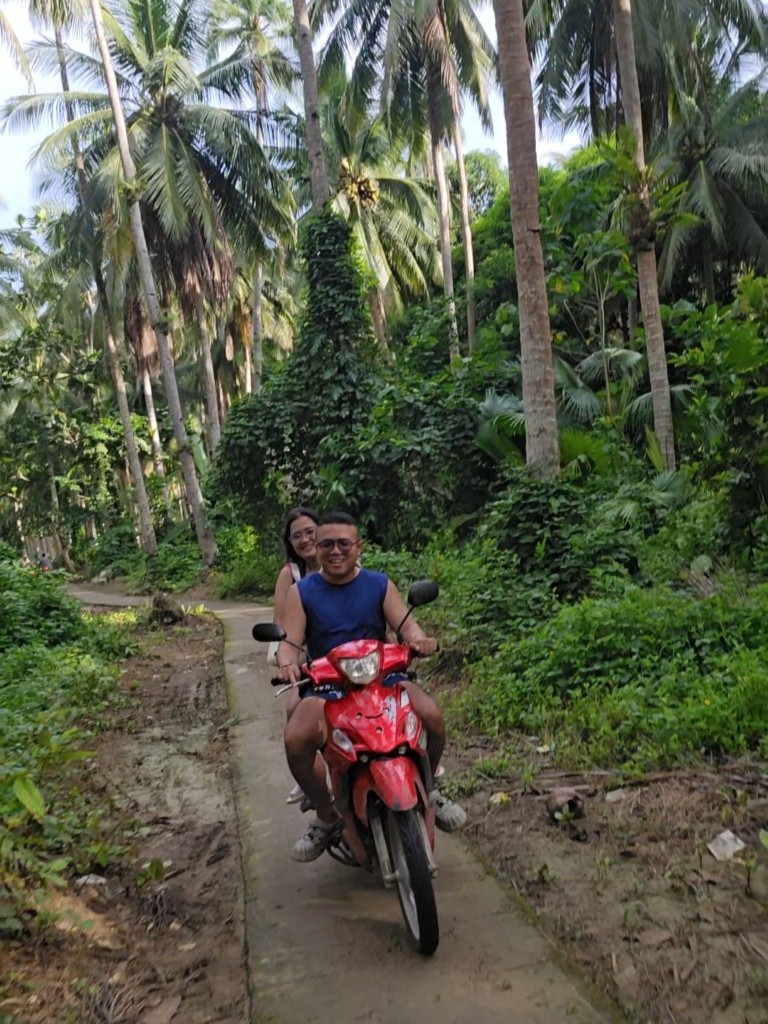
Through the coconut forest.
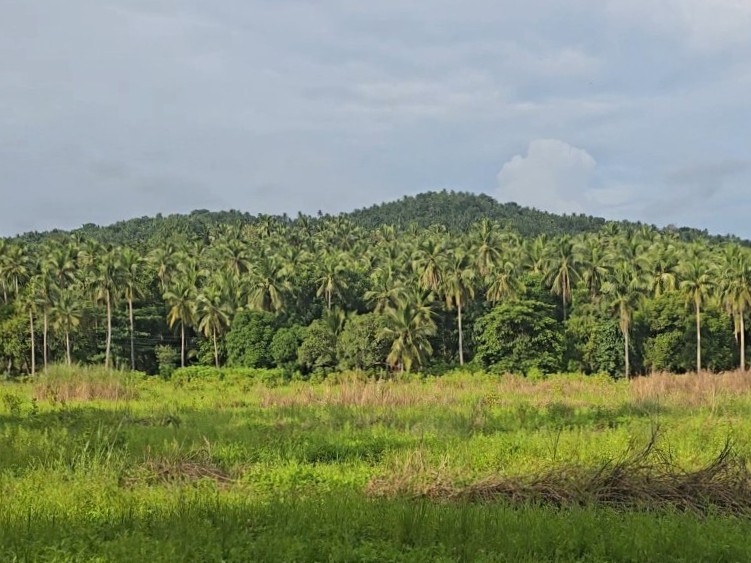
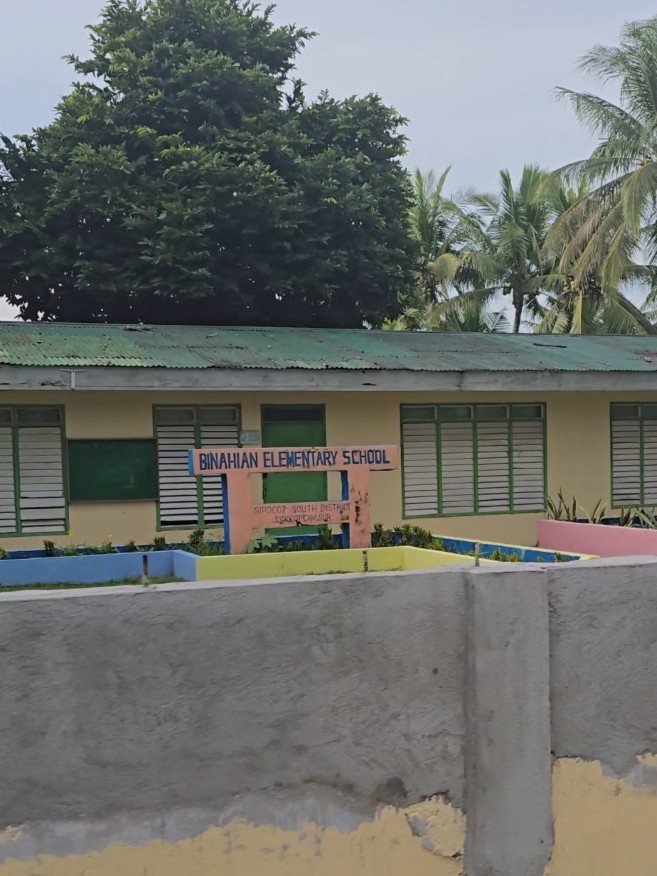
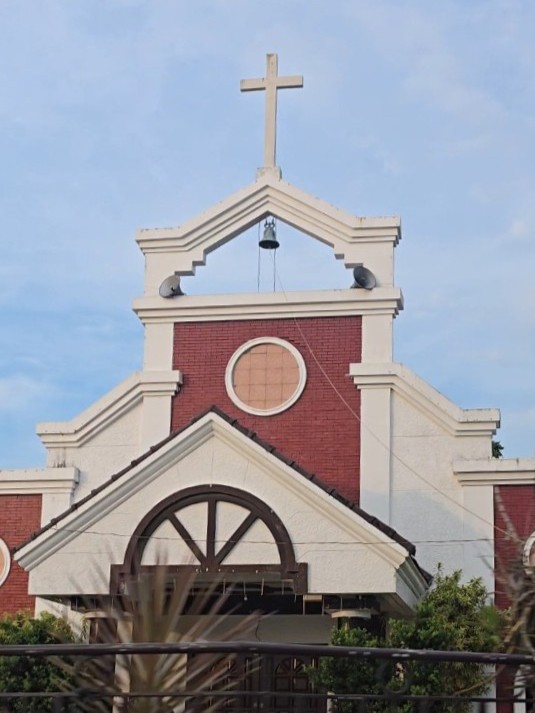
Through slacked community.
After around 20 minutes, we finally caught glimpse of the sea.
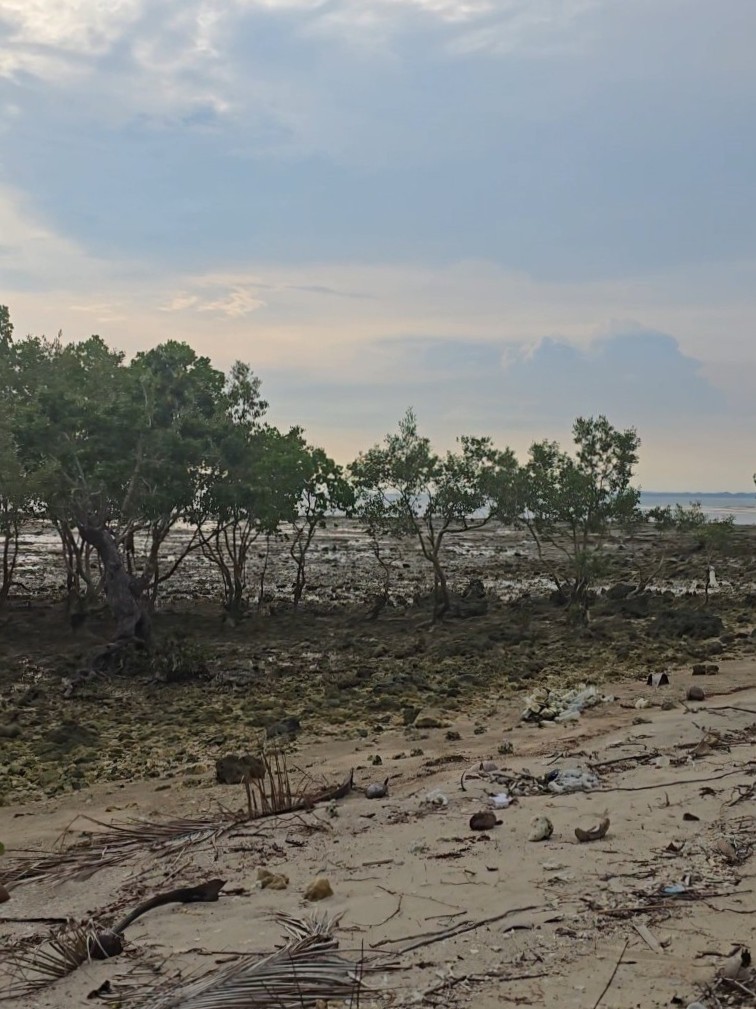
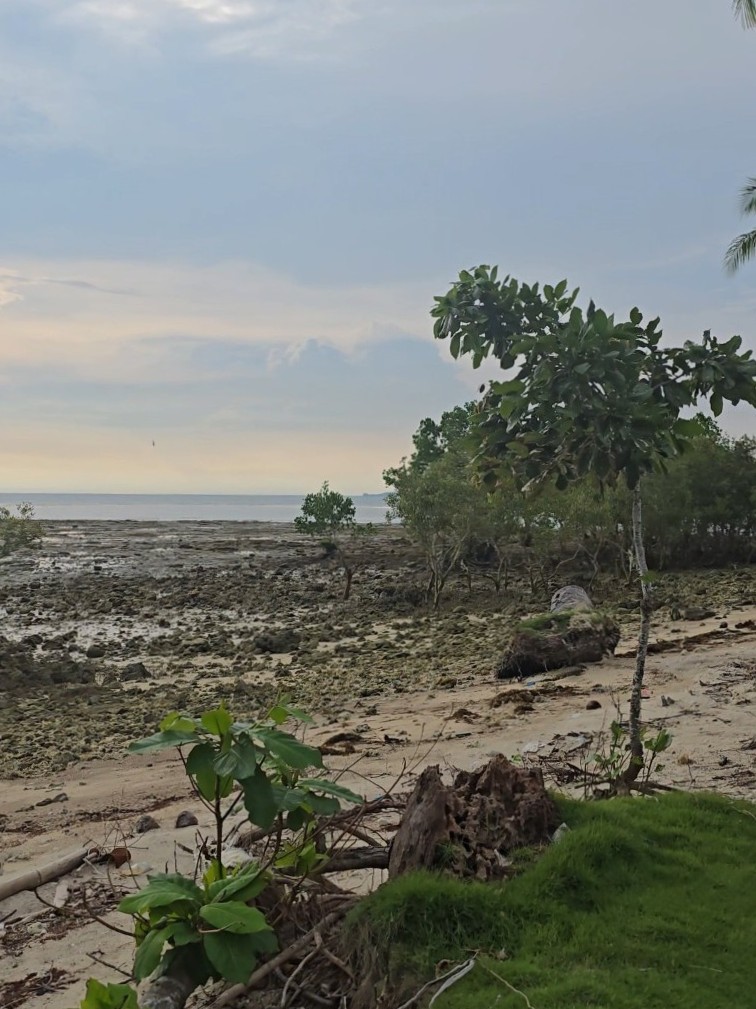
First glimpse at the beach of Binahian.
The resort by the beach that we visited is called the John Aldrin White Beach, probably named after the owner of the resort or someone important to the owner. As we were literally the only ones in the resort when we arrived, there was no one to ask as to the inspiration of the resort’s name.
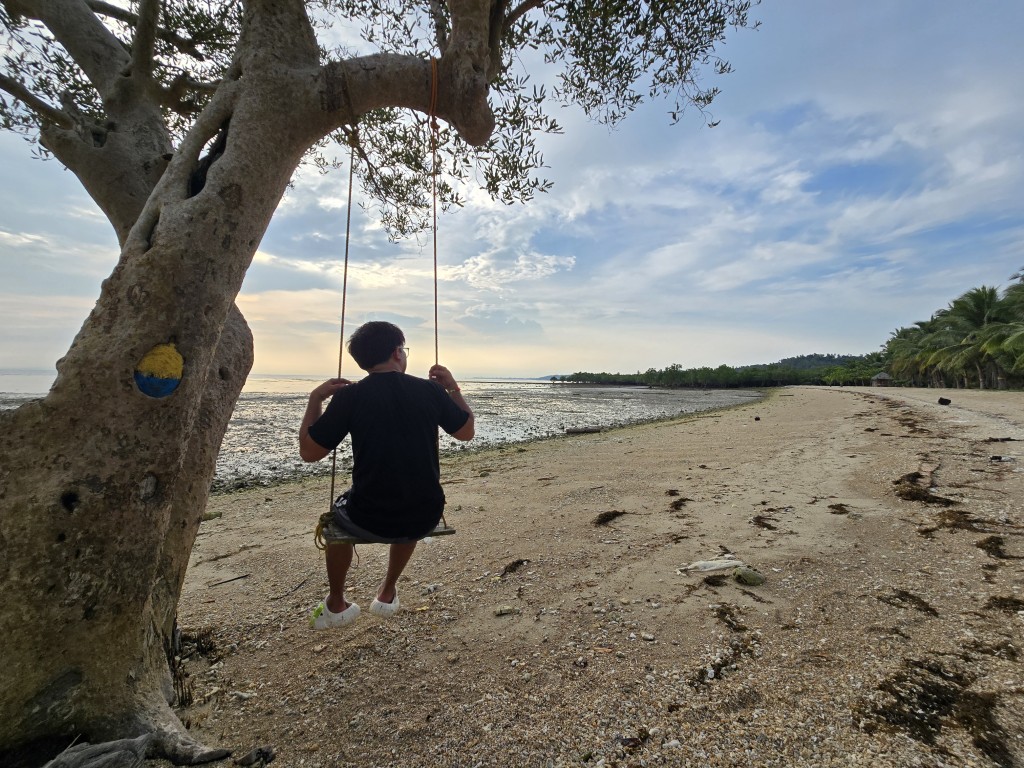
The resort was decorated with things that one would normally see in a typical beach resort. Fairly decent, I should say, given the relative isolation of Binahian. The simple structures added to the charm of the beach. It was not a sandy beach though. The creamy hue of the shore was owing to weathered and crushed corals, shells and pebbles.
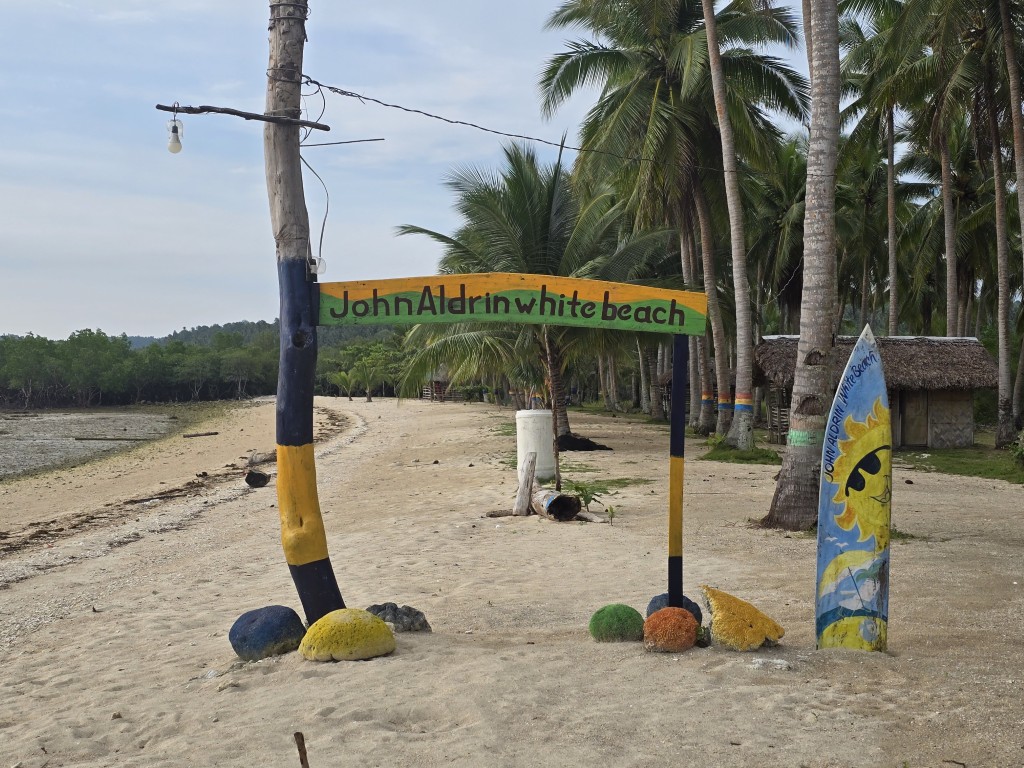
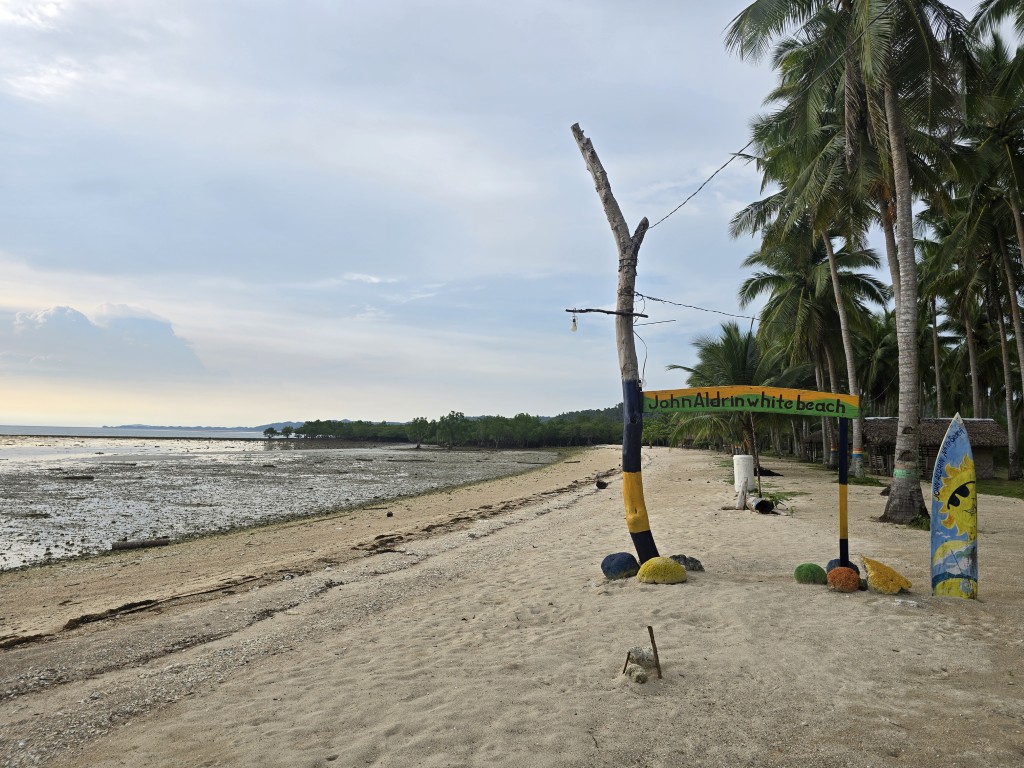
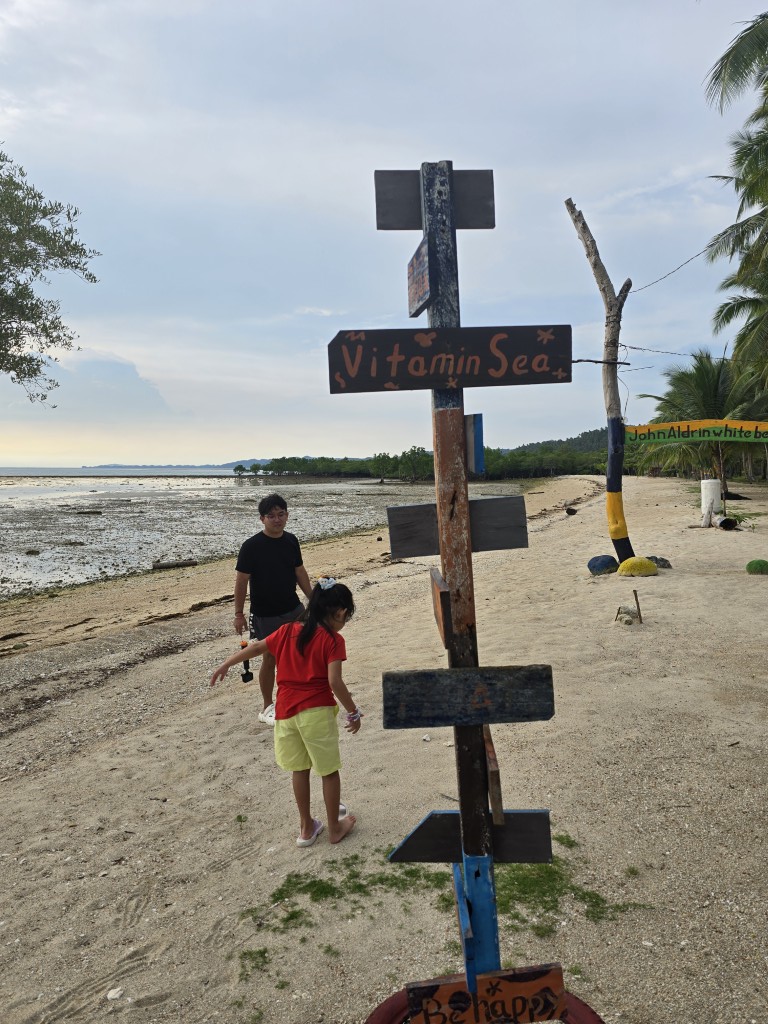
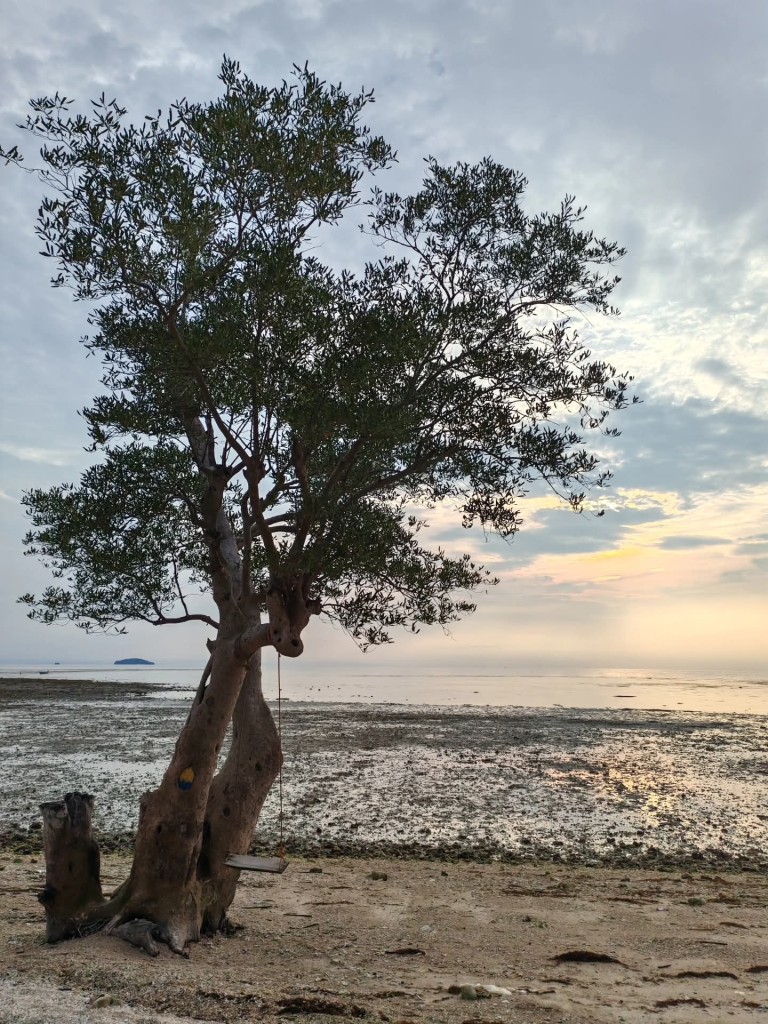
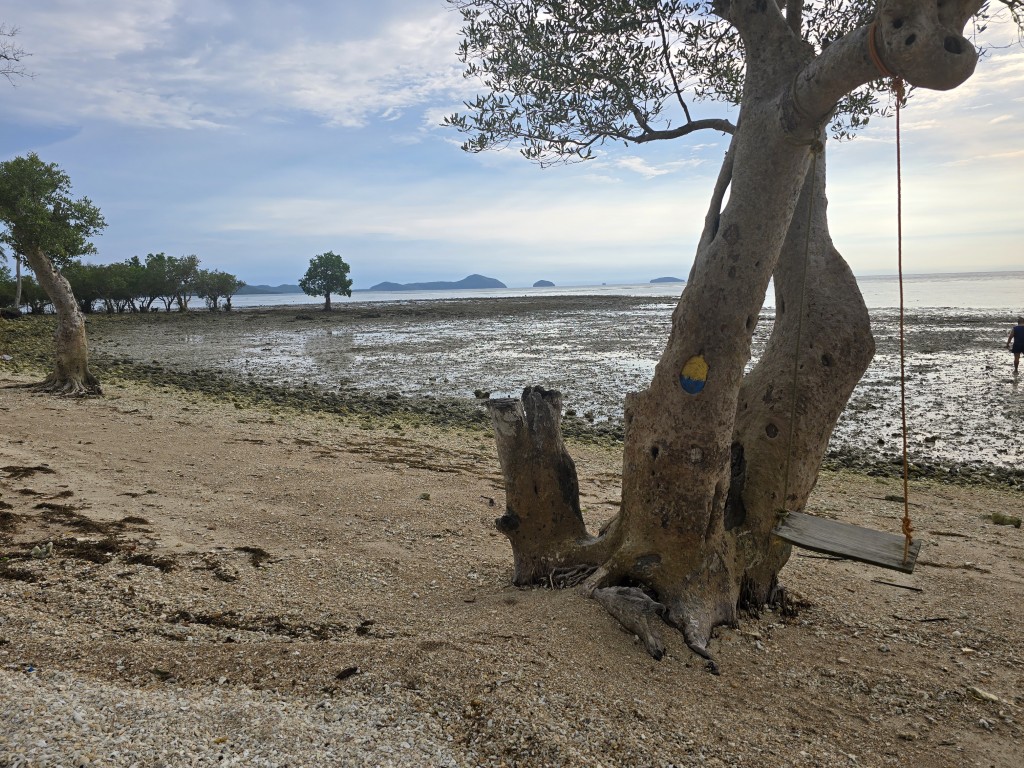
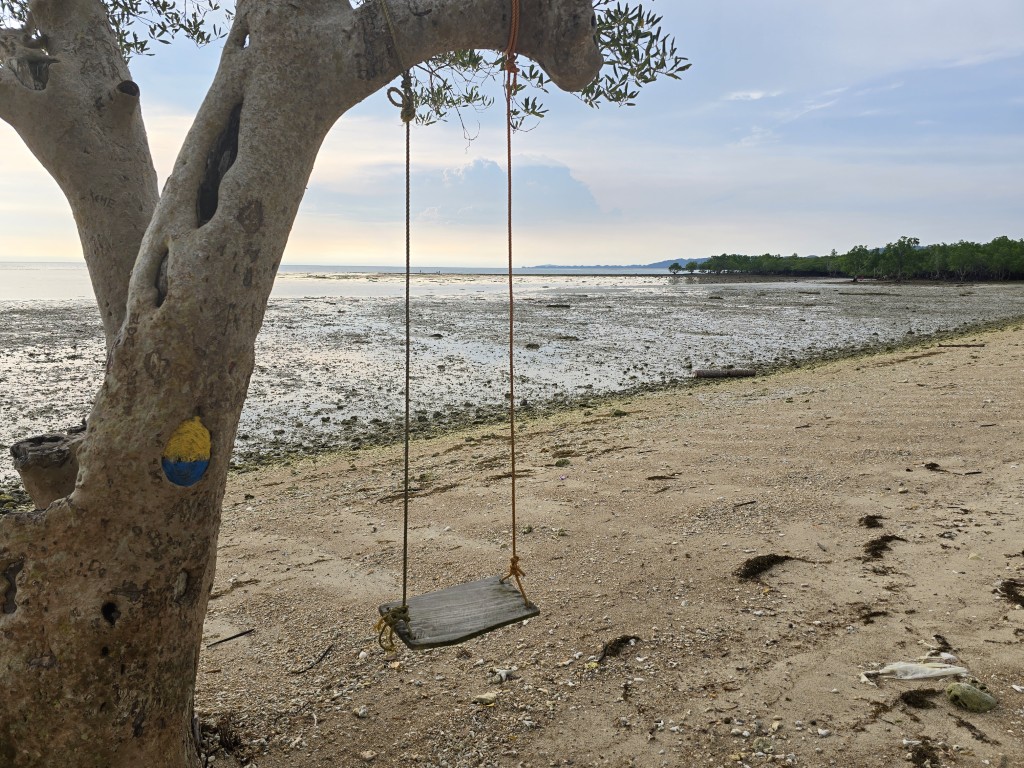
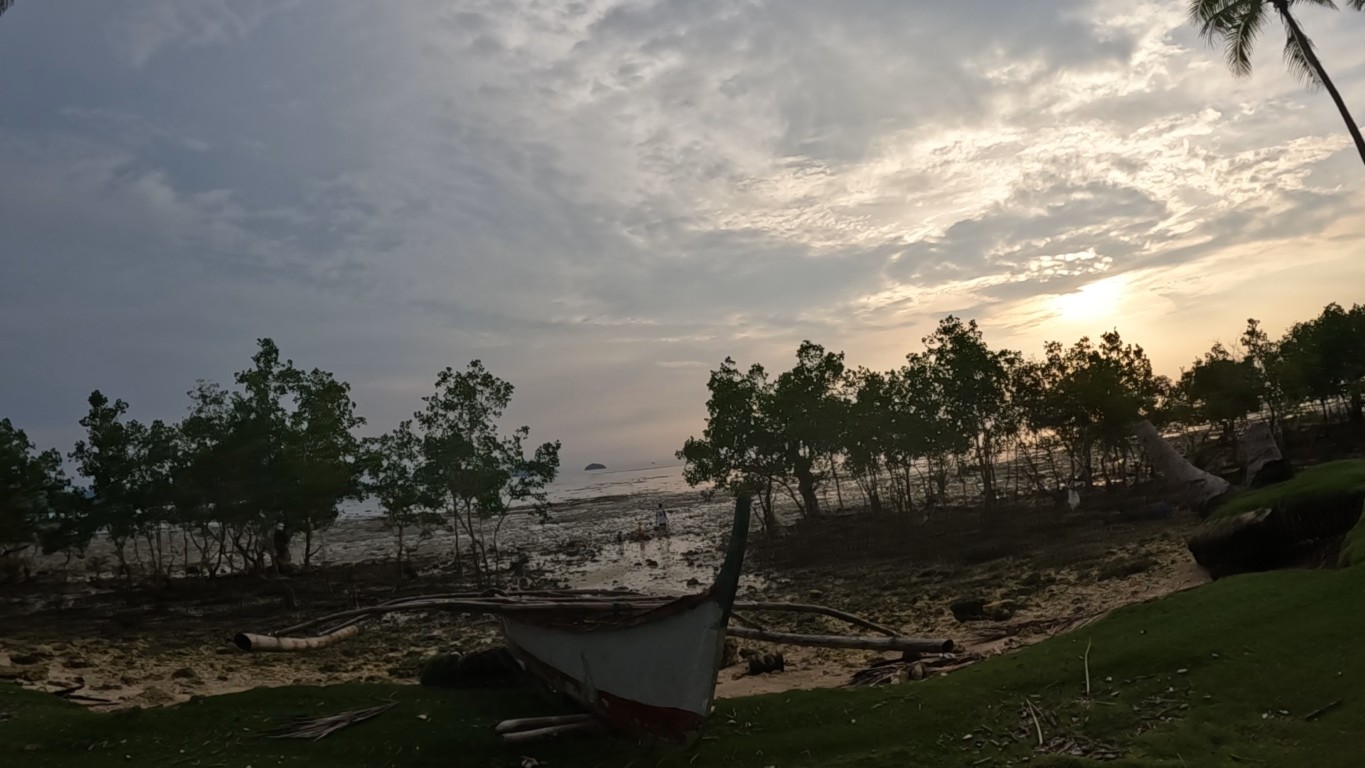
Low tide at John Aldrin White Beach.
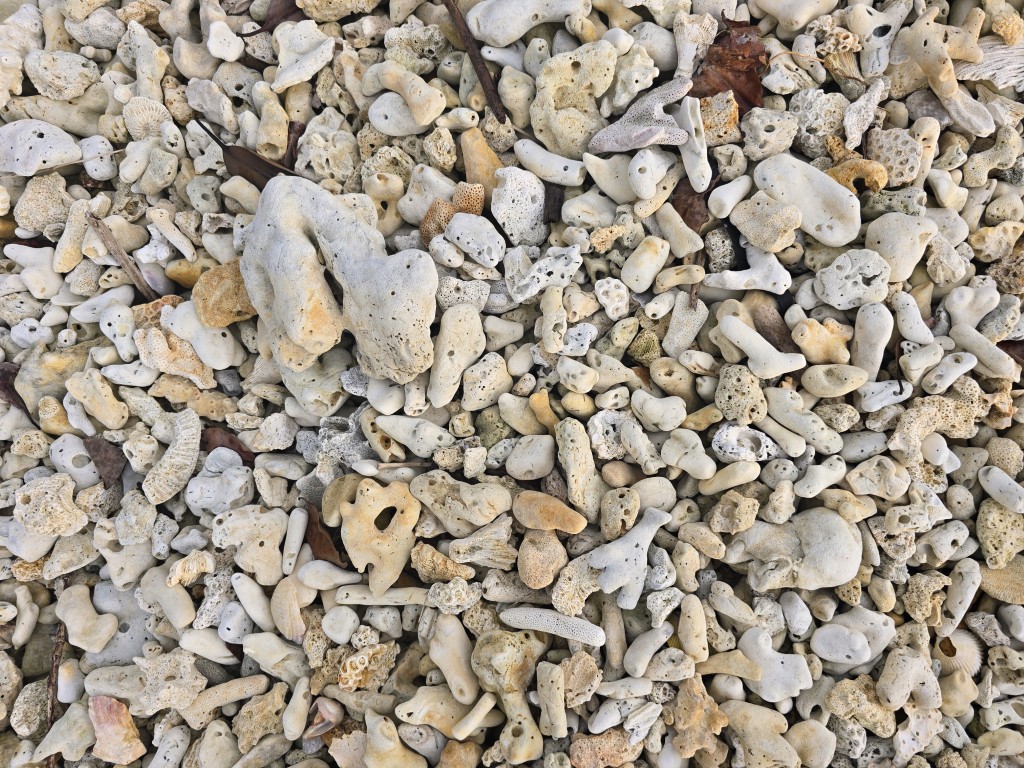
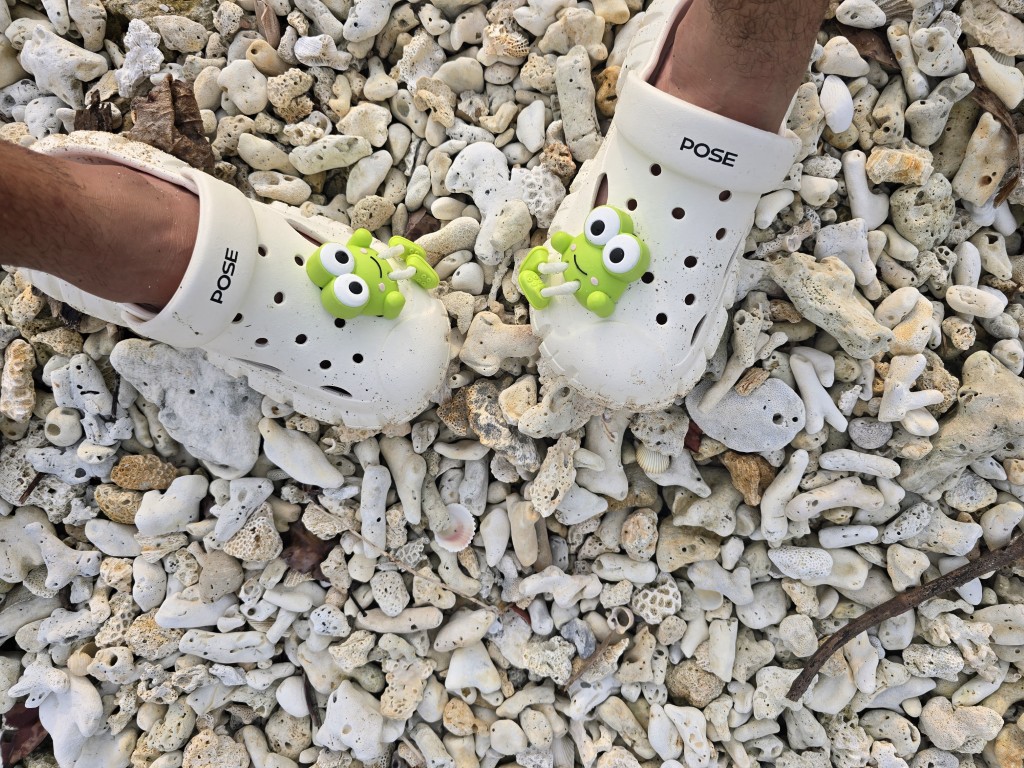
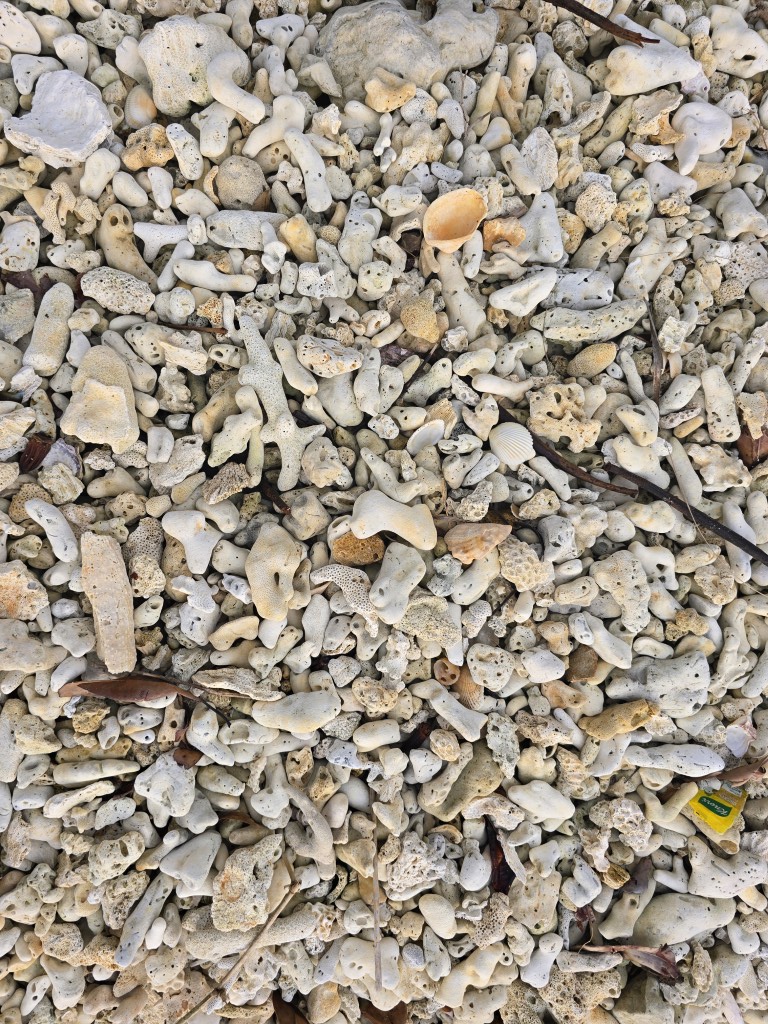
The pebbly part of the beach in Binahian.
It was clear that the tide has ebbed as the shallows had moved away far from the beach. Most plants and rocks that would be normally beneath the water had surfaced. As the tide was too low, we decided to forego of our initial plan to swim and just settled with wading through the water and sightseeing.
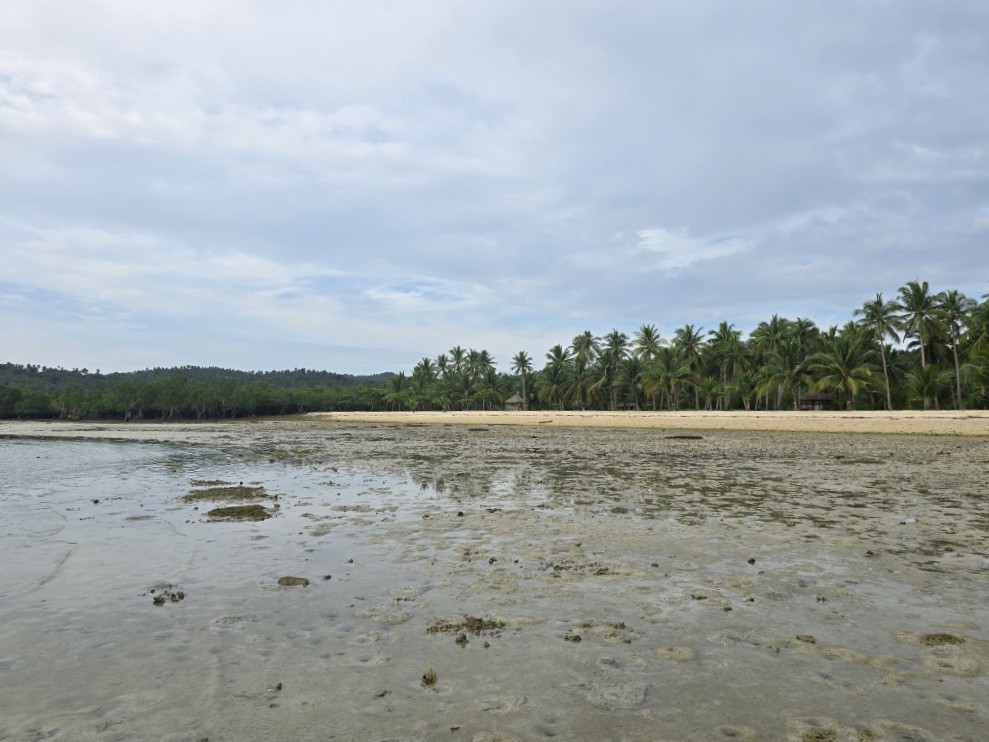
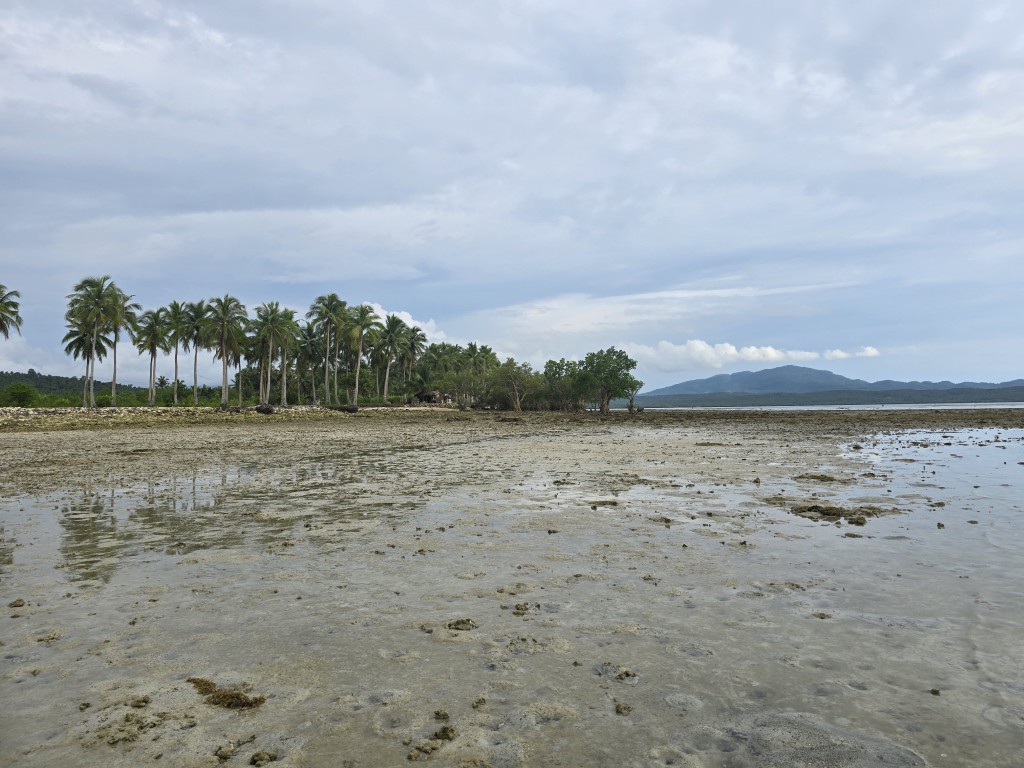
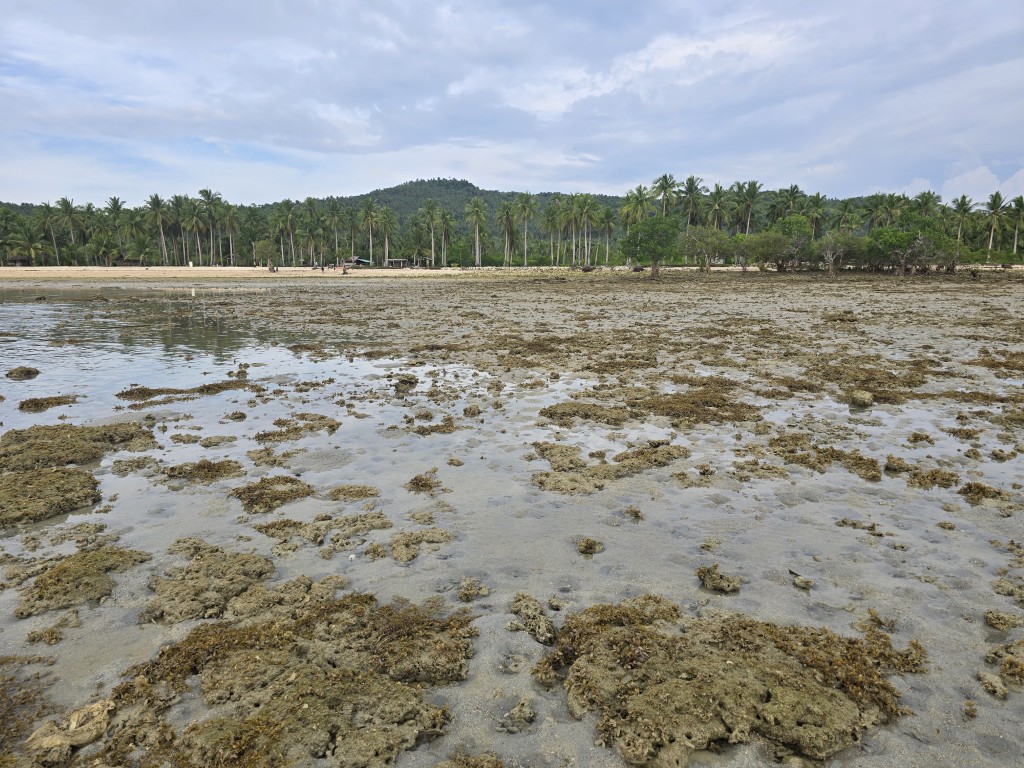
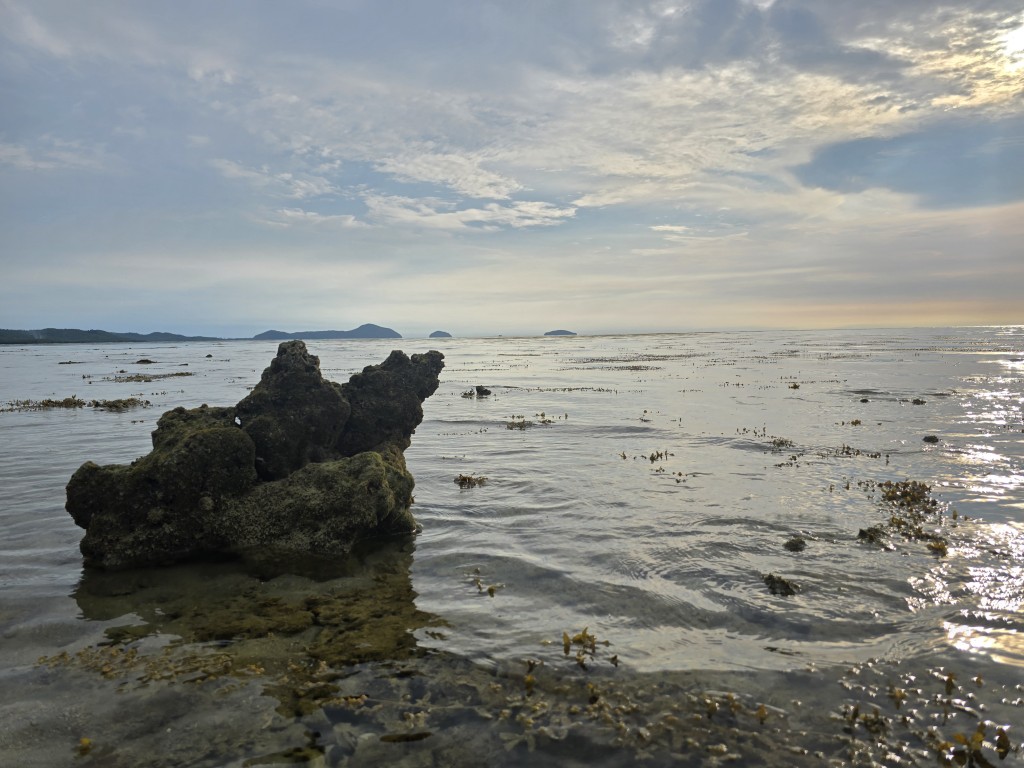
The calm of the ebbed tide.
The low tide did not only show us the other side of the sea, as opposed to the one that is often depicted with waves crashing to the beach. It also showed us some sea creatures that would otherwise be under water. It was nice to know that given the relative seclusion of the beach, life at the sea of Sipocot has a good chance at thriving.
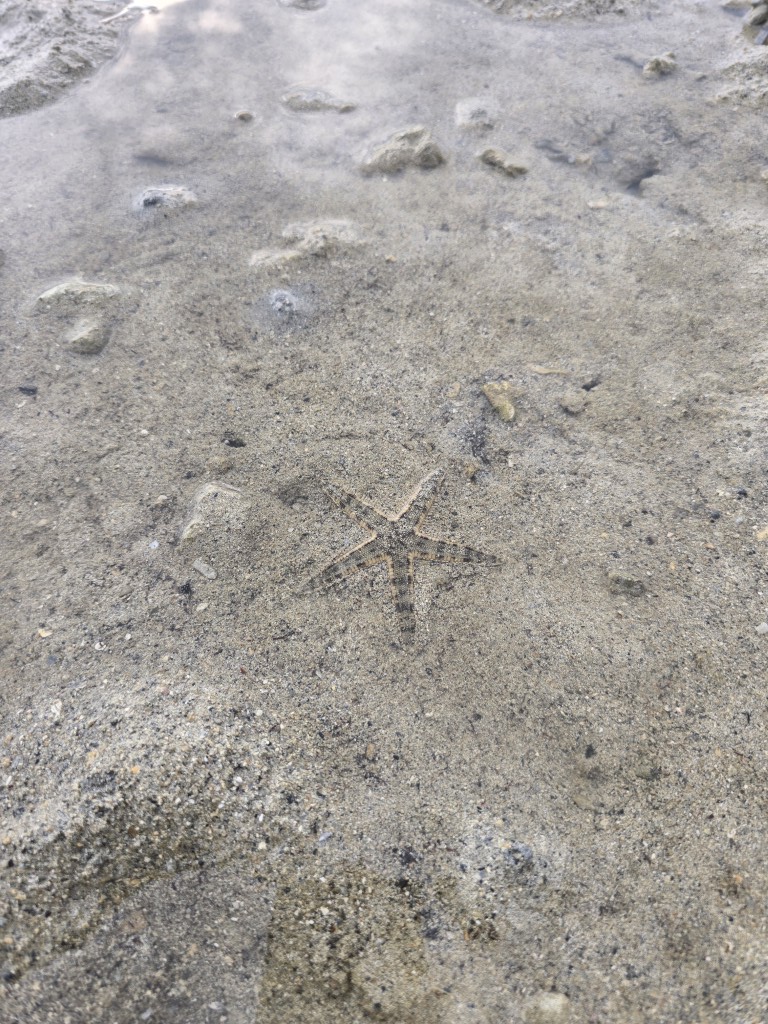
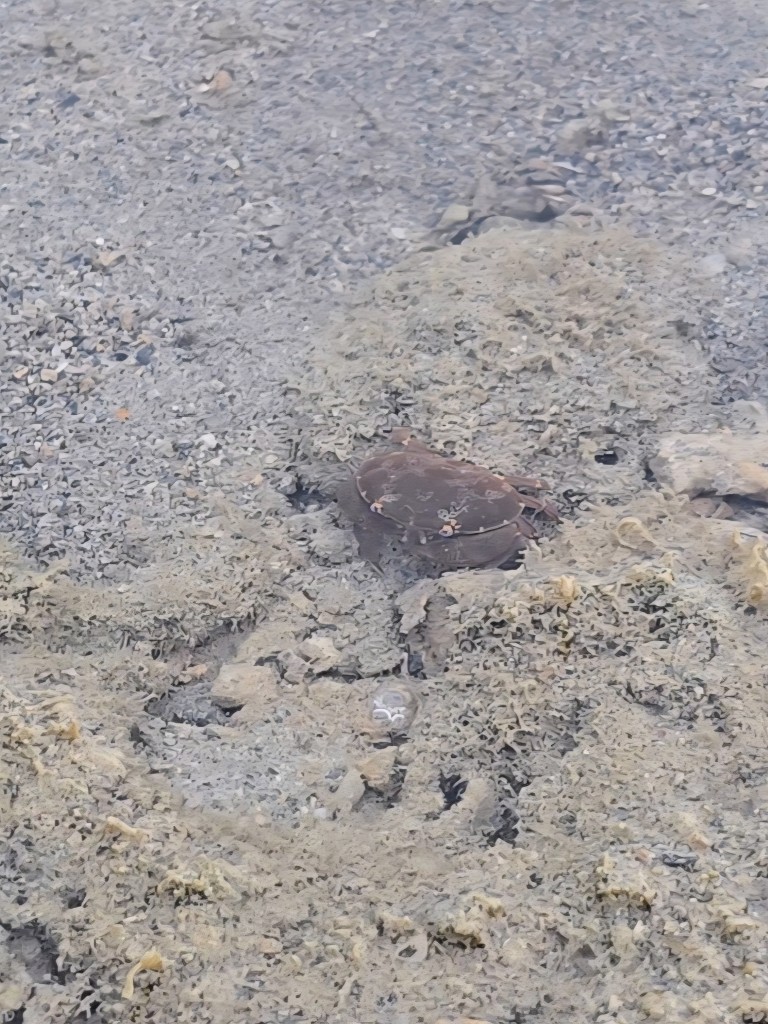
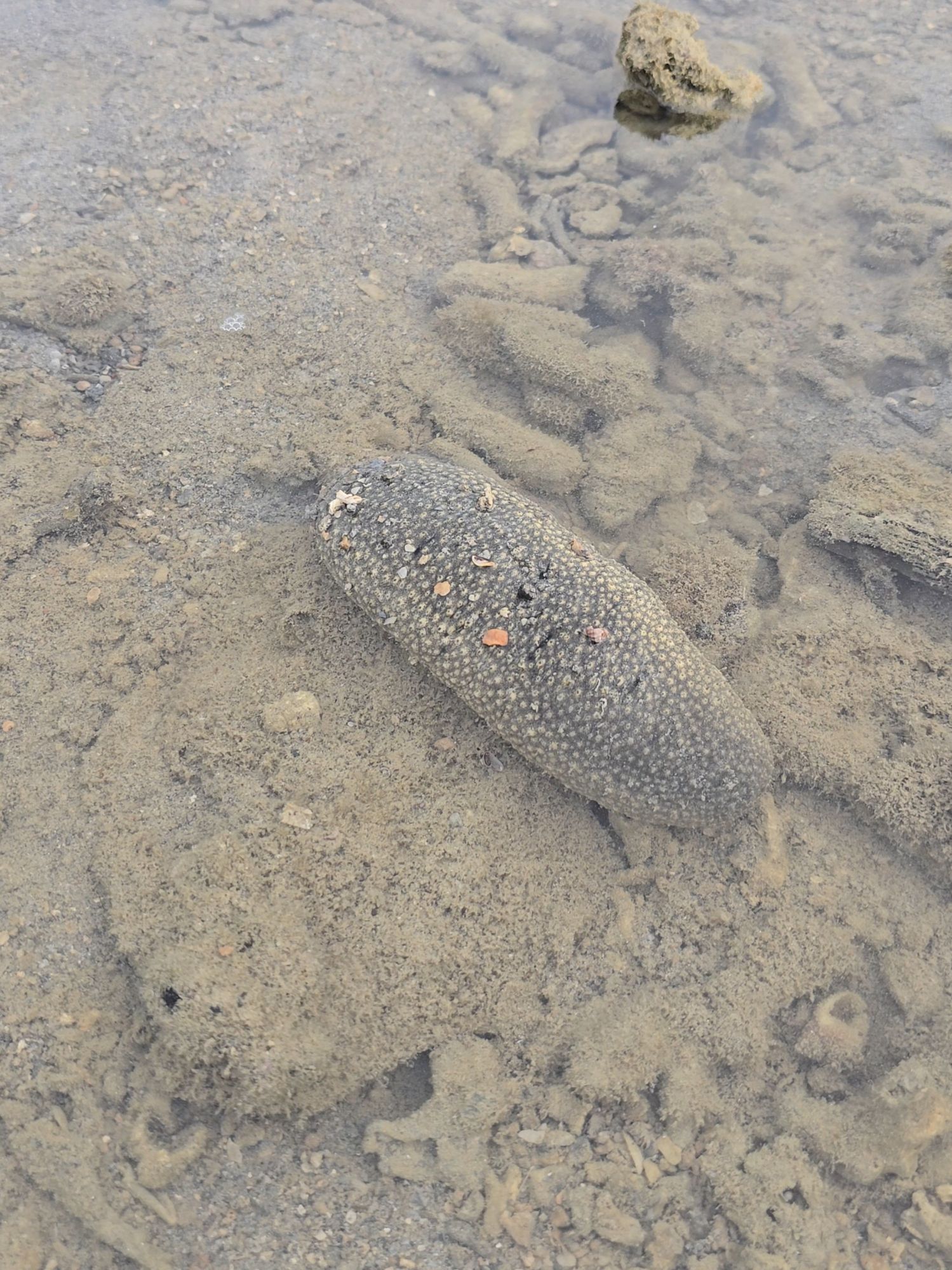
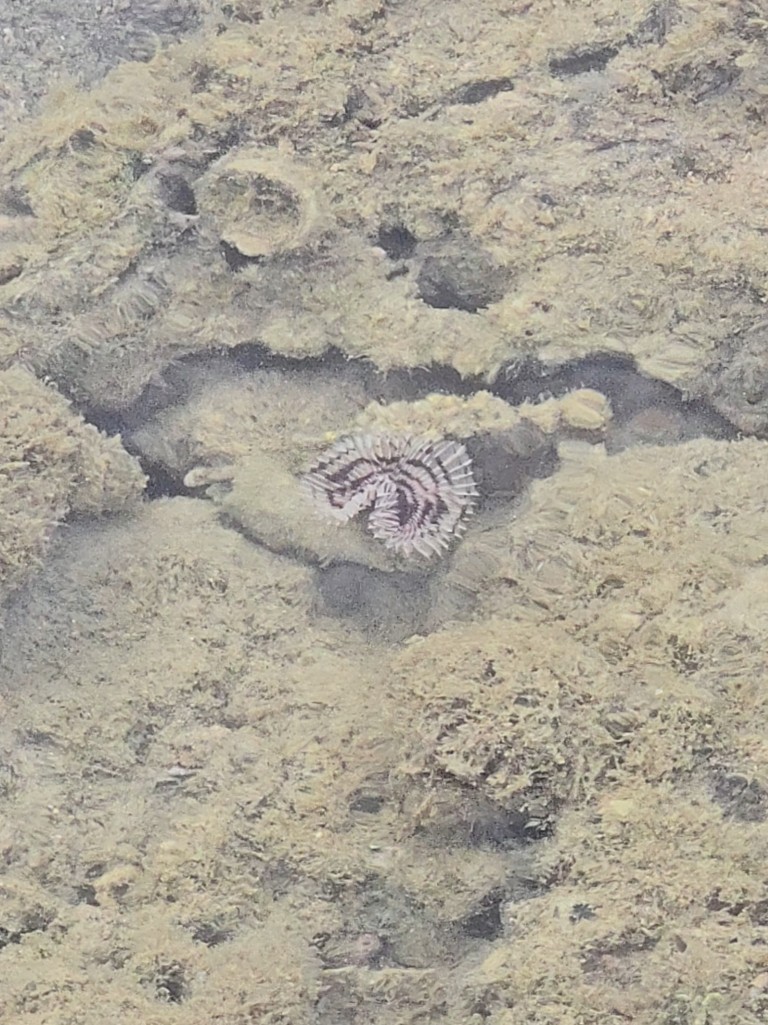
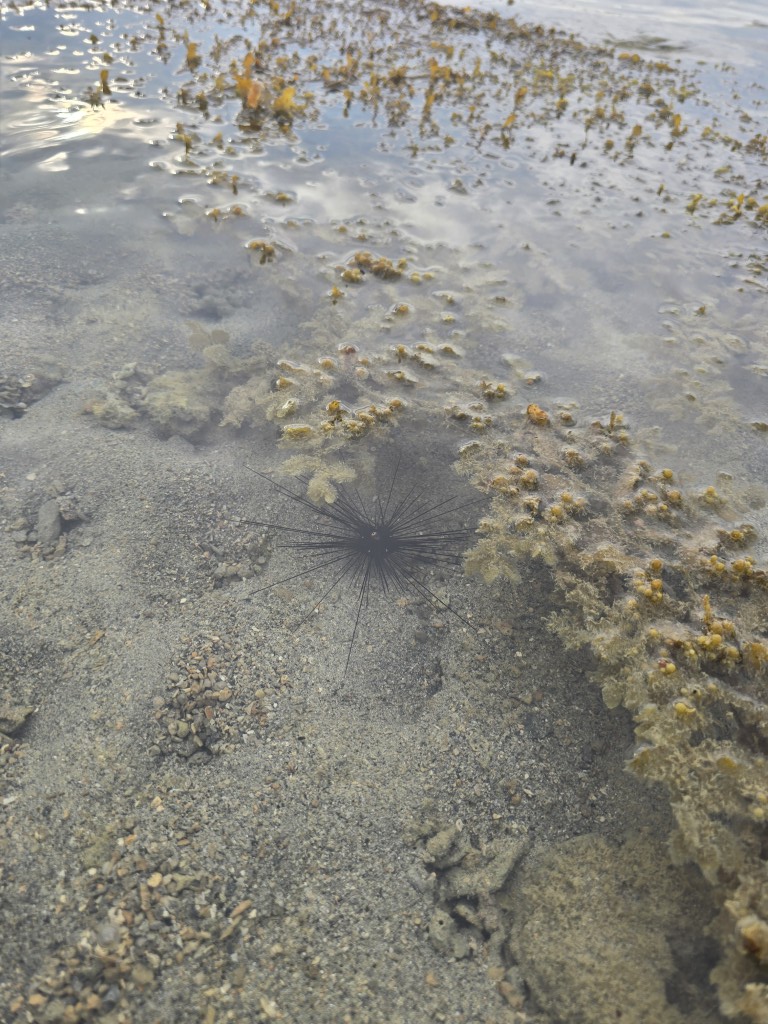
L to R — starfish, crab, sea cucumber, fan worm and sea urchin.
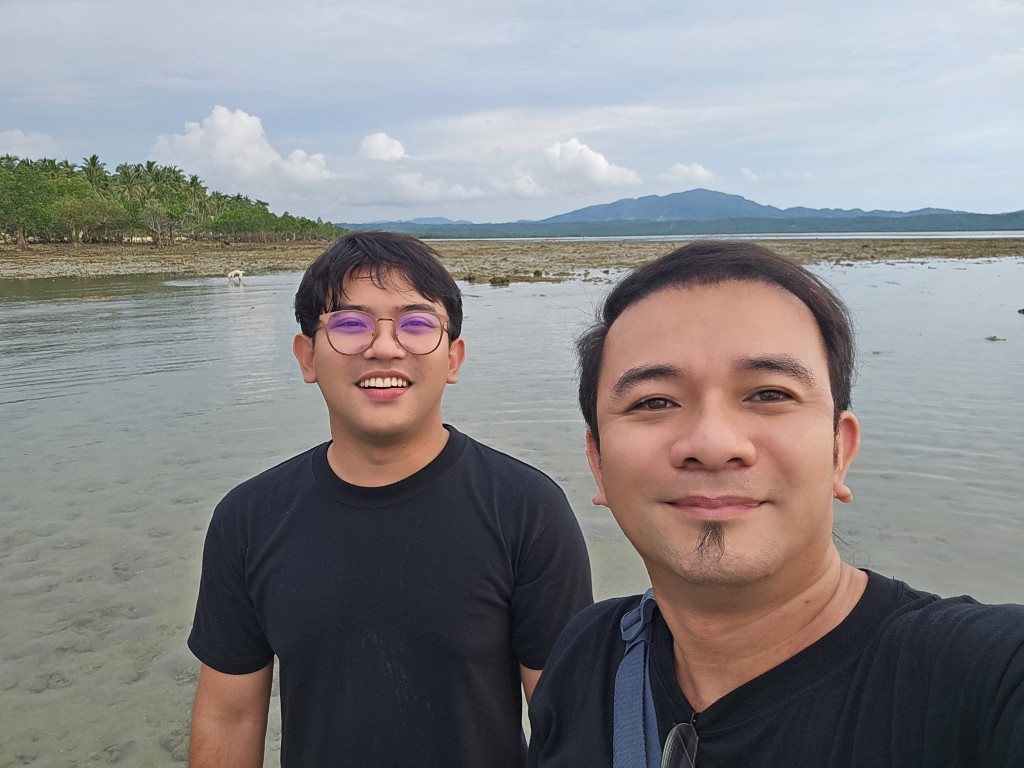
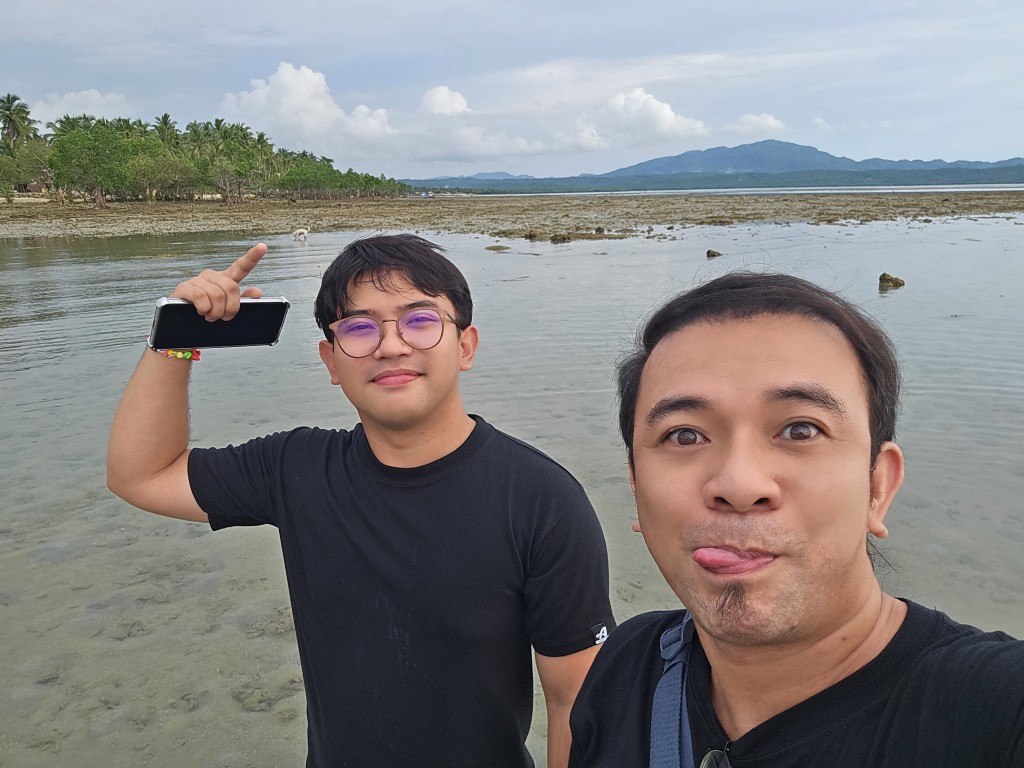
Not sea creatures.
We started to go back to the beach when it started raining, though the rain was just a fleeting one and was gone even before we got back to the shore. We then took more photos while immersing ourselves in relaxation in the midst of the relative silence of the sea, further enhanced by the ebbing of time.
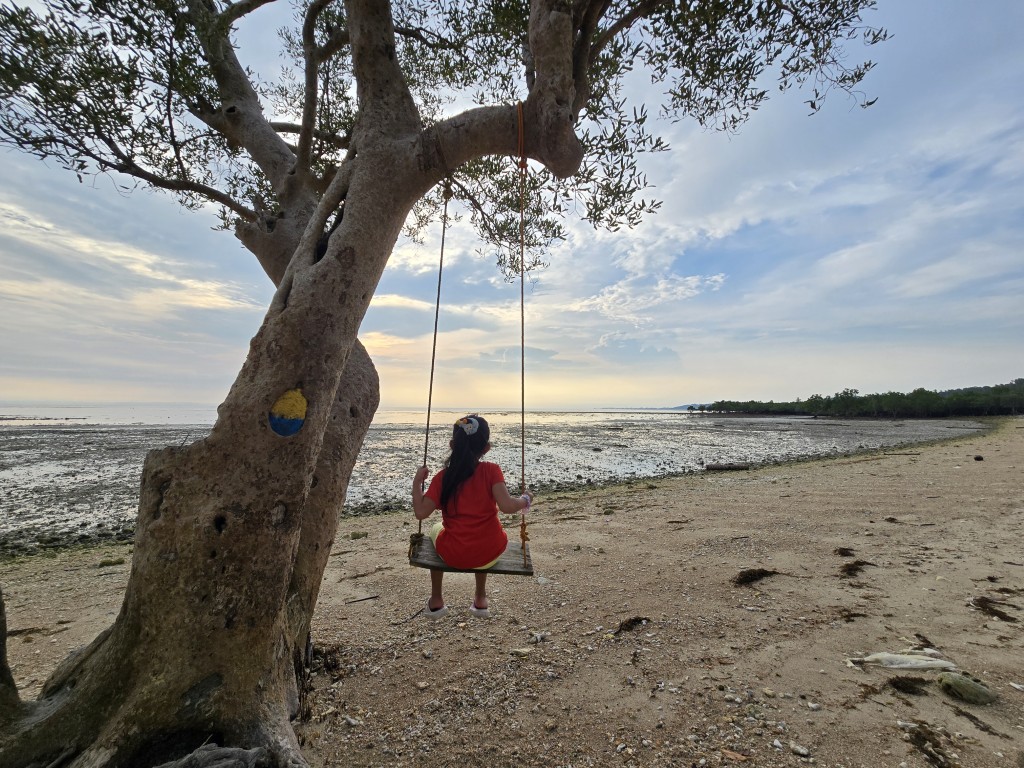
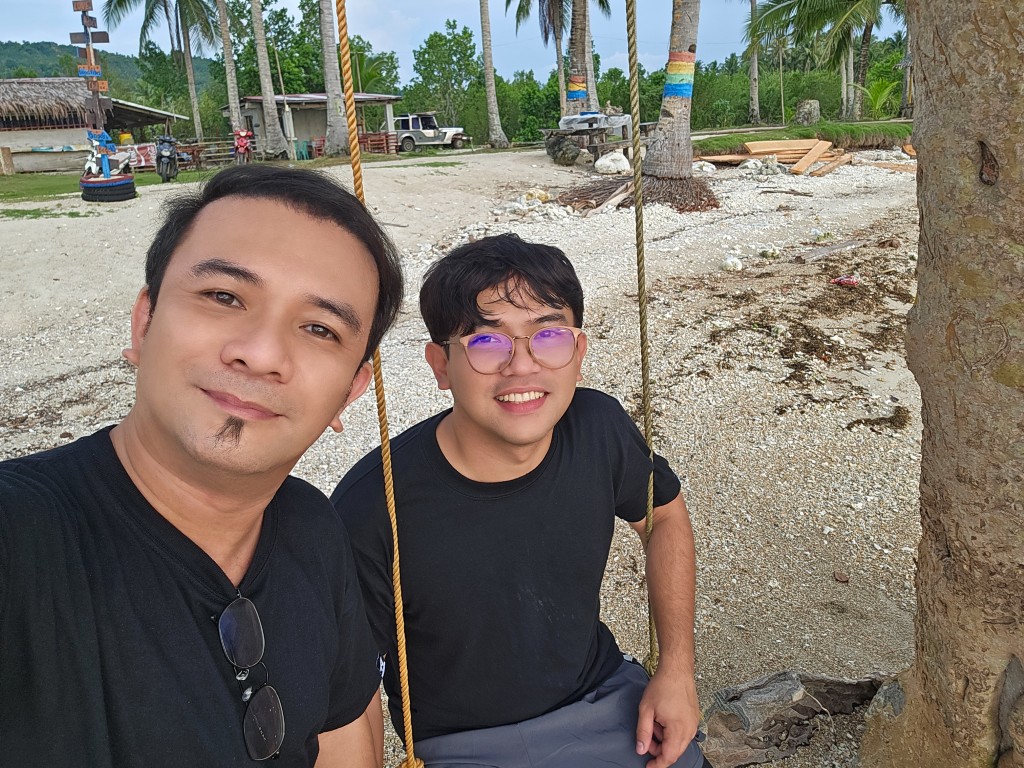
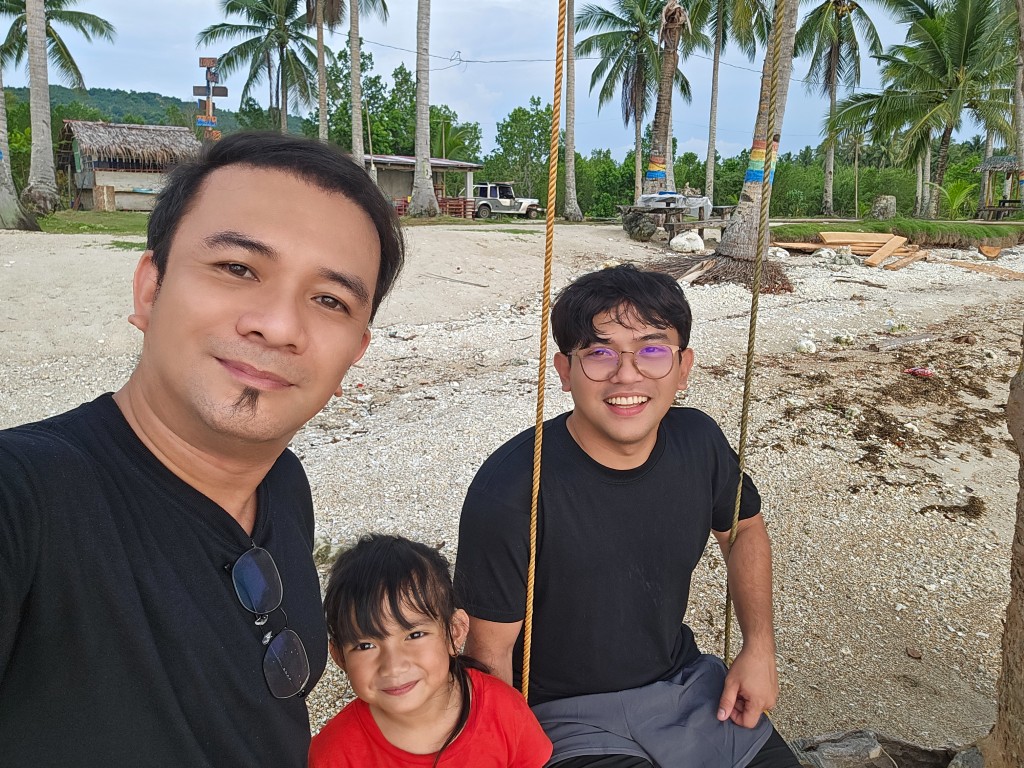
A relaxing afternoon: Ran, Riyan and me.
We would have loved to see the sunset, but driving through the narrow pathways in the dark was not a good idea, especially given the road condition to the beach and its secluded location. After almost an hour of bumming in the beach, hence, we called off our visit to Binahian and headed back to Caima.
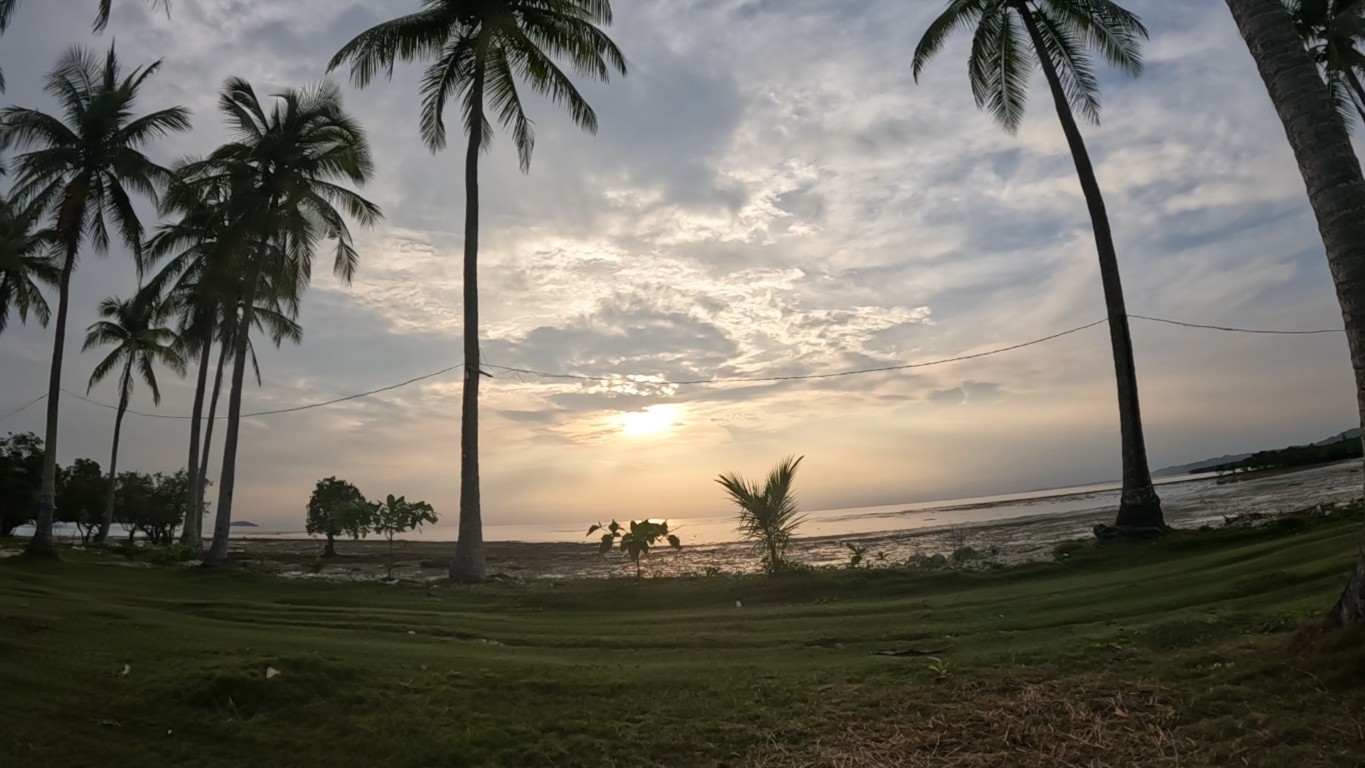
It is true that the combined ebbing of tide and time when we were in Binahian was just a typical cycle of nature, something that is normal and something that happens over and over again. It is, however, a reflection of an existential reality. The tides may go low but it will show that there is live thriving beneath; dusk will come, but it will usher a new day that is to come. True enough, very much like the cycles of nature, human lives are somehow predicated on cycles too; but for humanity, there is at least the choice to look at the ebb differently and the choice to take action on what has been seen beneath the surface or on what lies further ahead.
Beneath the surface and further ahead—just like what you would want to uncover and what you would want to achieve when travelling. Very much like what Renegade Junctures does.
We left Binahian a little past 05:00 PM and we were back in Caima just in time for dinner courtesy of Rose and her mother. After dinner, we stayed a while for good conversation, then headed back to our accommodation. We needed to rest for a long day that would await for us, a day that would start in the middle of the night but such a start that can never be more appropriate and fitting.
Our journey to Bicolandia had truly just begun.


 Renegade Junctures
Leave a comment