
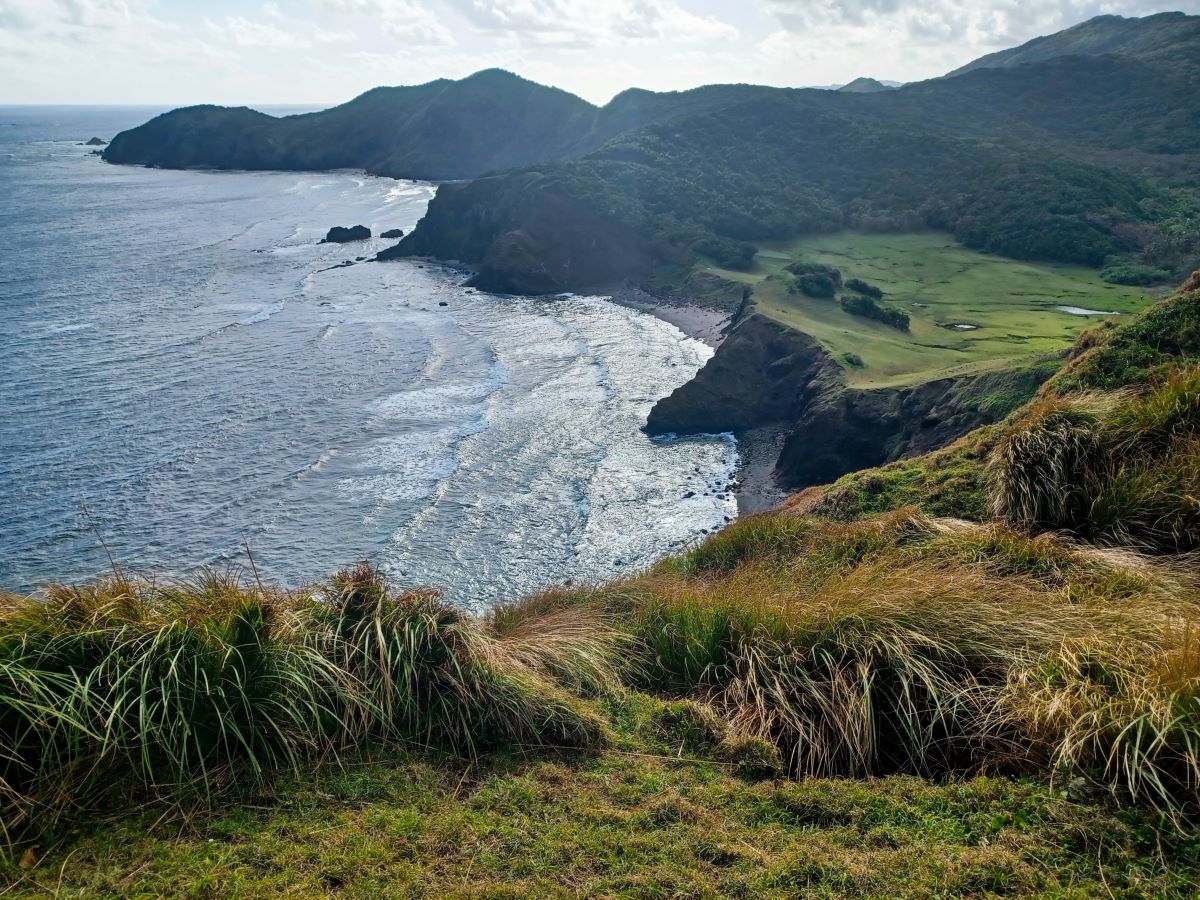
Just a few meters away from the Palaui Island marker where we viewed Dos Hermanas Islands is a perfect viewing spot to see the entirety of Cape Engaño from above. There is just no stopping to the amazement that we were experiencing.


A story goes that Cape Engaño got its name from the Spaniards who upon setting foot on the island were filled with awe, hence naming it Cabo Engaño. I am not a linguist, but that doesn’t make sense to me. In Spanish, engaño means deception. The loanword equivalent in Tagalog is engganyo, which means to lure. If the Spaniards were the ones who named the cape, then why does the Tagalog loanword seem to be the more appropriate source of the name as opposed to the Spanish one?
I think though that there is no need to choose which is which. Beauty, after all, is alluring but could sometimes be deceptive. Both works.


There is really nothing to do on the top of the cape but to stand still and appreciate the handiwork of nature. Beauty is an understatement. Our stay on the top, short as it was, opened our eyes to the unfathomable mystery of nature and how insignificant human existence really is. Come to think of it, no protection, preservation and to some extent, restoration would be necessary of humans are not destroying the delicate balance in nature to begin with. We’re all red-handed.
Speaking of humans, our next stop and the last one on the top of Cape Engaño is a manmade structure that due to its old age has already become a part of the historical heritage of Palaui Island, constructed by the same race who allegedly gave the cape its name.
We’re about to wrap-up the trip up the cape with a manmade wonder that has withstood the test of time.


Leave a Reply to renegadetravellerCancel reply