

One of the offshoots of the response of the Philippine government to the Jolo Cathedral bombing of 2019 was the growth and strengthening of the 11th Infantry Division of the Philippine Army. Founded just 10–day shy to a couple of months before the day of the bombing, the division, which also goes by its nickname Alakdan, is one of the infantries in Mindanao whose main task is to bolster anti-terrorist operations through conventional warfare. One of the main units of the Alakdan Division is the 1102nd Infantry Brigade, which goes with the nickname of Ganarul, the Tausug word for famous, celebrated or renowned. The Ganarul Brigade is stationed in Camp Bud Datu, our next destination in Sulu.
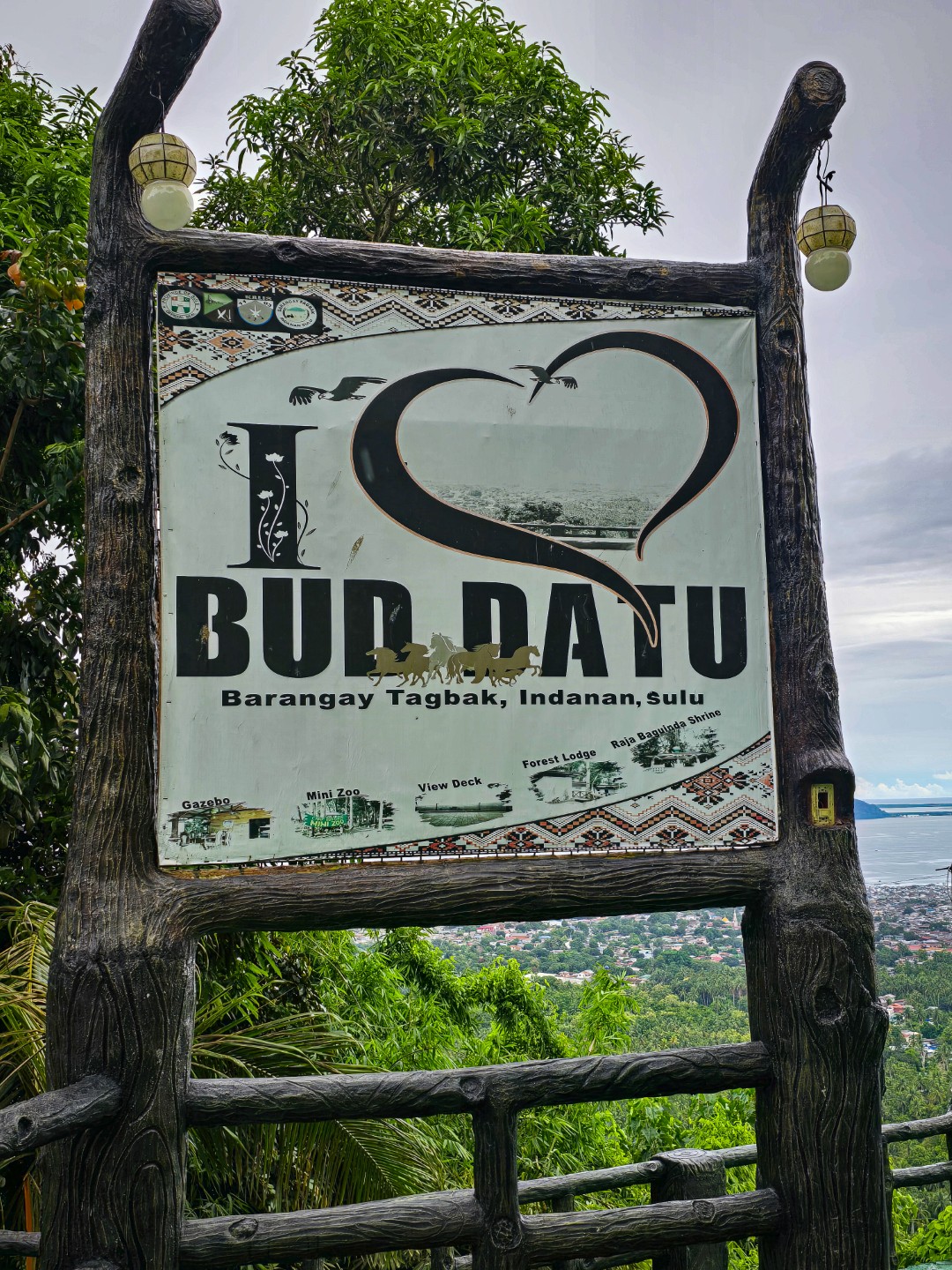
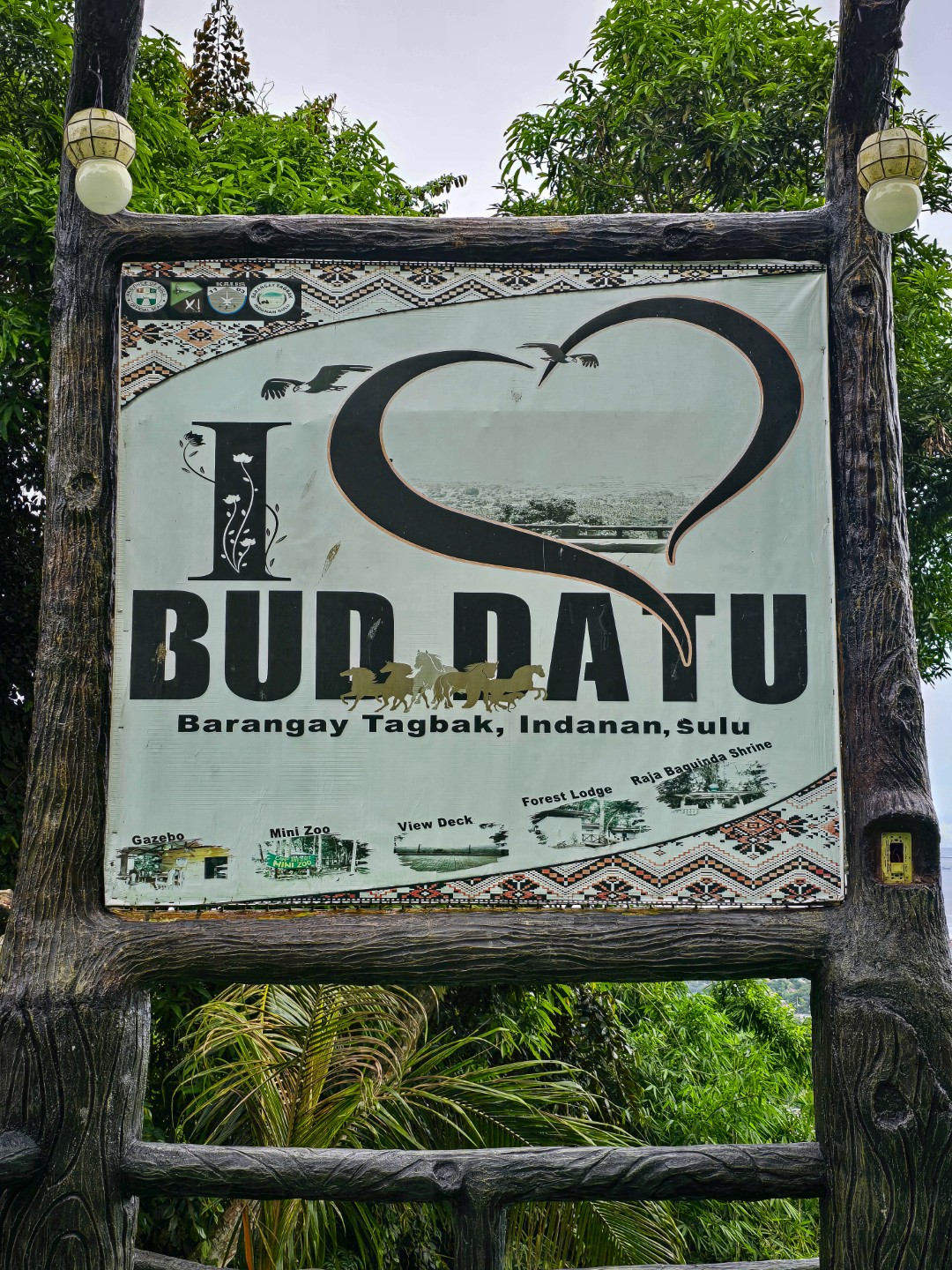
The signage on the view deck of Bud Datu in Indanan, Sulu.
Bud Datu or the Mountain of Rulers is located in the town of Indanan. Apart from its role of being a military camp where the heroic act of maintaining peace and order is part of daily life, it likewise plays an important part in perpetuating the pre-colonial history of the island province; in fact, even pre–Islamic history. Rajah Baguinda, the legendary last ruler of Sulu prior the establishment of the sultanate, is buried on the mountain. There is a shrine erected over his reputed burial site, but we were unable to visit the spot. What we missed with the shrine though, we made-up with a picturesque view overlooking Jolo and the Sulu Sea at a distance.
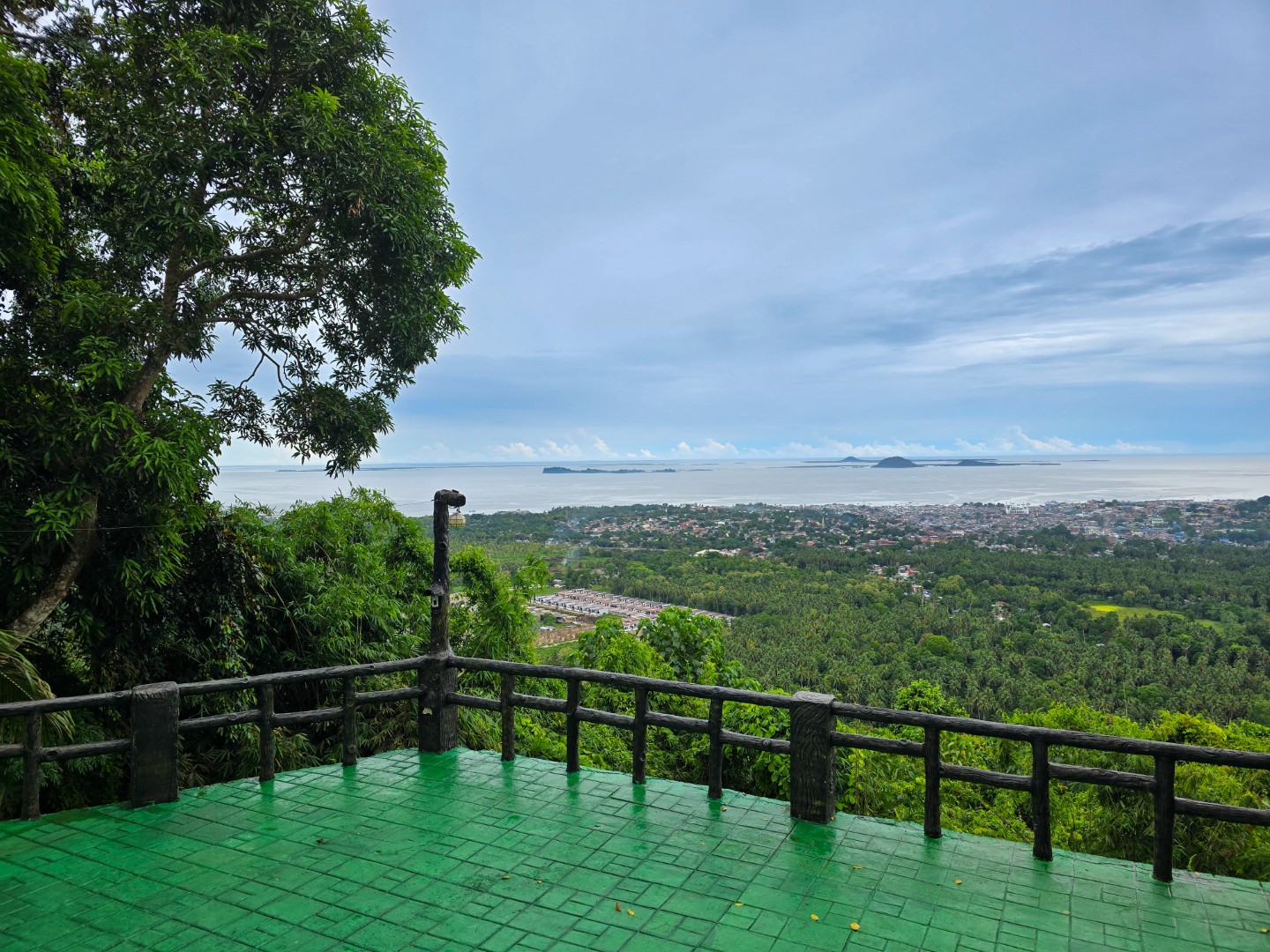

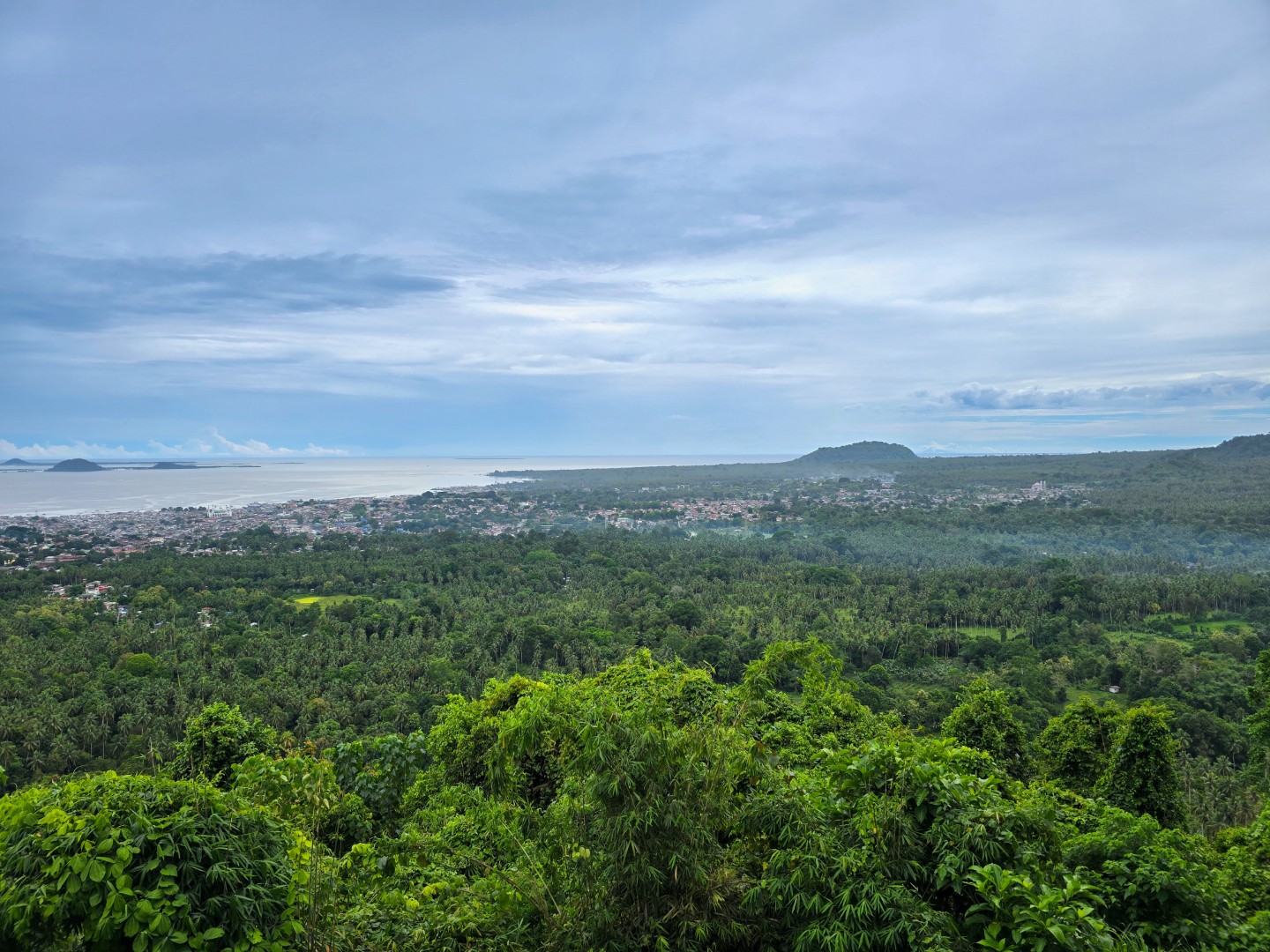
The scenic view from the view deck atop Bud Datu .
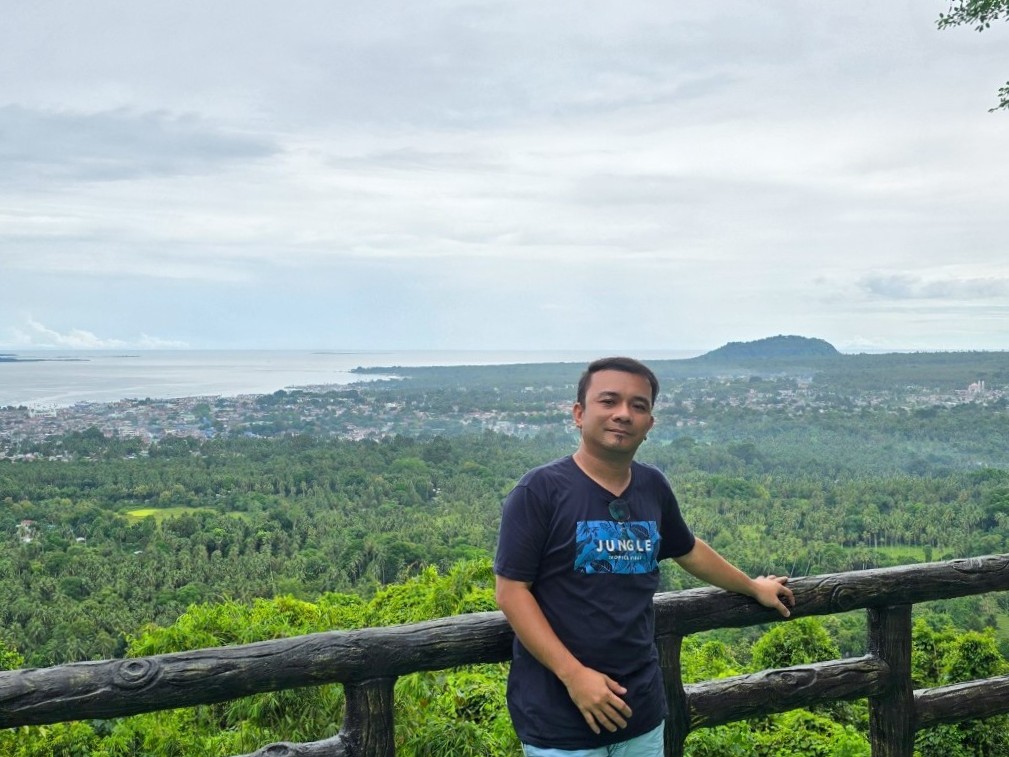


Just us, living the experience.
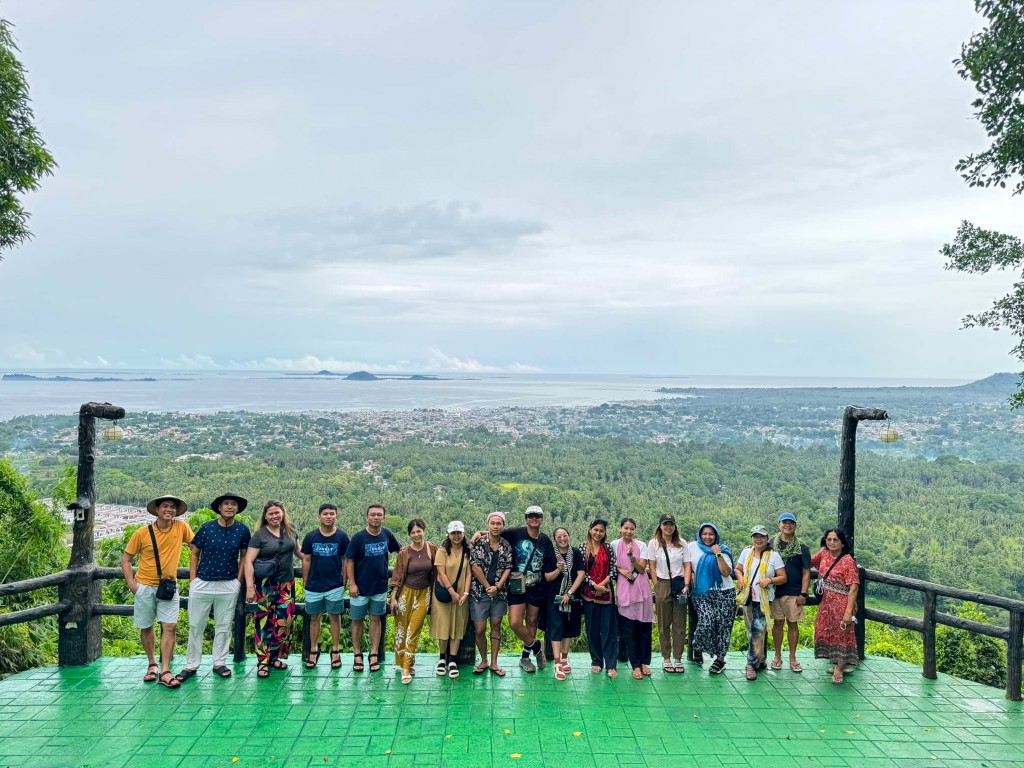
The skies were gloomy and it was drizzling for most parts. We were getting used to it though, as we were also welcomed by a downpour when we first reached Tawi–Tawi. We were still fortunate though that the rain had already taken it easy on us though the sun still had not shown up. It would have been a total pity if the downpour persisted. Despite the dark clouds hovering above us though, our visit to Bud Datu is worth the trip.
From the top of the mountain of rulers, down we went to where the waters fall.
Tambuang Falls is roughly a quarter of an hour away from Bud Datu. Located in the town of Maimbung, it does not pack a punch in terms of height but shows off in terms of plentitude of water flowing through. Located under the shadows of Mount Kuting, the falls is surrounded by trees and foliage, accentuated by a rainforest vibe owing to the local climate.


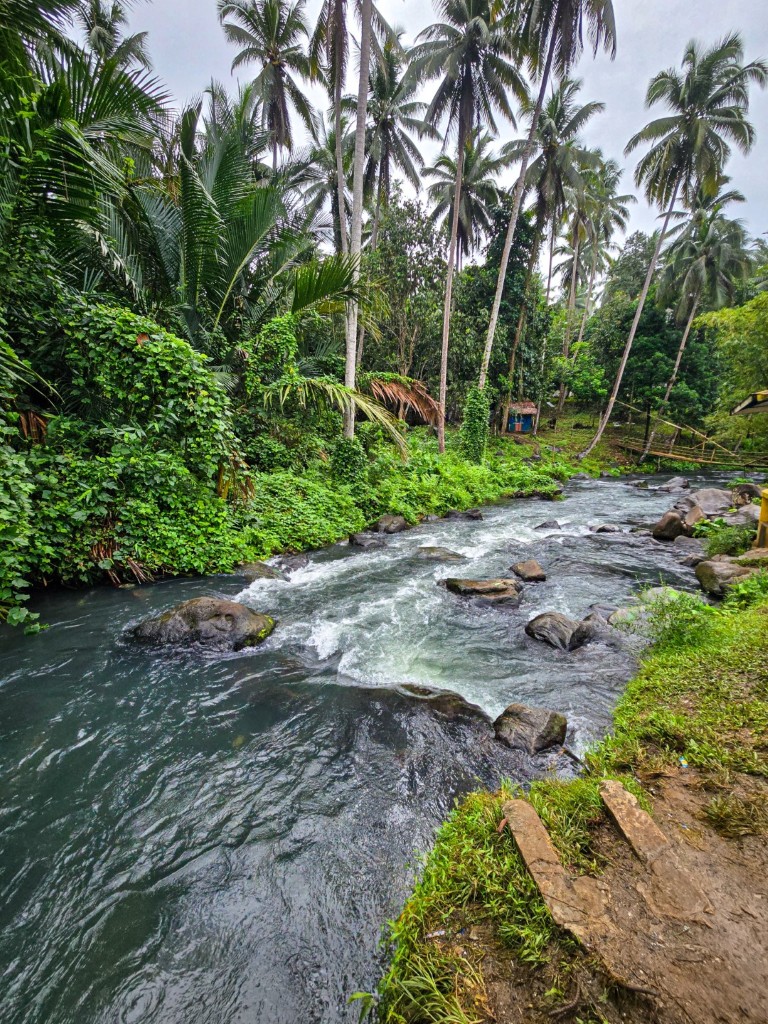
The downstream from the cascade of the falls.
While the forest is a given to surround the body of water, manmade structures had already been constructed around the falls as well, giving it a more resort vibe than a natural geological feature.
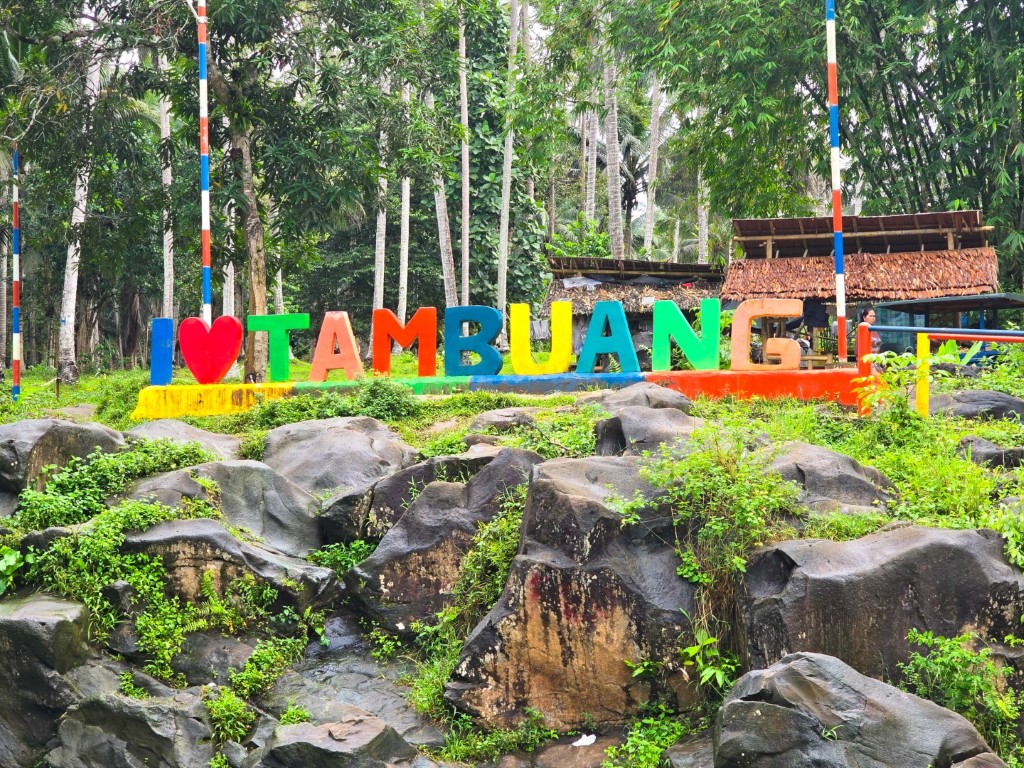
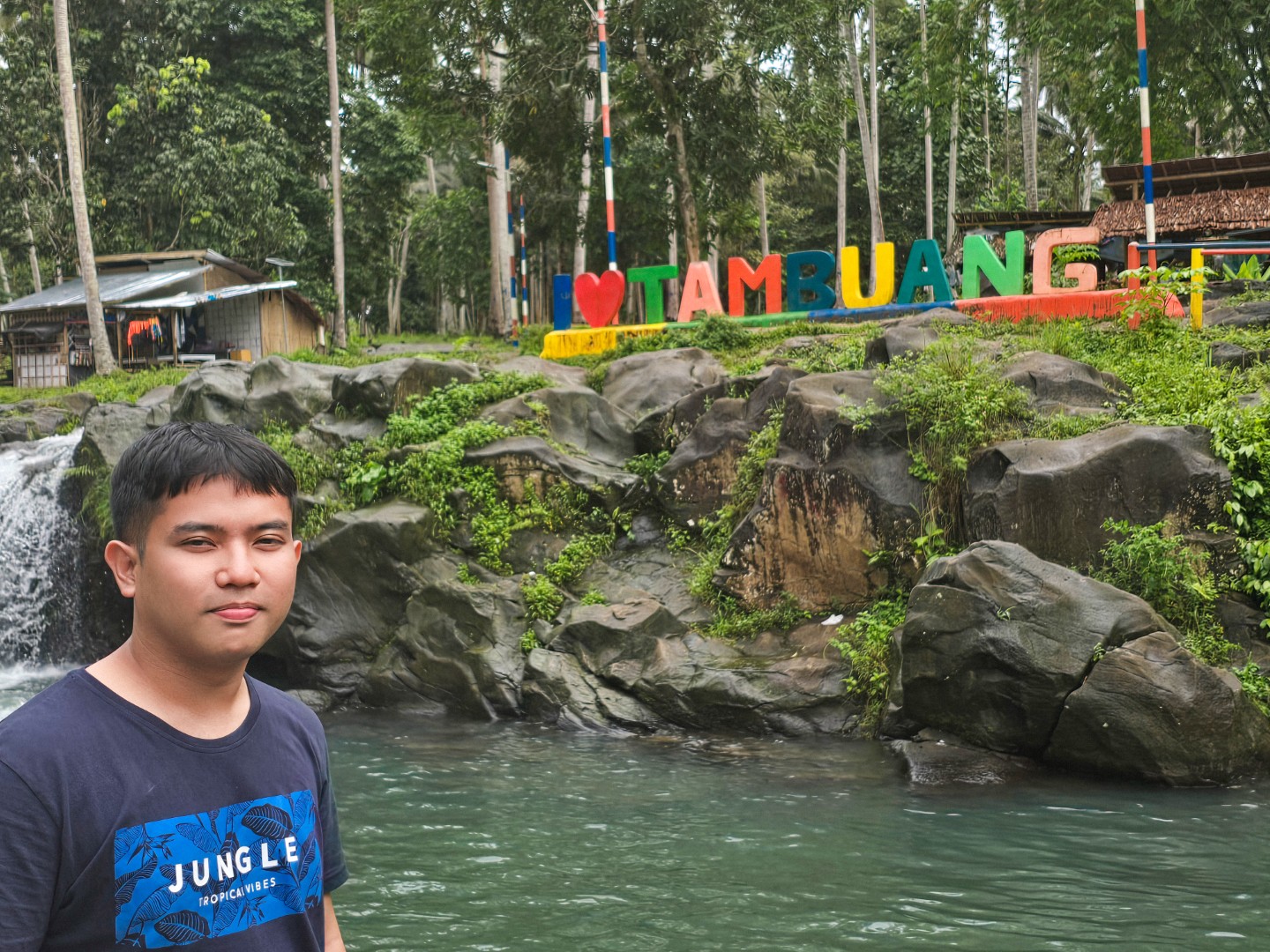
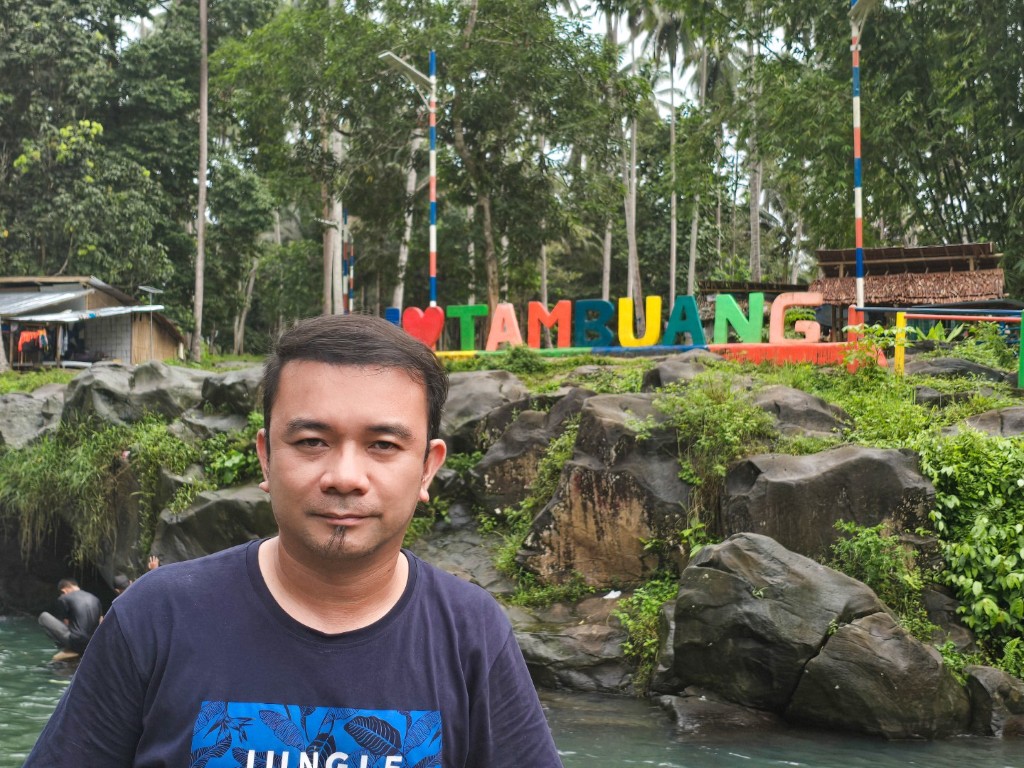
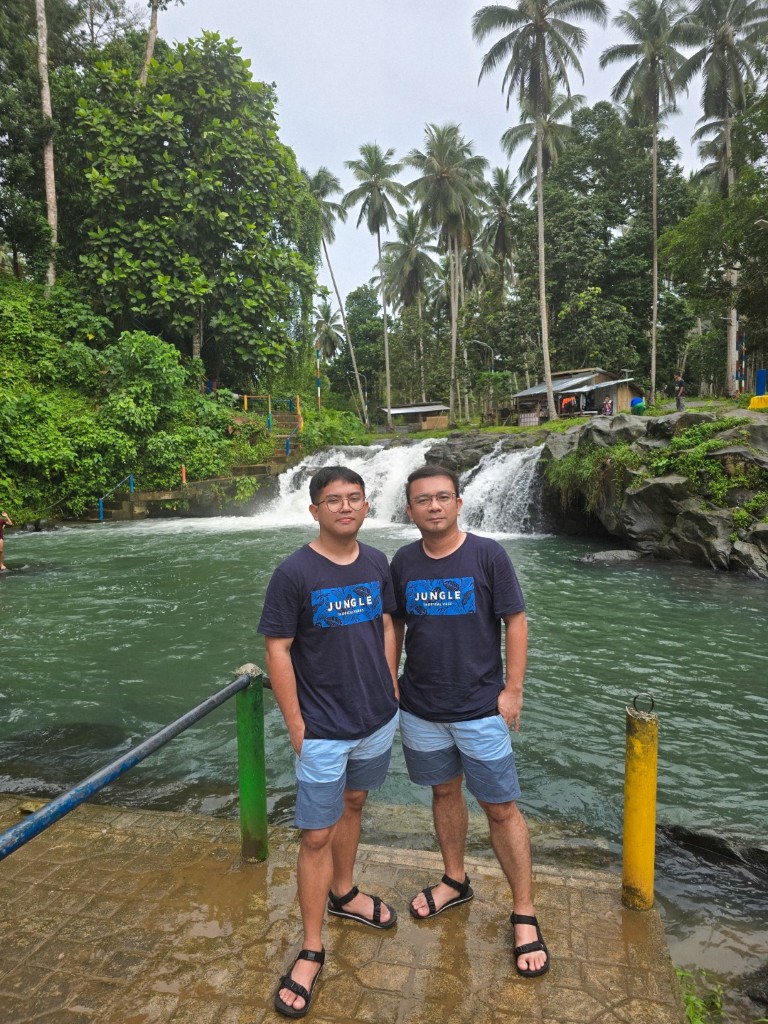
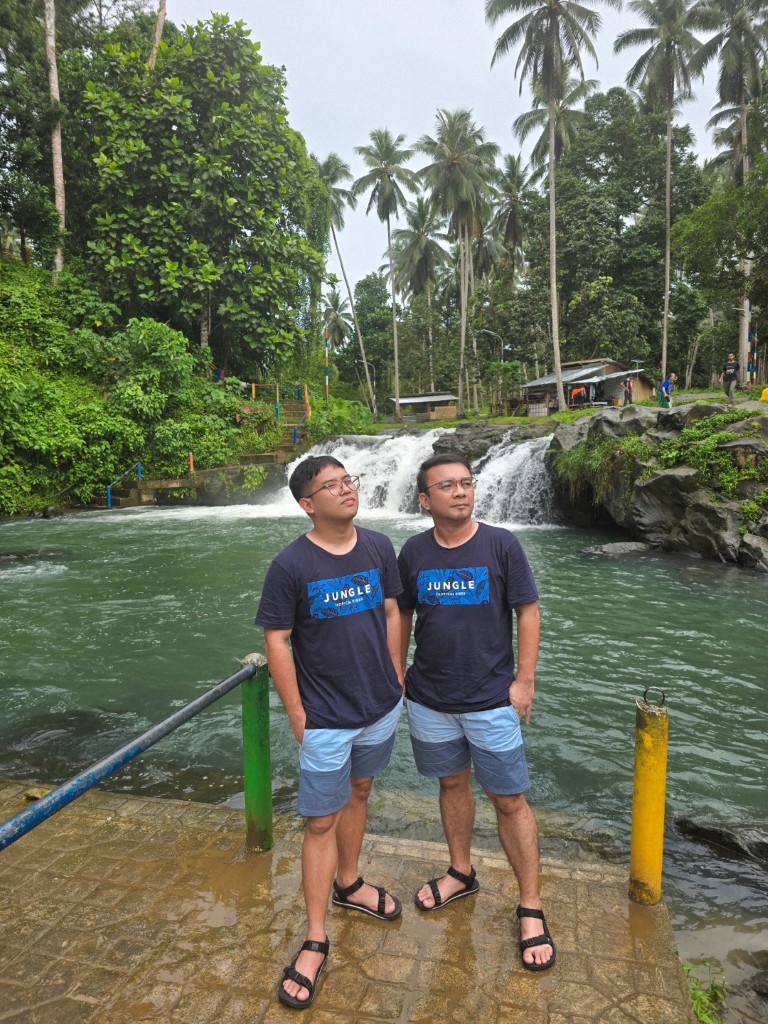
Twinning at Tambuang.
At this point, I do not intend to criticize just for the sake of criticizing, but the manmade structures around the falls took away everything natural that one should expect from such a body of water in the middle of the forest. The vibrant colors particularly gave an artificial touch to what could have been better described as a mystical place undisturbed by human hands. There is no turning back anymore though.
I understand all from the point of view of tourism; that perhaps, the local government just wanted to provide places to stay for visitors with the gazebos, paths to cross to with the bridges, and points where to take photos with the concrete displays. I get that, so much so that we even took our photos with the concrete displays. The concrete structures serves their purpose, but still, Tambuang Falls would have been better off in its unadulterated state. That is how nature thrives anyway. Visit it all you want, but leave it untouched.
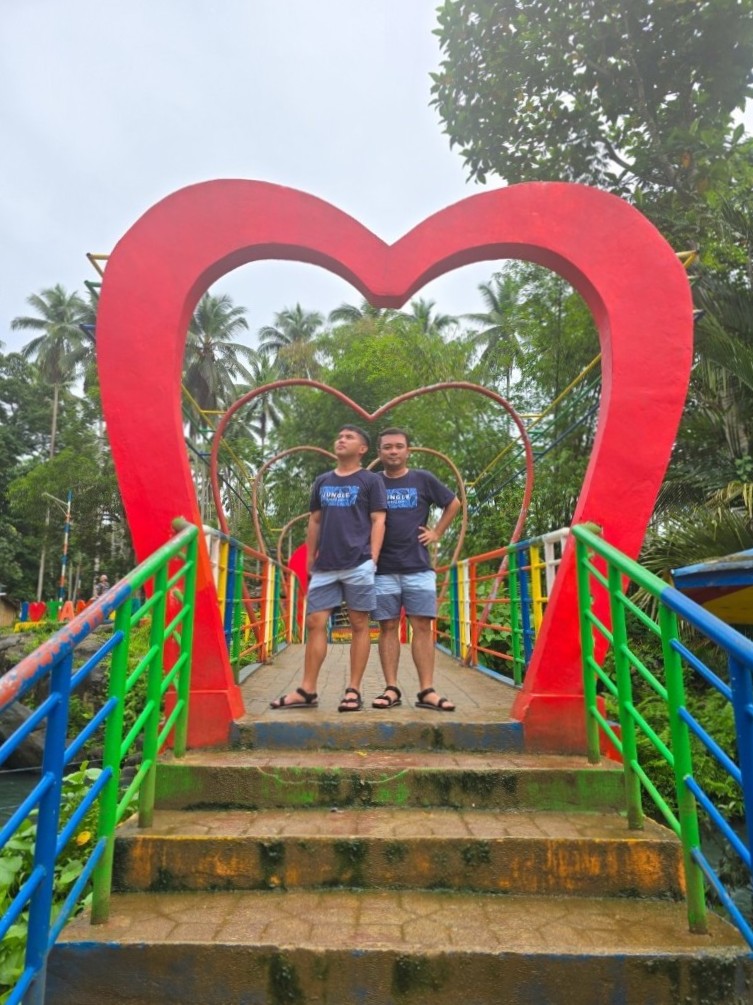
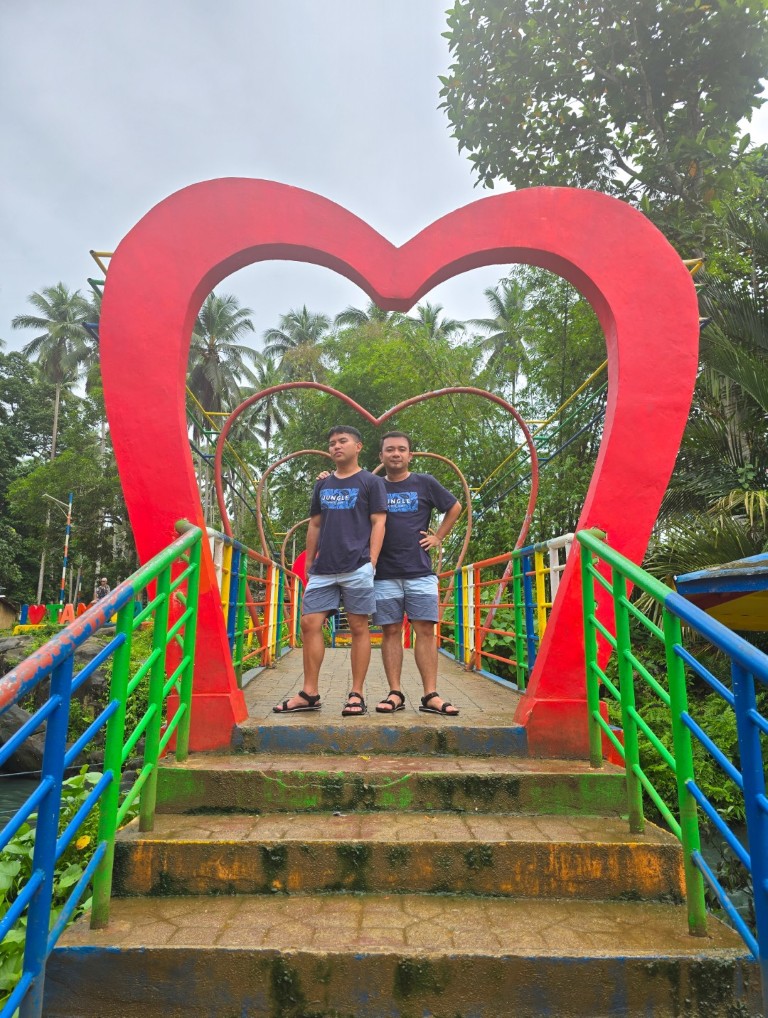

See? A heart so big, it can accommodate two—or even more!
So why did not I say anything similar to the other places we have visited so far, such as the military camp atop Bud Datu? Well, for one because this will be a never-ending article just pointing-out that we should draw the line between what is extremely necessary and what we can do without. The structures in Tambuang Falls sadly falls on the latter.
Despite what had been said though, Tambuang Falls remains a place worthy of a trip when in Sulu. Not only does it provide a spot for relaxation. It supports tourism, and in turn supports livelihood. That reason should be more than enough to go and see it.
From the top of the mountain of rulers, down we went to where the waters fall.
Our quick trips to Bud Datu and Tambuang Falls were trips to two different attractions in Sulu that serve different albeit correlated roles in the island province’s socio-economic landscape. One atop a historic and sacred mountain maintaining peace and stability; another down below providing recreation and relaxation. Without the former doing its job, the latter could not be enjoyed.
Next stop: where the only royalty left is God.


 Renegade Junctures
Leave a comment