
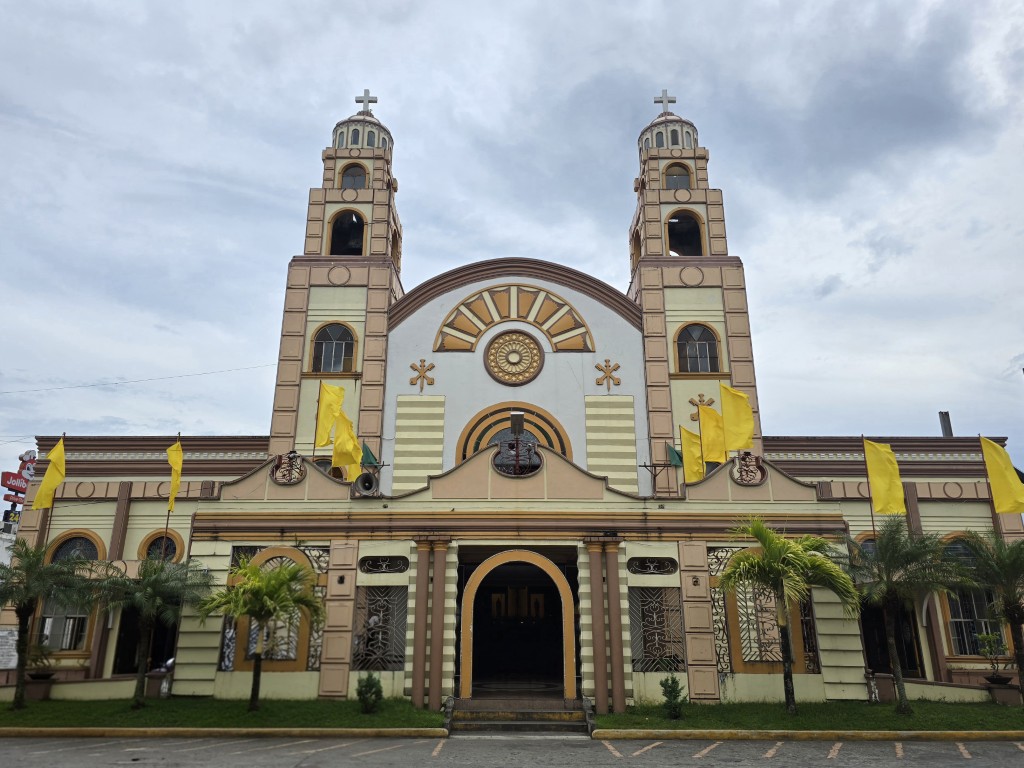
As if being the gateway to the evangelization of Bicol was not enough of an honor, Sorsogon plays another important part in the history of Christianity in the Philippines. It is where the first Filipino bishop of the Catholic Church, the late Most Rev. Jorge Barlin y Imperial, hailed from before being elevated to the episcopate.
Before being appointed as the Bishop of the then Diocese of Nueva Caceres, now the Archdiocese of Caceres, Bishop Barlin was the Vicar Forane of Sorsogon and parish priest of its capital town of the same name. One of the major challenges he faced back then was the rise of the schismatic Iglesia Filipina Independiente or the Aglipayan Church. Remaining steadfast to his loyalty to the Roman Catholic Church and the See of Peter, he reportedly rejected the offer to be the Obispo Maximo of the Aglipayans, saying that he rather be a floor sweeper or lampazero than turning away from the Mother Church.


The bust of Bishop Jorge Barlin y Imperial in front of the Sorsogon Cathedral.
Unfortunately, in 1909, Bishop Barlin fell ill and died while in Rome for the traditional ad limina visit to the Pope. He was buried in Cimitero Comunale Monumentale Campo Verano in Rome, and repatriating his remains is a challenge to this day as his original tomb and his bones could no longer be found.
Despite what happened to the mortal remains of Bishop Barlin, his reputation of courage and loyalty to the faith is immortalized not only in Sorsogon but in different places in Bicol Region, such as in his birthplace in Baao, Camarines Sur and in the City of Naga where the cathedral that he used to canonically posses is located.
These pieces of information were unbeknownst to us until we stood in front of the Cathedral of Sorsogon, the predecessor structure of which was the one where Bishop Barlin once served. The present structure of the cathedral was inaugurated in 2011 as the previous ones were destroyed by natural calamities.


The facade of the cathedral with shots of its distinctive dome.
The Diocese of Sorsogon was carved out from the territory of the Archdiocese of Caceres in 1951, and it was divided in 1968 when the Diocese of Masbate was carved out from it. Its current jurisdiction encompasses the entire civil province of Sorsogon, and its cathedral is dedicated to the patron saints of the Universal Church Saints Peter and Paul. The cathedral faces the Sorsogon Bay, as if reminiscing in a spiritual way how the sea was instrumental for Christianity to reach the shores of the Bicolandia through Sorsogon.


The aisle and sanctuary of the cathedral.


Replicas of Our Lady of Peñafrancia and the Divino Rostro, alongside the cathedra.


Details of the sides and ceiling of the church.
As is customary to our family, we offered our silent prayers inside the church before heading on to our next destination. After all, we cannot really separate the spiritual nature of our journey to Bicolandia. We were there on a pilgrimage for the Feast of Our Lady of Peñafrancia, and our visit to Sorsogon Cathedral, the once parish of the willing lampazero, is an appropriate continuation of our homage to the Patroness of Bicol.


Taking photos in front of the church just before we leave.
Our trip to the southernmost province of Luzon would turn out to be all worth the distance, and that the gloomy skies would turn out providential—as providential as being able to visit the last church served by Fr. Jorge Barlin before becoming the first Filipino bishop. The weather would eventually prove helpful, allowing us to visit places that would otherwise be under the heat of the sun.
It was already almost 08:30 AM when we left the cathedral but the sun remained concealed behind the clouds. We were thinking that as long as it was not raining, then we were all good. We pushed through to our last destination in Sorsogon before heading to more of what Bicolandia has in store for us.


Leave a Reply