

In calls to prayer of the major Abrahamic religions, the Jews use the shofar, while the Christians use the bell. It is said that the Muslims opted to use the human voice as call to prayer in order to distinguish them from the other religions. In Islam, the mu’azzin would climb up the minaret and use his voice to recite the adhan and remind the people of their duty to pray. This would have to be done five times a day, in order to fulfill the salah: fajr before dawn, dhuhr at noon, asr at late afternoon, maghrib at sunset, and isha at nighttime. With the introduction of sound systems, the job became easier for the mu’azzin. Mosques nowadays have loudspeakers installed on the minarets, ensuring a more efficient way of call to prayer.
During our stay in Tawi–Tawi, we would oftentimes hear the sound of the loudspeakers on the minarets. It is something that is integral to the community life, an undeniable intertwining of religion in daily routine. This did not come as surprise. As Tawi–Tawi is a majority Muslim province, the sound from the minaret is not just a part of daily life; the echoing adhan guides life. What came off as a pleasant surprise to us was that in the middle of the busy streets of downtown Bongao, in a skyline usually dominated by commercial signages, electric posts and domes of mosques, there was a bell tower and a cross.
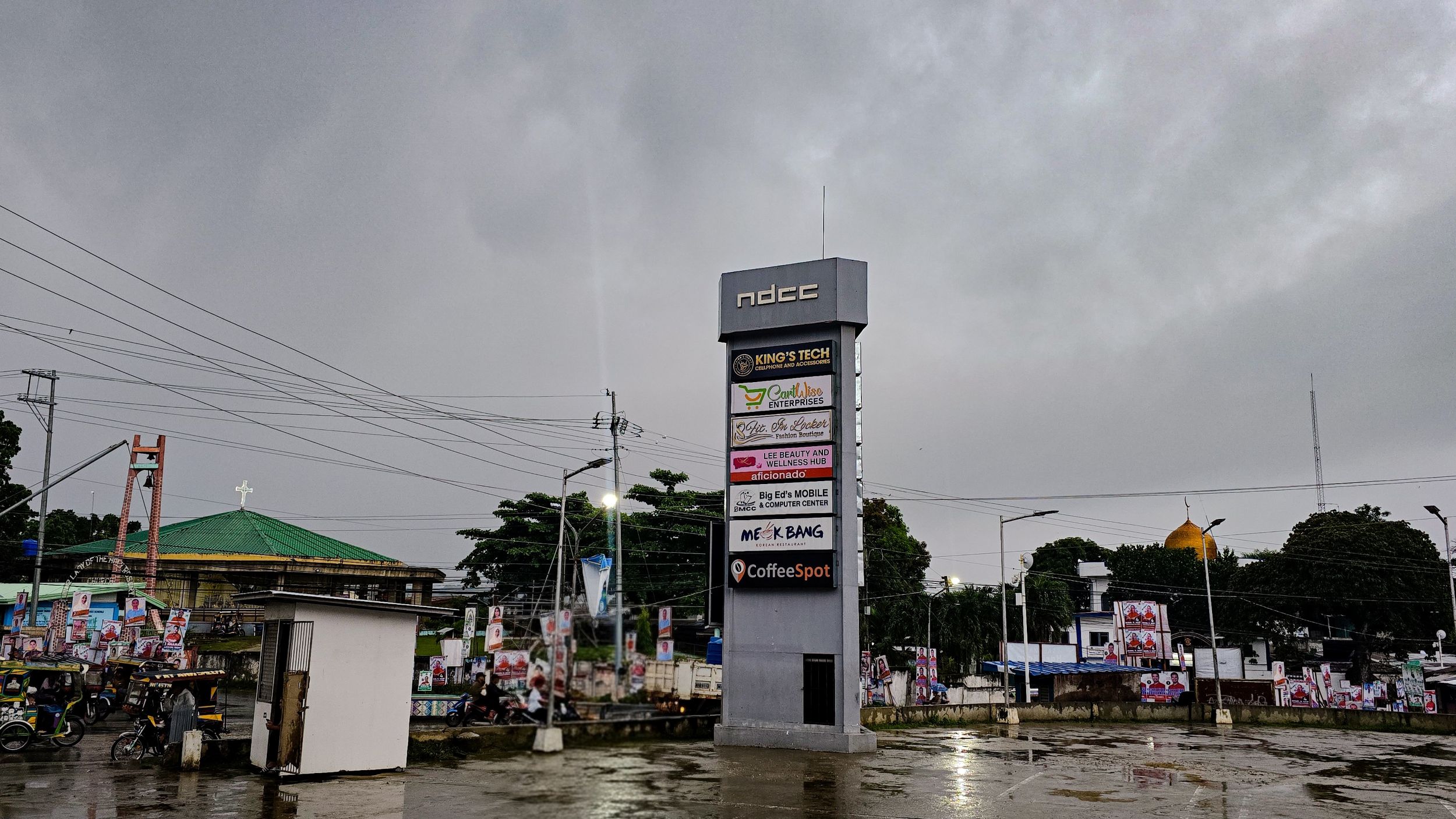
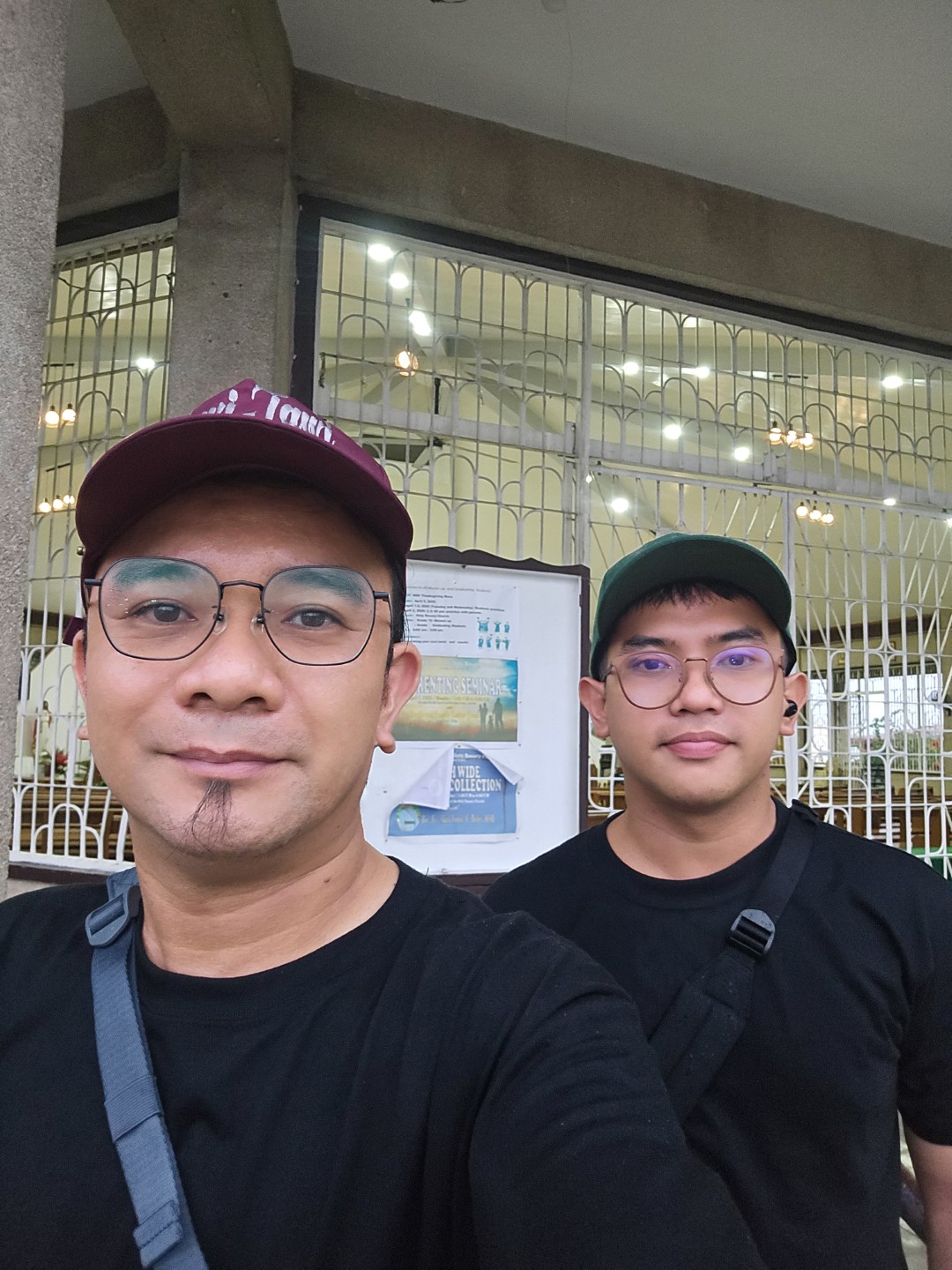
The rain that beset us in the provincial capitol went with us until we reached downtown Bongao. There, we had a quick stop in a commercial plaza to replenish our stocks of snacks and drinks. After buying our stocks and while in the vehicle waiting for the rest of the group, Ran and I informed our driver that we would want to bolt from the group to visit the church that was nearby. It was still raining and we made a run for it.
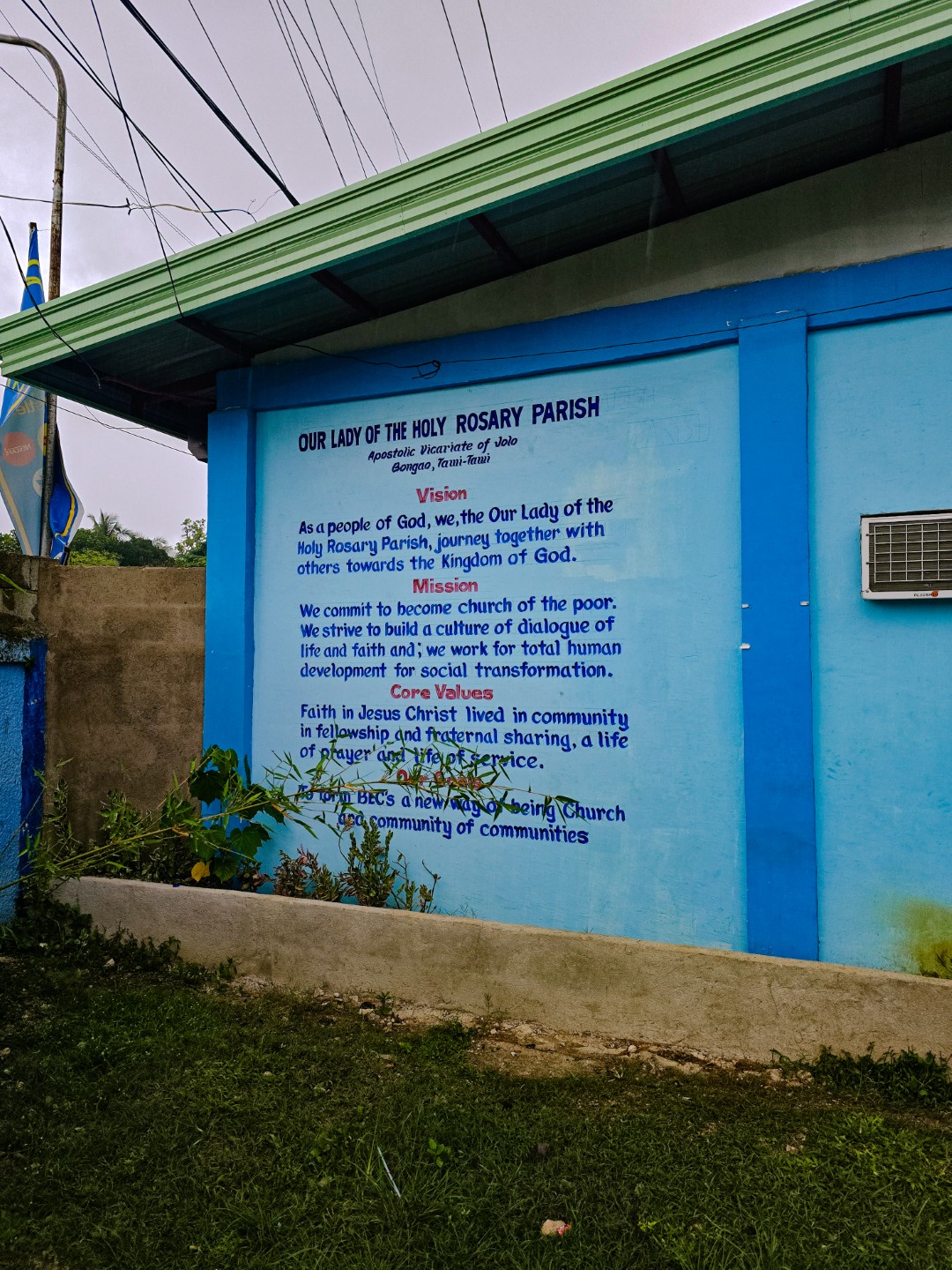
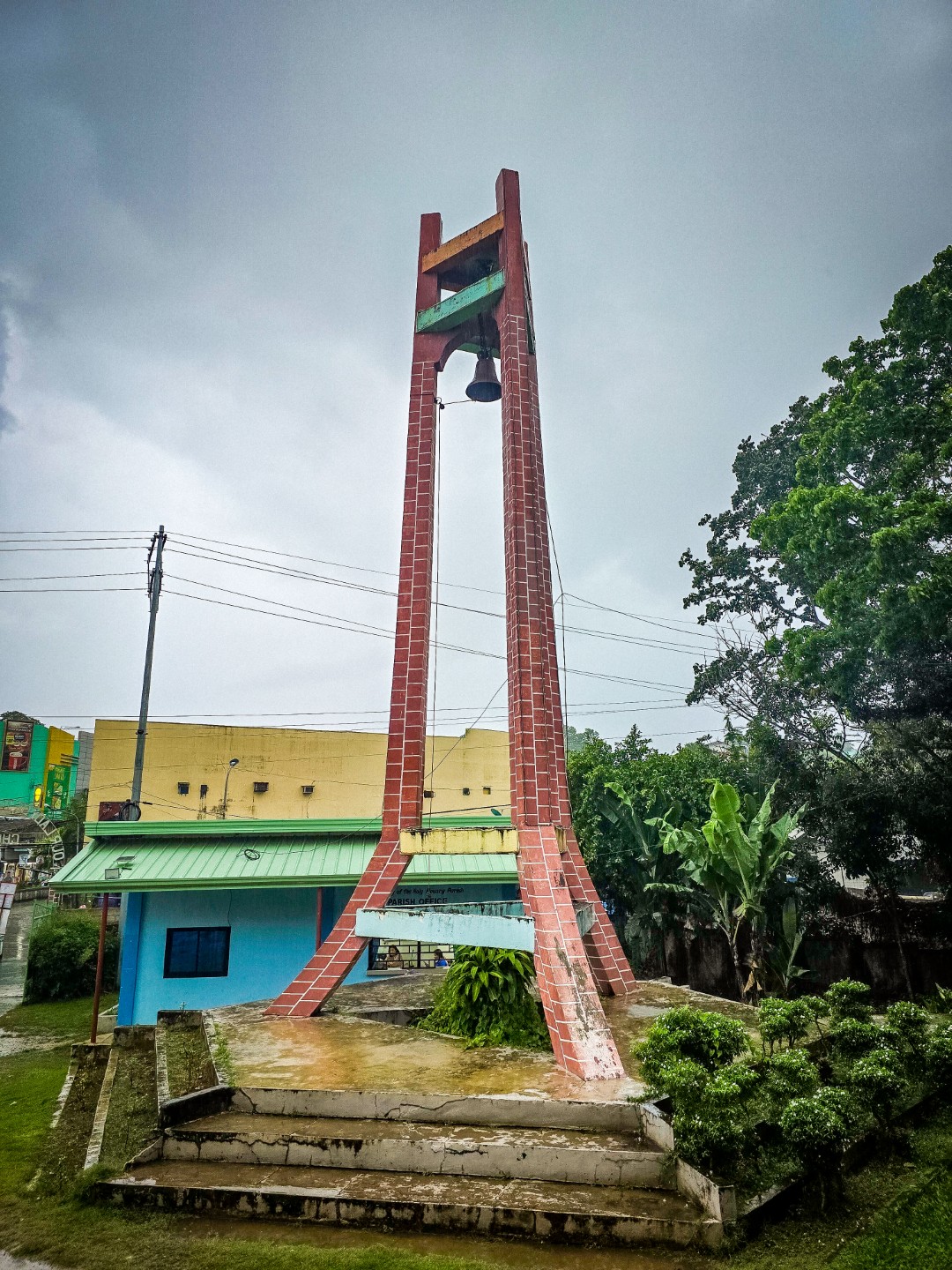
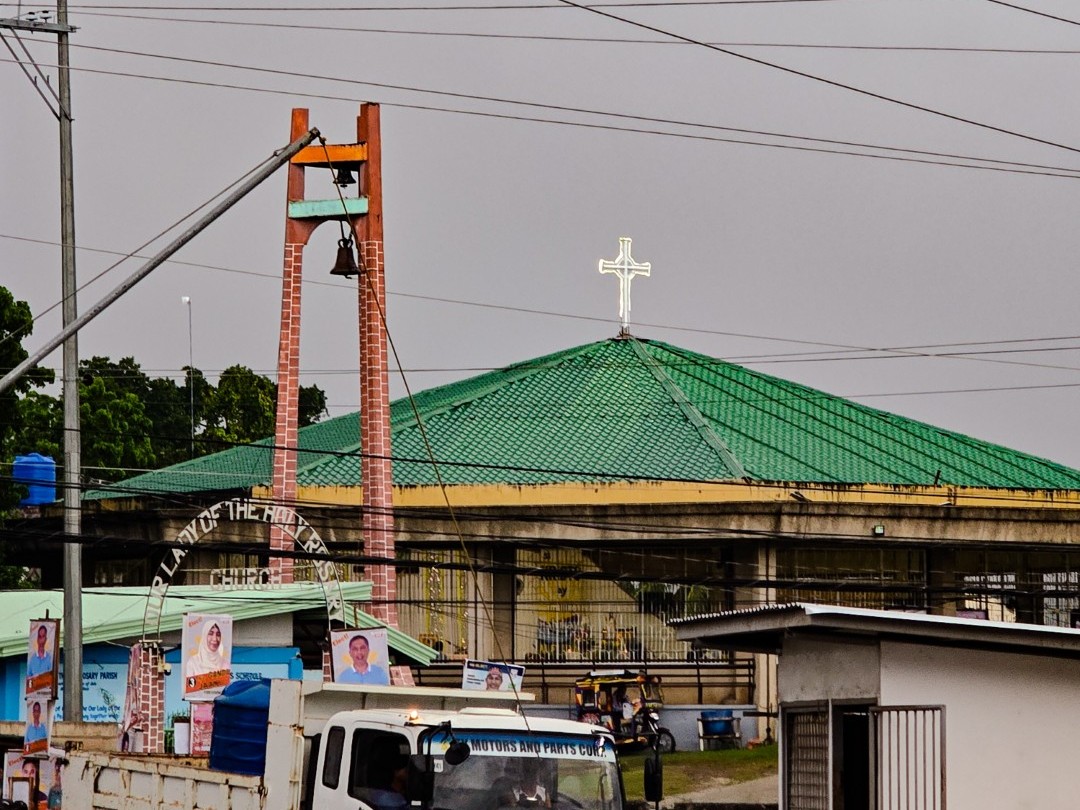
Our Lady of the Holy Rosary Parish, Bongao, Tawi–Tawi.
The Our Lady of the Holy Rosary Parish of Bongao was established in 1951 and is placed under the care of the Missionary Oblates of Mary Immaculate, a Catholic missionary religious congregation. It is within the ecclesiastical jurisdiction of the Apostolic Vicariate of Jolo. Placed under the tutelage of the Blessed Virgin as Queen of the Holy Rosary, the parish caters to the minority Catholic population of Bongao and of nearby towns.
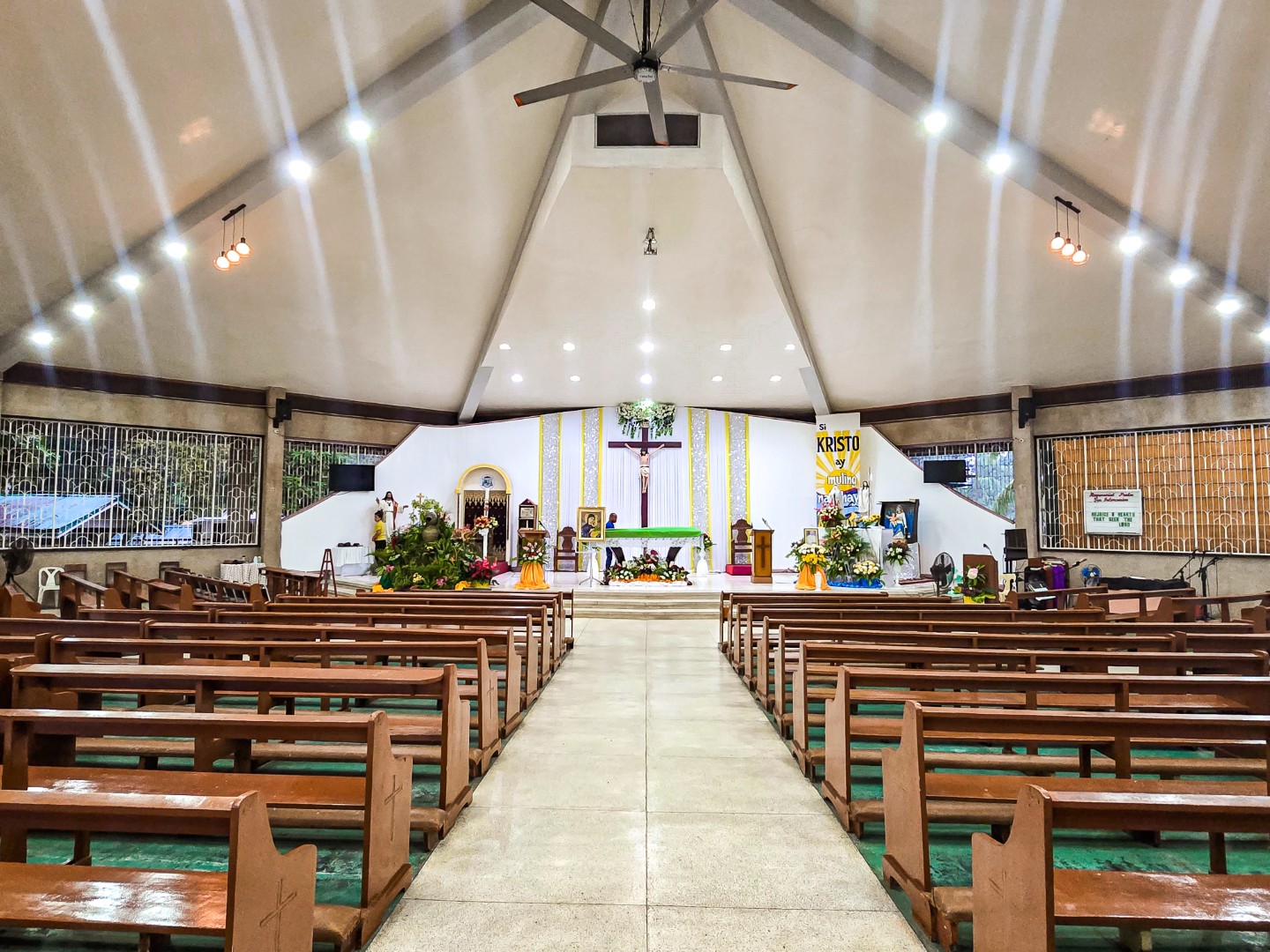
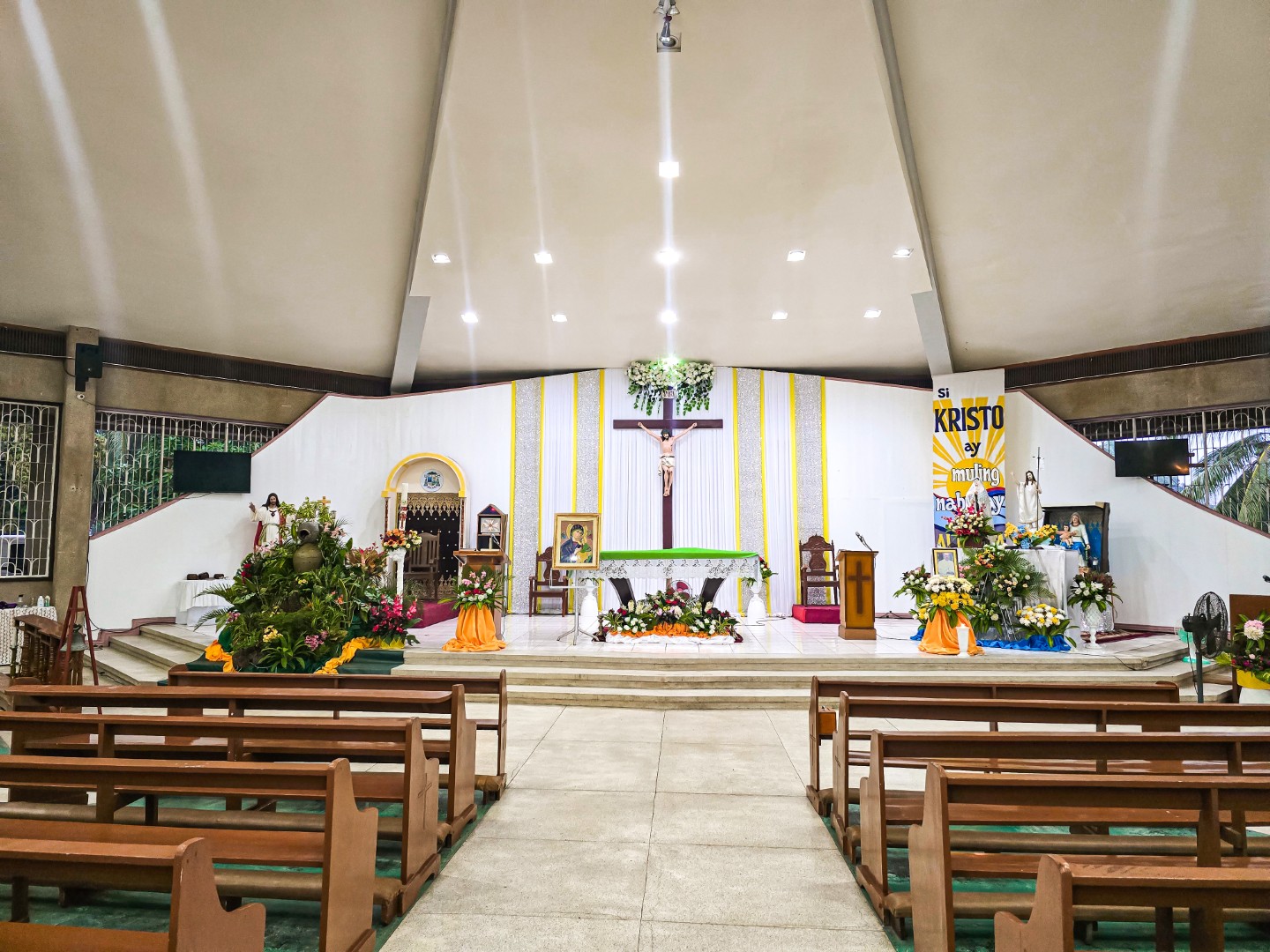
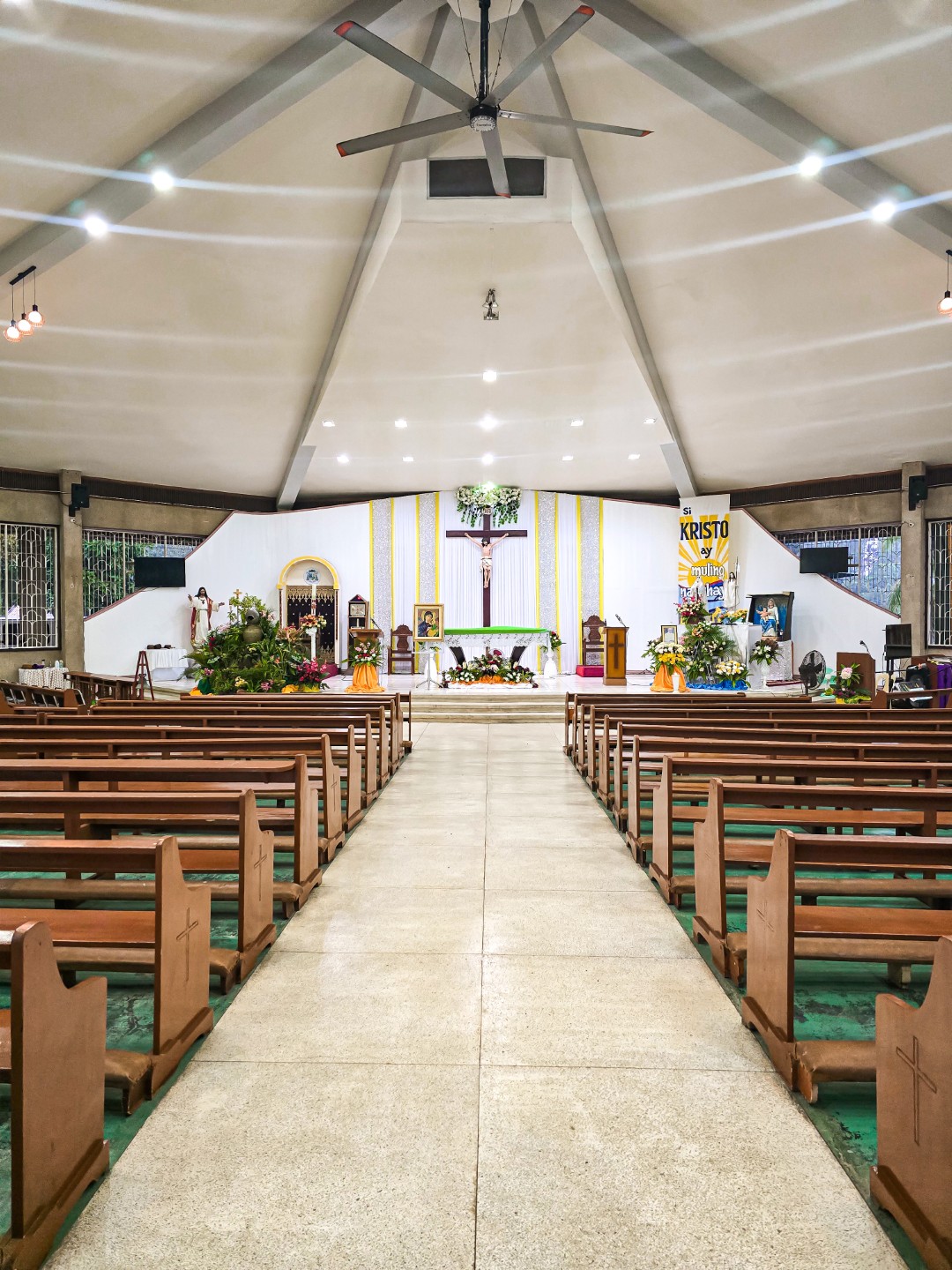
The nave and the sanctuary of the church.
We spent some moments of silent prayer. We did not stay for long lest that we left behind by our service vehicle. When we went to the church patio, however, the rain has become stronger. Left with no much choice, we just had to make a run for it again.
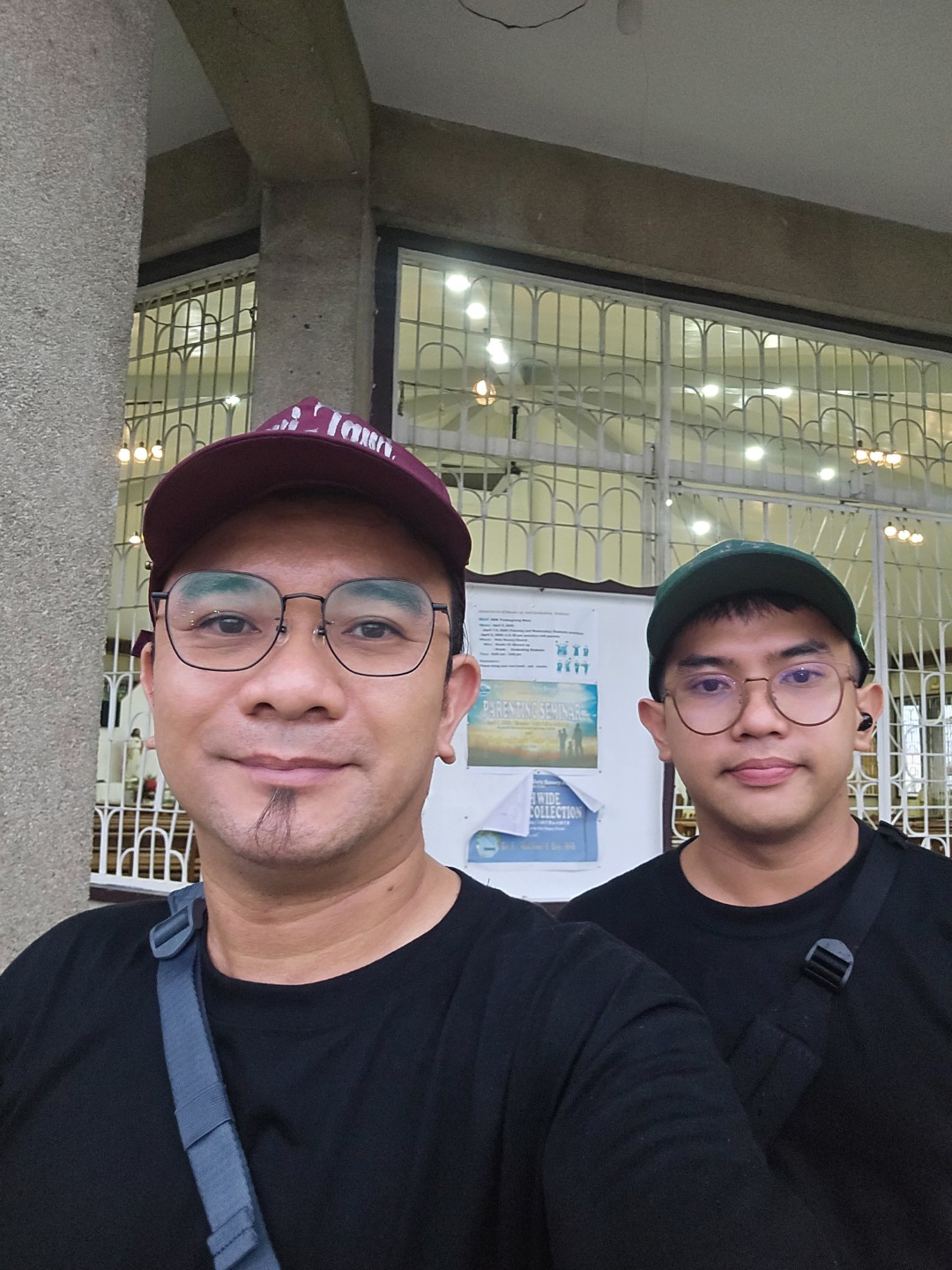
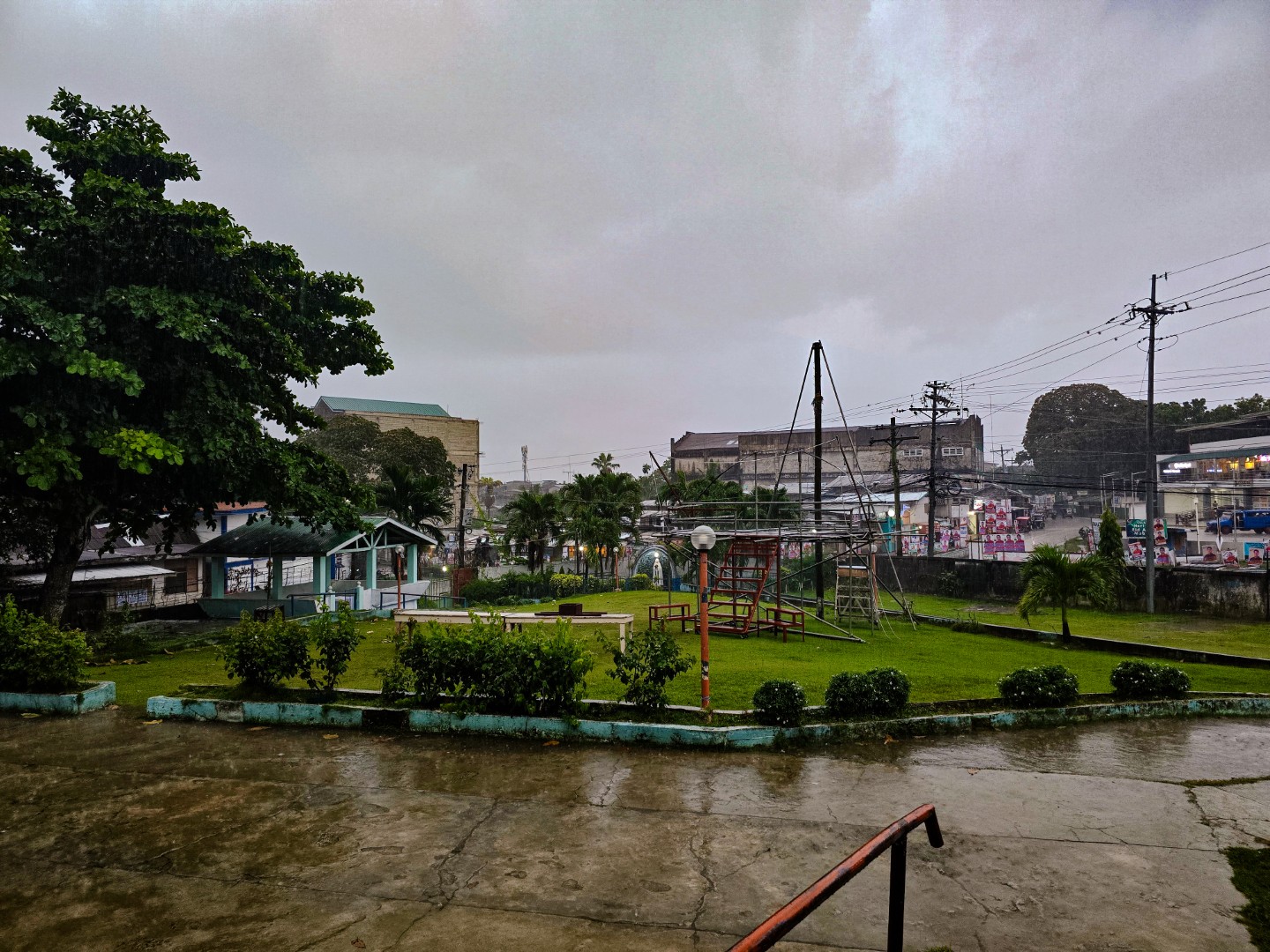
If you look closely in the photo of the church patio, our service vehicle is in the far right side.
It was somehow fascinating to see a church in the town center of Tawi–Tawi given its reputed Muslim majority population. Not that it is an issue, as Tawi–Tawi is a very peaceful place hence despite the significant difference between its population of Muslims and Christians, there is hardly any incident of conflict within the community. It is that in a place where roughly 97% of the population adhere to the Islamic faith, a church, literally small in its dimensions compared to its neighboring mosques, seems to resonate the voice in the wilderness as proclaimed by St. John the Baptist.
As it is written in the book of the words of the prophet Isaiah,
“The voice of one crying out in the wilderness:
‘Prepare the way of the Lord,
make his paths straight.’”Luke 3:4, NRSV
We were able to get back to the service vehicle just before it went ahead back to our accommodation, albeit drenched in rainwater. The visit to the church was not in the official itinerary but was a very meaningful one for us, making the run under the rain a very worthwhile one. It was heartwarming to know that just like in Zamboanga City where diversity flourished, religious diversity in Tawi–Tawi is viewed with acceptance and not just mere tolerance. It is possible to live in harmony after all; to foster unity in diversity.
We returned to our accommodation in RnR Garden Inn to freshen-up after being drenched under the rain. When we were about to proceed to Ate Sidang’s homestay, it was as if the heavens were toying with us as there was a heavy downpour yet again. Stuck as we had no umbrella, Ate Sidang sent someone to fetch us with one.
Just like our first meal earlier that day during lunch, the dinner was no short of a feast.
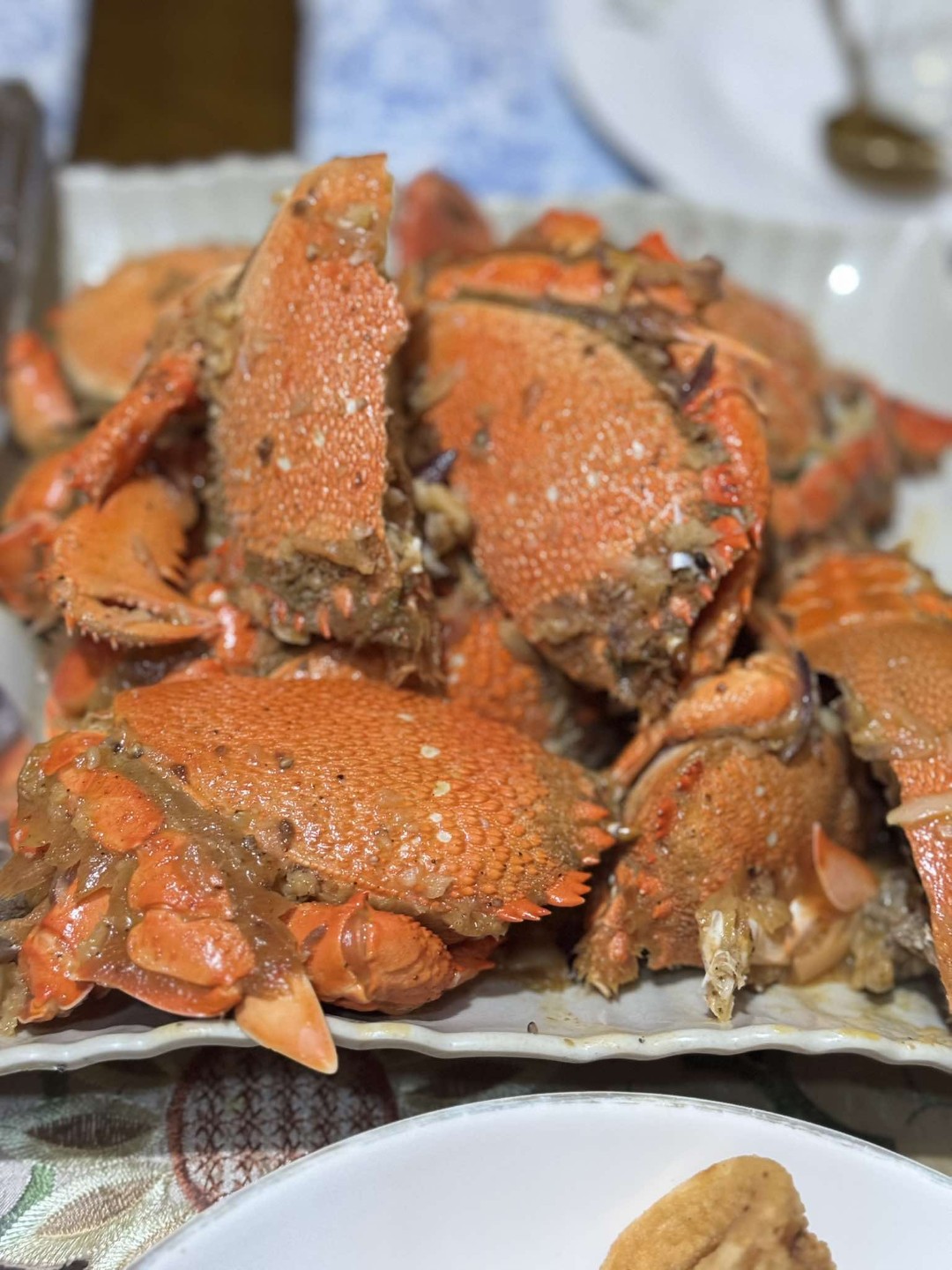
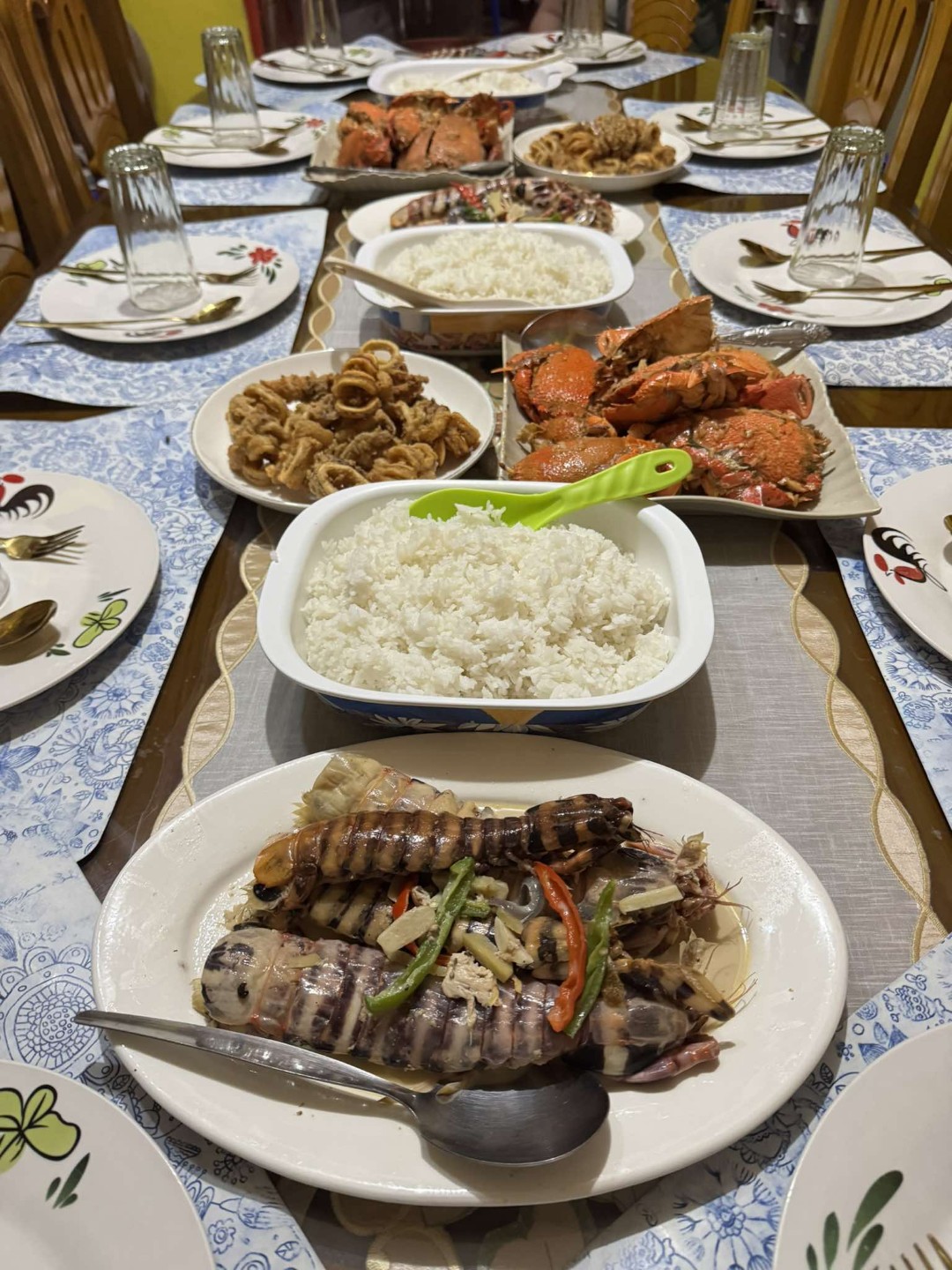
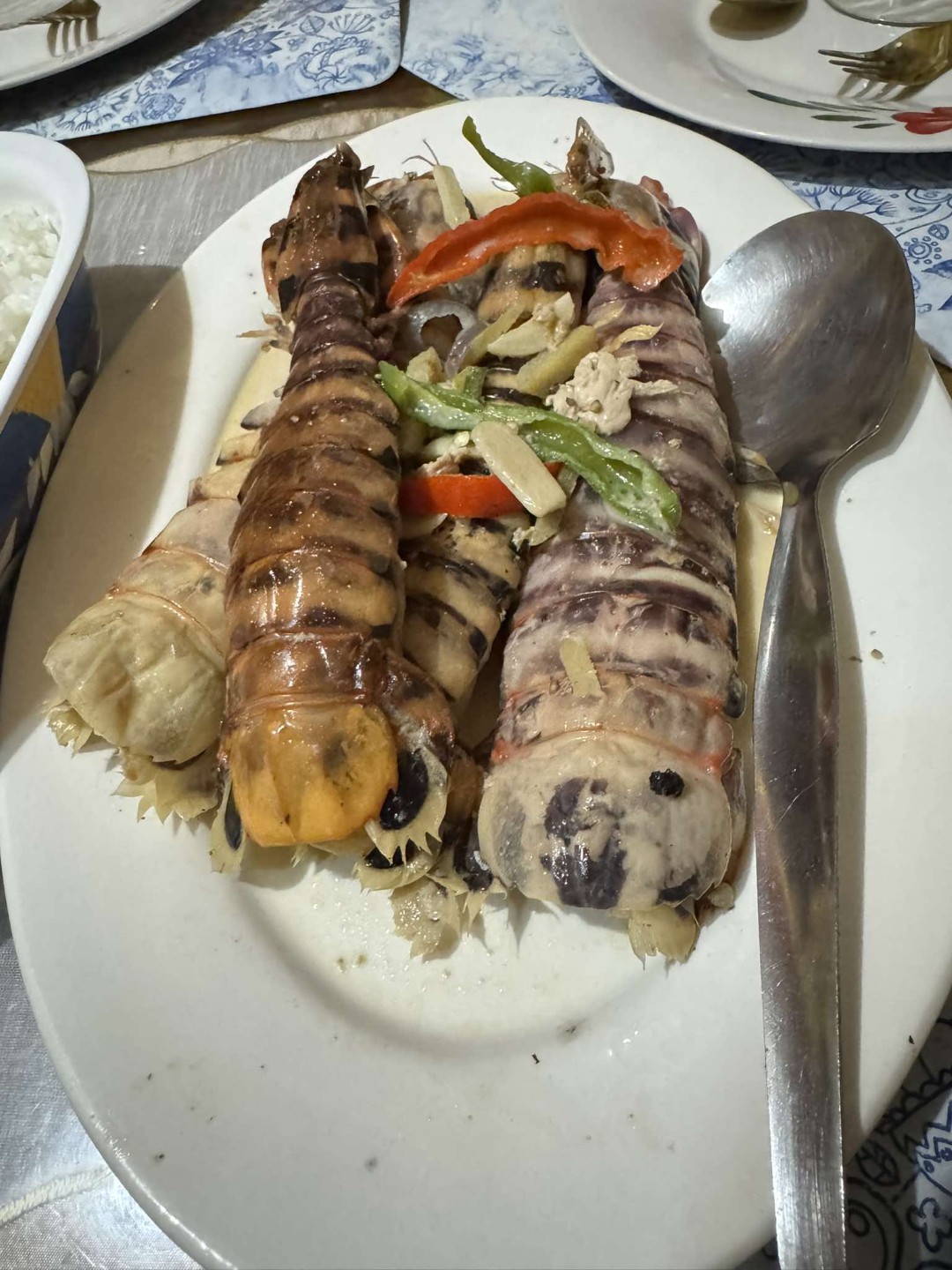
A feast of the bounty of the sea: crab, squid and sea mantis.
There would have been no better way to end our first day in Tawi–Tawi the way we did: a meaningful visit to the Our Lady of the Holy Rosary Parish and a sumptuous dinner at Ate Sidang’s home. After our meal, we headed back to the inn to get some rest. The call time for our second day in the southernmost frontier of the country would be early. We were about to conquer the sea.


 Renegade Junctures
Leave a reply to renegadetraveller Cancel reply