
The province of Bukidnon is aptly called the Mindanao Highlands given its average elevation of 915 meters above sea level, with more than three fourths of its land area elevated to above 500 meters. Its high geographical stature contributes greatly to its temperate climate, which should be reason enough for it not to come off as a surprise that its most popular produce is pineapple, a plant that thrives greatly under such climatic conditions. All things considered, Bukidnon is home to Del Monte Philippines and its pineapple plantation which is one of the largest, if not the largest, in the world.
Del Monte started its operations in Bukidnon as Philippine Packing Corporation in 1926 following a devastating infestation of mealybug wilt in the pineapple fields of Hawaii. The Americans who were governing the Philippines in those times hence decided to transfer plantations in the country, especially that the general climate in Bukidnon is ideal for pineapple growth. Expanding through the decades, Del Monte currently boasts of its 26,000–hectare plantation field in the town of Manolo Fortich.

The long road with rows upon rows of pineapple plants.
The plantation of Del Monte in Bukidnon was our next destination after our ranchero experience in the Communal Ranch of Impasugong. As if keeping with a unified theme, the next destination was not as much far from the previous one: surrounded by greens where human activity makes most of what nature has to offer.
We first visited the Pineapple Supervisors Multi–Purpose Cooperative, or Pine Coop. Pine Coop is a cooperative store being managed by supervisory and managerial employees of Del Monte. It sells various products that Del Monte has been known for so many years: juices, fruit cuts and cocktails, sauces, condiments and so much more! Being in the cooperative shop was like being in a grocery of nostalgia, giving off sensory reminders of how such products have become staples of every Philippine household.


The Del Monte signage in front of Pine Coop.


A 90’s kid would never forget: Del Monte Kitchenomics!
The nostalgia aside, we were actually excited for something new for us. Apart from the much well known products that Del Monte has to offer, it would be our first time to try Del Monte’s famous pineapple ice cream, sold and served in hollowed pineapples. As if providential, the cantaloupe version was also available. Of course, we had to try both!


Ain’t he excited?


Pineapple and cantaloupe ice creams in their respective fruit shells.


Our second day together in Northern Mindanao.
Both variants of the fruit ice creams were delights in their shells. The pineapple let out a burst of its signature tangy sweetness, driving tastebuds crazy in the best way possible. The cantaloupe was a little subtler but in no way inferior with its luscious earthiness. It was not even summer yet, but our taste buds all went on vacation to tropical gastronomic paradise.
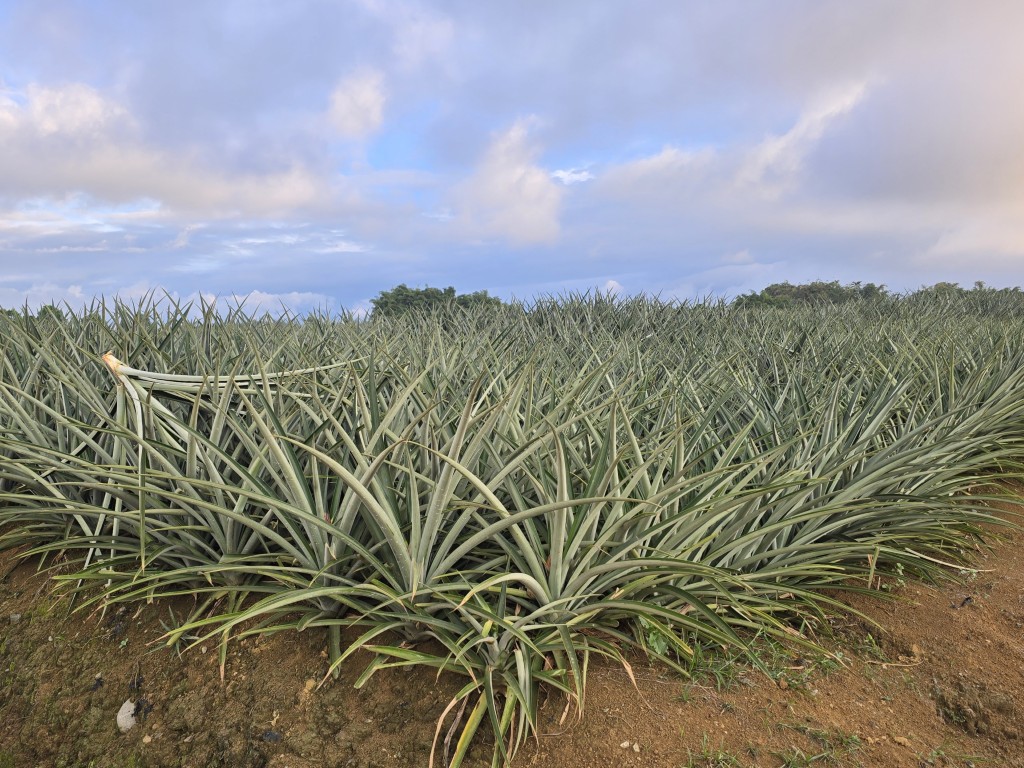
After spending time in the Pine Coop Store, we then proceeded to see where all are sown, grown and gathered. The pineapple farmlands extend way beyond what the eye could see, kilometers of spiky greens against a bright reddish earth.


The expanse of pineapple plants.


In the midst of pineapple fields.
We encounter pineapples often enough, but seeing the very expanse of land where they are grown and tended brings about a different kind of understanding. Not quite wonder, but something more grounded: an awareness of the many lives that move with the rhythm of the fields. In places like the Del Monte Pineapple Plantation, the fruit is no longer just something consumed; it becomes part of a larger story of work, livelihood, and continuity. To witness how the land is shared between purpose and sustenance, and how entire communities find their place within that rhythm, is to realize that what seems commonplace carries with it a depth that often goes unnoticed.
Having seen it from where it begins, it becomes difficult to look at the fruit in quite the same way again.
Our day in Bukidnon had not ended in the plantation, and as the long rows of spiky greens slowly gave way to the wider, more familiar openness of the province, the sense of what lay behind them lingered. Beyond the scale and order of the fields is a quieter story of the many lives that move with the rhythm of the land, those whose days are shaped by planting, tending, and harvest. There, the plantation is not just a landscape to be seen, but a livelihood to be lived, where work and land meet in a kind of steady understanding. In that coexistence, there is a reminder that the land does not stand apart from those who depend on it; rather, it becomes part of a shared rhythm, one that sustains, endures, and continues long after the visitor has passed through.


Leave a Reply