
Good food has always been an essential anchor for Renegade Junctures. Traveling to various corners of the country has taught us that a locality’s cuisine is a vital window into its culture, often serving as the very crucible where a community’s shared identity is forged and preserved. It was through these journeys that we realized exceptional food rarely requires pretense; more often than not, the finest culinary experiences are the most accessible ones, anchored by the freshest ingredients and honed by techniques quietly passed down through generations.
This philosophy lies at the very heart of the Michelin Bib Gourmand, recognition reserved for high-quality cooking that remains fair-faced and affordable enough to offer genuine value. Having experienced a Michelin Selection establishment back in December 2025, we knew the profound joy that comes from a kitchen operating at that level of dedication. Naturally, whenever navigating the glass-and-concrete expanse of Bonifacio Global City, catching sight of the iconic Michelin emblem on a storefront would instantly arrest our attention. We have to try it sometime.
That was exactly what happened that ultimately drew us through the doors of Ikoka Yakitori. Tracing its lineage directly back to Osaka, Japan, the restaurant specializes in the timeless art of yakitori—chicken skewers meticulously grilled over charcoal and lacquered with a rich tare sauce. While the BGC storefront proudly displays the Michelin Bib Gourmand distinction, the coveted recognition belongs to its Japanese progenitor, Sumibi Yakitori Ikoka, which received the honor in 2022. It was only recently, in 2025, that the brand established its very first outpost outside of Japan, anchoring its legacy in Taguig City.


Ikoka Yakitori Restaurant, BGC.
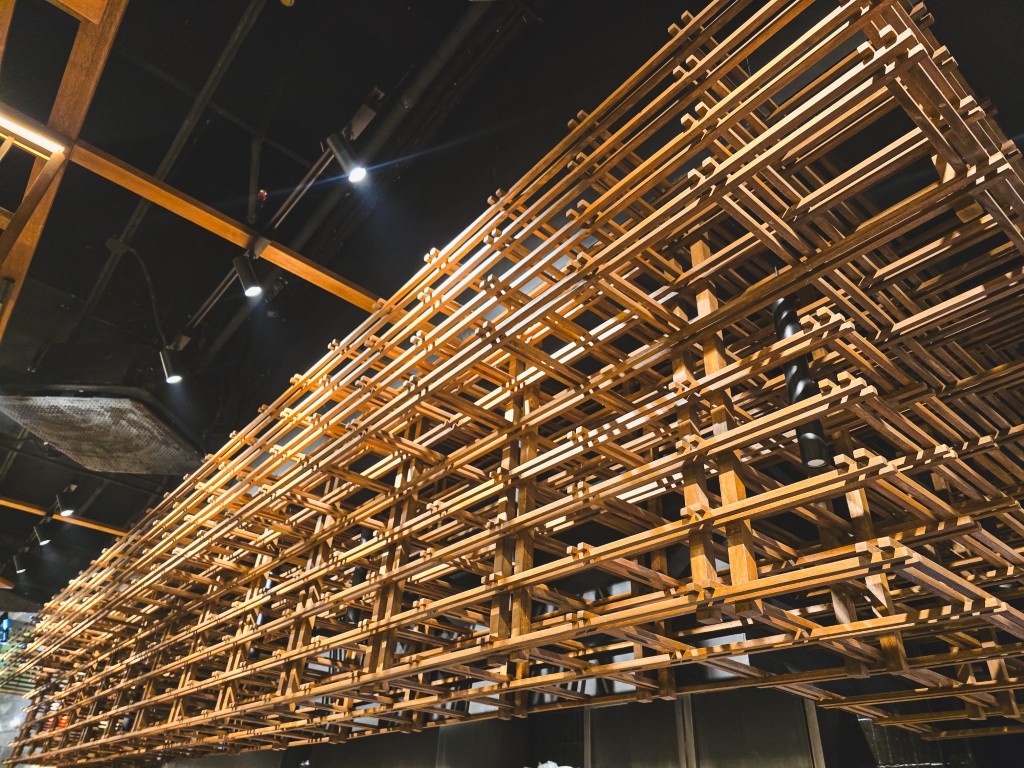
We stepped through the doors of the restaurant just as the evening began to crawl. The restaurant’s interior immediately presents a thoughtful study in Japanese spatial design; eschewing modern flash for a disciplined, clean minimalism that balances raw woodwork with warm, focused lighting. It was an intentional simplicity that immediately slowed the pulse, an atmosphere underscored by the gracious, attentive hospitality of the staff who escorted us to our table.


Simple yet elegant Japanese vibes inside the restaurant.
Confronted by an expansive menu that tempted us to try everything, we chose instead to be highly deliberate, curating a selection that would offer a balanced glimpse into the kitchen’s repertoire. For the charcoal-grilled core of our meal, we settled on a traditional line-up of yakitori: the classic negima skewers of chicken thigh intertwined with scallions, the lean tenderness of mune chicken breast, savory enoki maki mushroom wraps, and the delicately textured tsukune chicken meatballs. To complement the smoky depth of the grill, we rounded out our order with a few distinct side plates: the bright, citrus-kissed momo tataki ponzu, the crisp indulgence of torikawa no karaage, and the rich, melt-in-your-mouth comfort of buta no kakuni. The dishes then arrived in steady succession, crowding the table with an aromatic landscape of deep char, steam, and sharp citrus. It was a quiet invitation to a remarkable sensory experience.

Enoki maki, negima and mune.

Tsukune.

Momo tataki ponzu.

Torikawa no karaage.

Buta no kakuni.
To close the evening, we turned our attention to the brief dessert selections, eager for a refreshing counterweight to the deep, savory profiles we had just enjoyed. The menu offered only two sweet options, prompting us to try both: first, the traditional mitarashi dango, featuring pillowy strands of skewered glutinous rice dumplings lacquered in a sweet soy glaze; and second, the shiratama ice cream, which paired that same delicate, chewy rice flour base with the cooling contrast of vanilla. To cleanse the palate at the very end, a chilled glass of Yobick Sakura yogurt drink lent a light, floral brightness to the close of our dinner.


The sweet department. Mitarashi dango, shiratama ice cream, and sakura yogurt drink.
Overall, it was a delightful experience, one that quietly proved that even within the hyper-modern, glass-and-steel grid of Bonifacio Global City, the authentic pulse of generational heritage can still be found. Ikoka Yakitori does not rely on contemporary gimmicks or flashy presentation to justify its space; instead, it rests its reputation entirely on the patient, unhurried discipline of fire, smoke, and seasoning that made its progenitor a celebrated fixture in Osaka.


Duo in travel and food.
For a brief hour, the frantic pace of the surrounding business district simply faded away, replaced by the steady crackle of charcoal and the comforting rhythm of skewers and chopsticks. It served as a timely reminder for our journey: whether we are standing at a literal crossroads in a remote, uncharted province or simply stepping off a bustling metropolitan sidewalk, the true spirit of exploration will always reveal itself to those who stop to honor the honest, uncompromising mastery of a craft.


Leave a Reply