
Witnessing the natural beauty cradled within Misamis Occidental during our visit to the Bigaan U–River set a brand-new tone for our last day in Northern Mindanao. It shifted our entire perspective. By the end of it, we realized that Misamis Occidental isn’t merely the other half of Misamis Oriental. For what it’s worth, it was right here in the west that the foundations of the greater Misamis history were originally laid. It was the cradle where it all started, a heritage that gradually moved from west to east.
After our trek up to the U–River view deck, we made our way back to our accommodation in Oroquieta City. We quickly freshened up, packed our things, and prepared for the long road ahead. Unlike the previous days, however, this morning carried the bittersweet weight of a final stretch. Our time in Northern Mindanao was drawing to a close; we were finally heading home.


Habitacion Hotel and Restaurant, when we arrived at night.


Mirror shot in our room before bidding the hotel good bye.


While waiting for the rest of the group.
As we watched the coastal roads roll past our windows, it was easy to see how deeply this land is tied to its roots. Long before Misamis Occidental was partitioned by administrative lines, the coast of the province belonged to a sweet, golden variety of coconut. The indigenous Subanen called it kuyamis, a word that early Spanish tongues eventually flattened and reshaped into Misamis. It wasn’t until 1929 that the vast territory once known as the Segundo Distrito de Misamis was split down the middle, creating the twin provinces of Occidental and Oriental.
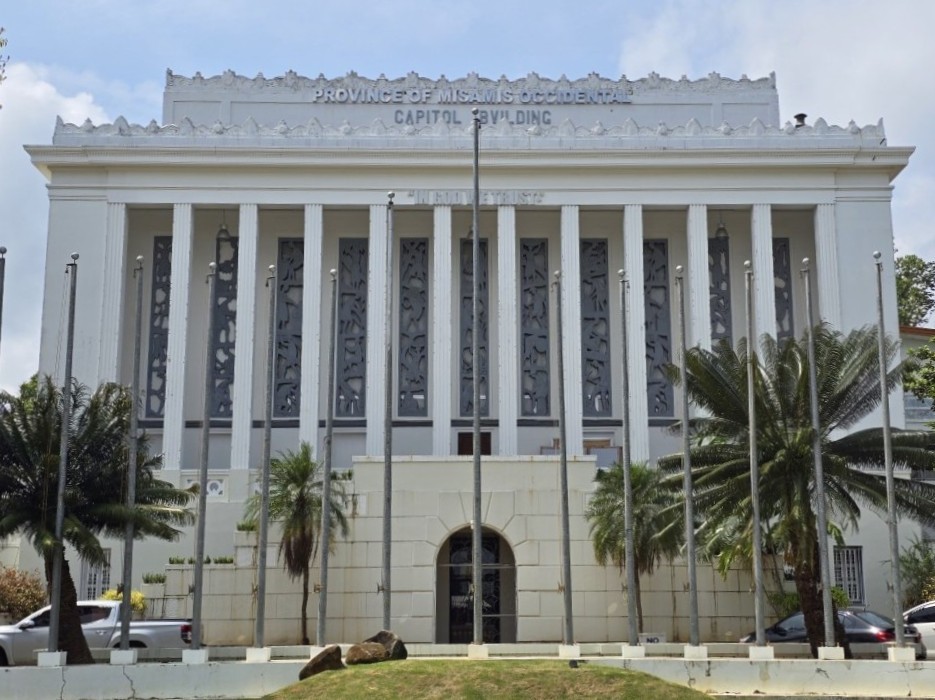
Oroquieta, which later became a city in 1970, was chosen as the capital for this western half. Its provincial capitol building, constructed in 1935, even earned the distinction of being adjudged the most beautiful capitol in the Philippines back in 1973. That same historic landmark served as our first official stop on our way back to Laguindingan Airport, the gateway where we had entered the region six days prior.
Today, despite the steady passage of time, the capitol retains its classical charm. It stands not only as a tangible seat of governance but as a stately edification of the Misamis Occidental identity.


The facade of Misamis Occidental Capitol.


Unlocking achievements one province at a time.
With the midday sun rapidly reaching its peak, we decided to keep our photo session in front of the majestic capitol brief. The heat was a clear sign that it was time for lunch. Before braving the long road ahead, we sought refuge and a good meal at Villa Tuna.


Villa Tuna. The house that tuna built.
True to its name, Villa Tuna is a sanctuary for seafood lovers, reimagining classic Filipino comfort foods by swapping out traditional meats entirely for fresh fish. It felt like more than just a gastronomic pitstop; it was a delicious celebration of the coastal bounty that helped shape the cultural identity of Misamis Occidental. We went all out for our midday feast: tuna tapa, tuna sisig, tuna kilawin, tuna sashimi, and even tuna pancit canton. Talk about a total tuna overload!


Familiar dishes, uncommon ingredient.
Tasting such familiar profiles reimagined through a singular marine protein was a fascinating treat for our palates. Each dish offered a beautiful interplay between the common and the novel, the familiar and the unusual; traditional everyday recipes brilliantly accentuated by the distinct, savory richness of the sea. Ultimately, that feast did more than just perfectly satiate our appetites for the long road ahead; it provided a rich, satisfying exclamation point to our entire Northern Mindanao adventure, leaving us fueled for our next destination before the final journey home.


Leave a Reply